Font
Color
Graphics
Изображение точки

To see AR mode in action:

1. Install ARTEFACT app for iOS or Android;

2. Find the exhibition «Treasures of the Don Steppes»

3. Push the «Augmented reality» button and point your phone's camera at the exhibit;

Скрыть точки интересаПоказать точки интереса
Показать в высоком качестве

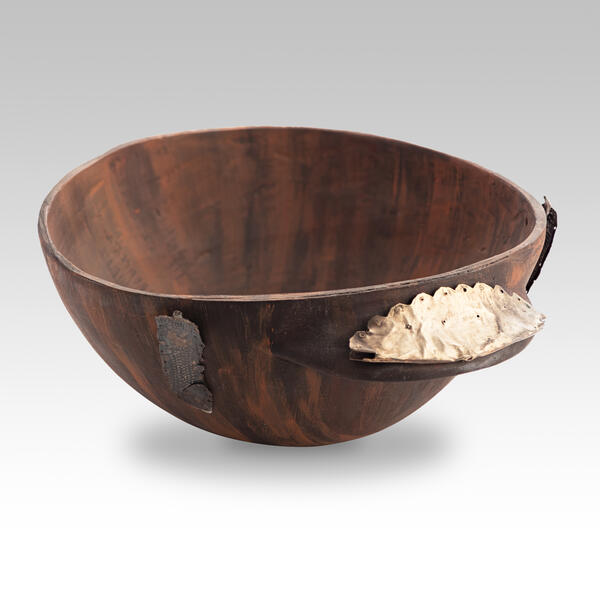
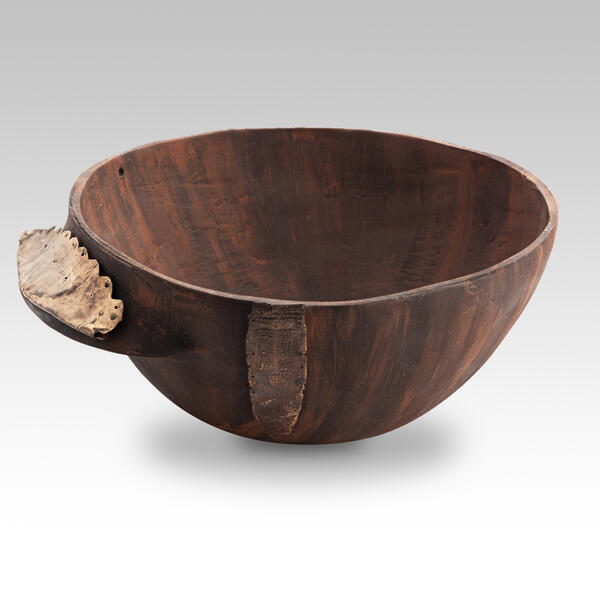
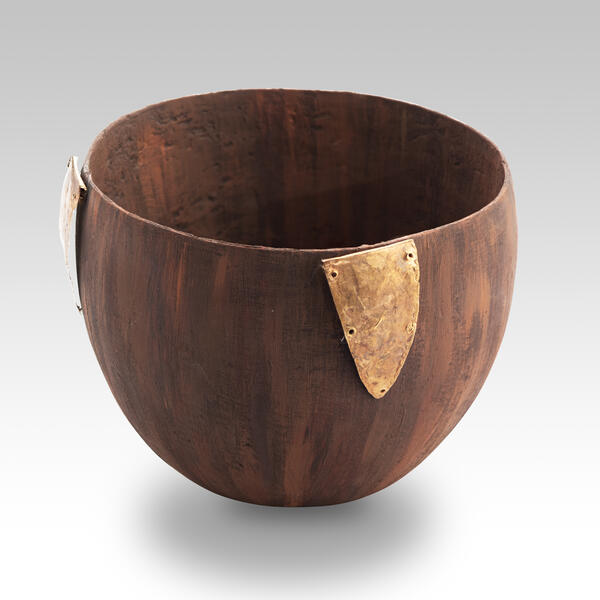
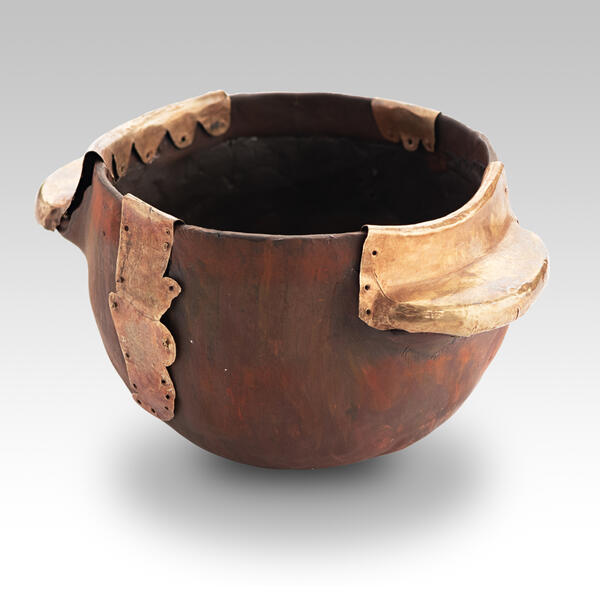
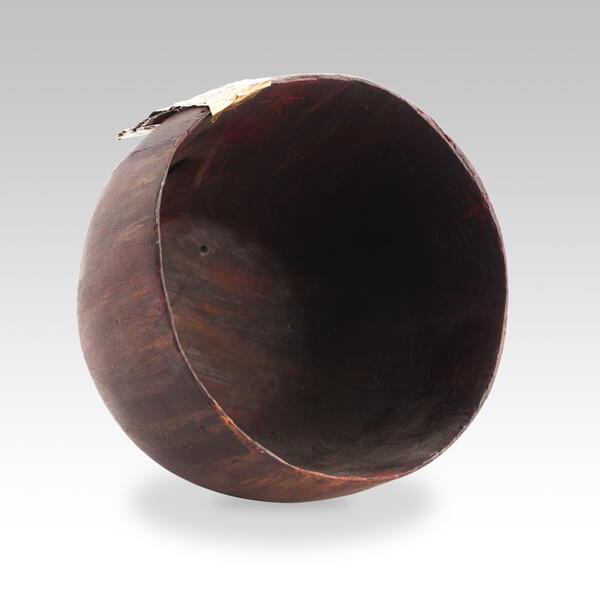
Reconstructed wooden bowls with overlays

Creation period
the late 20th century
Place of сreation
Russia
Dimensions
8,5x2,5x0,1 cm
Technique
polymer material, embossing
0
Open in app
#1
In the time of the ancient Greek historian and geographer, Herodotus, Scythia was a vast region located west of the city of Tanais, extending to the lower reaches of the Danube River that he called Istr.


Ancient authors occasionally used the name “Scythians” not only for the inhabitants of this region, but also for various other nomadic and sedentary populations of Southeastern Europe. This can be attributed to the fact that numerous tribes inhabited this territory and were closely related in terms of language and culture. So ancient historians often did not clearly distinguish between these tribes.


The Scythian people themselves referred to themselves as Skolotoi. It was a union of tribes who shared a common territory encompassing both nomadic and settled populations. Over time, during the 5th and 4th centuries BCE, this alliance began to exhibit a number of qualities indicative of statehood. In the 4th century BCE, a centralized state was formed under King Ateas.


There are several legends regarding the origin of the Scythians. One such legend was recounted by Herodotus in the 5th century BCE.
#3

According to the account which the Scythians themselves give, they are the youngest of all nations. Their tradition is as follows. A certain Targitaus was the first man who ever lived in their country, which before his time was a desert without inhabitants. He was a child — I do not believe the tale, but it is told nevertheless — of Jove and a daughter of the Borysthenes. Targitaus, thus descended, begat three sons, Leipoxais, Arpoxais, and Colaxais, who was the youngest born of the three. While they still ruled the land, there fell from the sky four implements, all of gold — a plough, a yoke, a battle-ax, and a drinking cup. The eldest of the brothers perceived them first, and approached to pick them up; when lo! as he came near, the gold took fire, and blazed. He therefore went his way, and the second coming forward made the attempt, but the same thing happened again. The gold rejected both the eldest and the second brother. Last of all the youngest brother approached, and immediately the flames were extinguished; so he picked up the gold, and carried it to his home. Then the two elder agreed together, and made the whole kingdom over to the youngest born.

#4
Grave goods from the burials of rich nomadic people included golden plates on wooden vessels. During excavations, archaeologists identified the outlines of the wooden containers in the ground that had not survived. Nevertheless, the gold decorations of the containers conveyed the shape of these objects. Based on this information, their original form was reconstructed through mathematical calculations.


The museum exhibition presents reconstructed wooden containers from the 5th–3rd centuries BCE with authentic golden plates.
#2

Reconstructed wooden bowls with overlays

#5
read morehide
00:00
00:00
1x

Reconstructed wooden bowls with overlays

Creation period
the late 20th century
Place of сreation
Russia
Dimensions
8,5x2,5x0,1 cm
Technique
polymer material, embossing
0
Point your smartphone camera to open in the app
Share
VkontakteOdnoklassnikiTelegram
Share on my website
Copy linkCopied
Copy
Open in app
To see AR mode in action:
  1. Install ARTEFACT app for 
  2. iOS or Android;
  3. Find and download the «Paintings in Details» exhibition
  4. Push the «Augmented reality» button and point your phone's camera at the painting;
  5. Watch what happens on your phone screen whilst you flip through the pictures.
 
We use Cookies
Cookies on the Artefact Website. We use cookies to ensure that we give you the best experience on our website. If you continue without changing your settings, we'll assume that you are happy to receive all cookies on the Artefact website. However, if you would like to, you can change your cookie settings at any time.
Learn more about useHide
Content is available only in Russian

X

Нашли опечатку?...

%title%%type%