

Vladimir Zanoga was born in 1953 near Nizhny Novgorod into a military family. In the early 1970s he graduated from the School of Arts of Gorky. Since 1993, he began holding personal exhibitions, and two years later he was admitted to the Union of Artists of Russia. In 2006 he became a professor at the International Slavic Academy, and in 2012 he was awarded the prestigious regional Nizhny Novgorod Award. His works are kept in the collections of the Office of the Nizhny Novgorod Metropolitanate, of Makaryevsky and Blagoveshchensky monasteries, of the Nizhny Novgorod Academic Opera and Ballet Theatre, as well as in the collections of many museums and private collections in Russia and abroad.
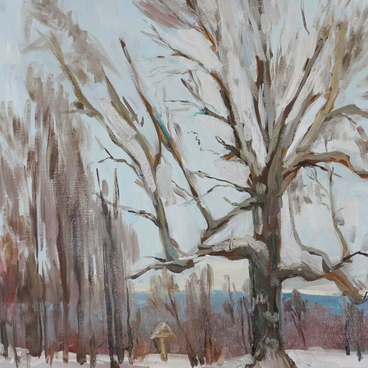
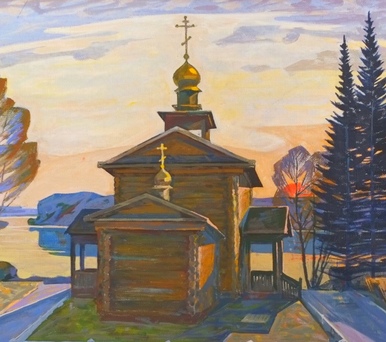
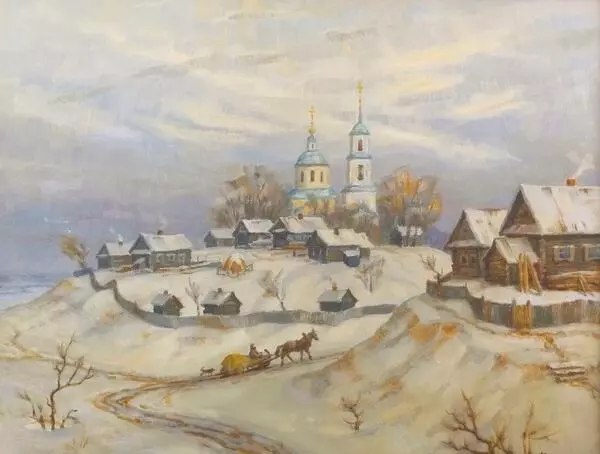
While he was still studying at the School of Arts, Zanoga began to, according to him, ‘unconsciously’, get interested in Orthodox icons and iconography. It is no coincidence that his well-seasoned works are permeated by the need to return to the origins of Russian spiritual culture. In his landscapes and still life paintings, he turns to links between generations and tries to restore the historical memory. He particularly often explores the subject of Christian motives, since he believes that art is inextricably linked with God.
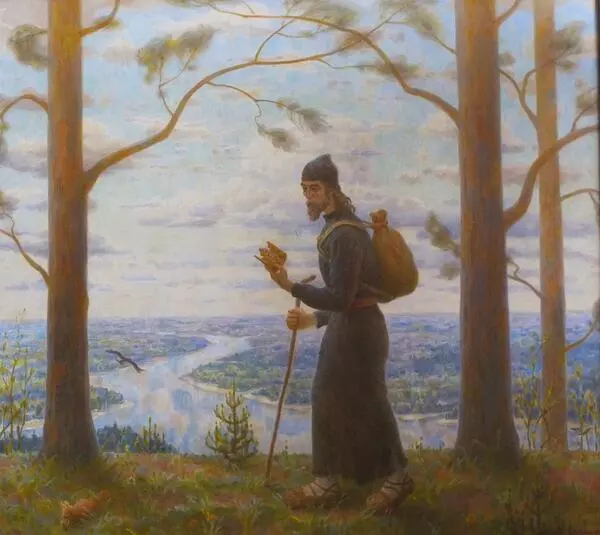
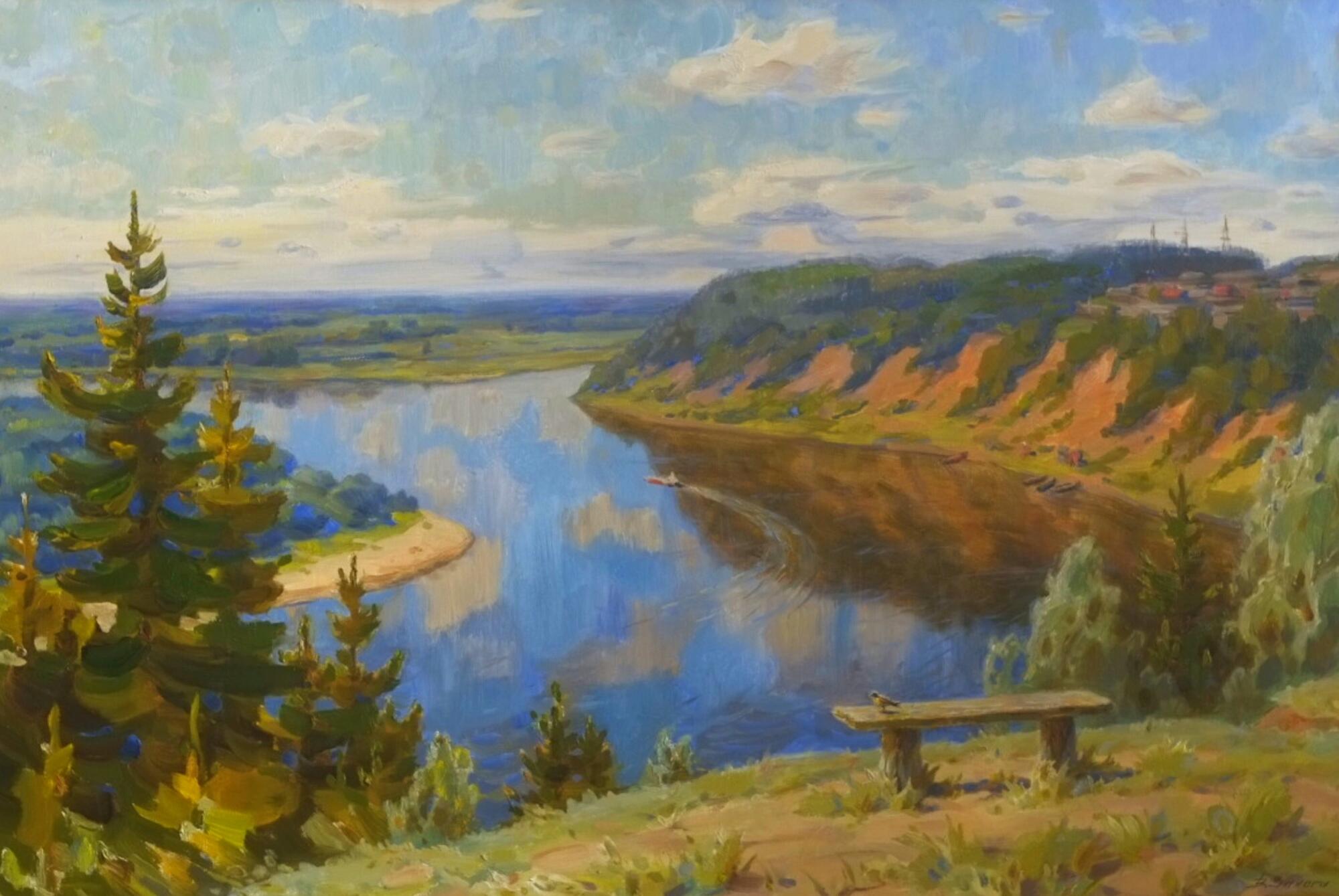
Despite his convictions, Zanoga remains, first of all, a painter who notices the beauty of flowers, landscapes, people, and who is able to capture it in his works. This is very well illustrated by the ‘The Vetluga River, View from Red Mountain’, where the painter depicted the natural landmark of the village of Varnavino of the Nizhny Novgorod Region, one of the most beautiful places on the taiga river Vetluga.
The picture shows the endless Vetluga forests in the distance, and on the right one can see the part of the village beyond the river. Due to its extraordinary beauty, this place quickly became an attraction for painters and professional photographers. However, Krasnaya Gora, dramatically towering above the river at 20 to 25 meters, and being 95 meters above sea level, is also a historical, cultural and spiritual place.
It was here in 1417 that the hermit Barnabas, a priest from the city of Veliky Ustyug, settled down in a hermitage. He was later canonized for spiritual exploits and for helping spread Orthodoxy in the pagan Mari tribes. In after years, as many as three churches were built on this site, and the Trinity-Varnavinsky Monastery was established. The settlement adjacent to the church became the village of Varnavina monastery. Under Catherine II, the district town of Varnavin, Kostroma province, was established in these places.
While he was still studying at the School of Arts, Zanoga began to, according to him, ‘unconsciously’, get interested in Orthodox icons and iconography. It is no coincidence that his well-seasoned works are permeated by the need to return to the origins of Russian spiritual culture. In his landscapes and still life paintings, he turns to links between generations and tries to restore the historical memory. He particularly often explores the subject of Christian motives, since he believes that art is inextricably linked with God.
Despite his convictions, Zanoga remains, first of all, a painter who notices the beauty of flowers, landscapes, people, and who is able to capture it in his works. This is very well illustrated by the ‘The Vetluga River, View from Red Mountain’, where the painter depicted the natural landmark of the village of Varnavino of the Nizhny Novgorod Region, one of the most beautiful places on the taiga river Vetluga.
The picture shows the endless Vetluga forests in the distance, and on the right one can see the part of the village beyond the river. Due to its extraordinary beauty, this place quickly became an attraction for painters and professional photographers. However, Krasnaya Gora, dramatically towering above the river at 20 to 25 meters, and being 95 meters above sea level, is also a historical, cultural and spiritual place.
It was here in 1417 that the hermit Barnabas, a priest from the city of Veliky Ustyug, settled down in a hermitage. He was later canonized for spiritual exploits and for helping spread Orthodoxy in the pagan Mari tribes. In after years, as many as three churches were built on this site, and the Trinity-Varnavinsky Monastery was established. The settlement adjacent to the church became the village of Varnavina monastery. Under Catherine II, the district town of Varnavin, Kostroma province, was established in these places.