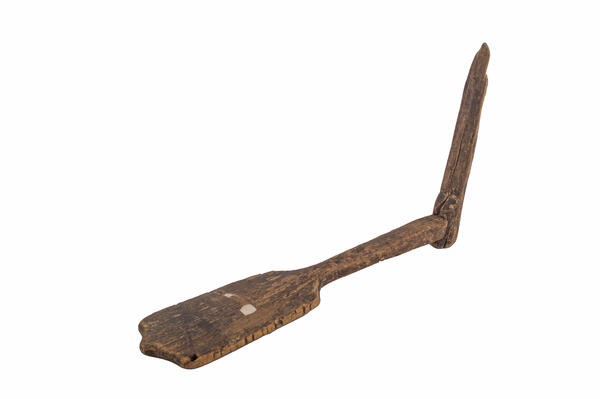
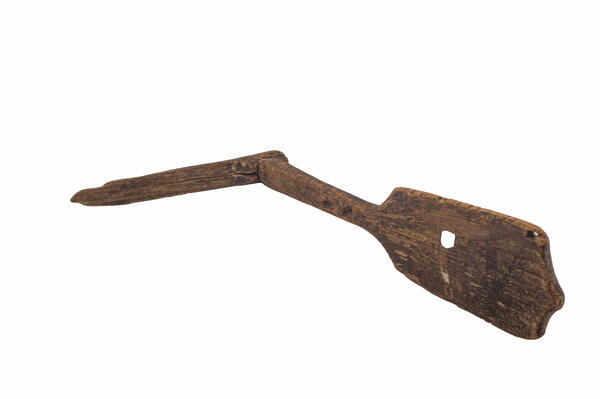
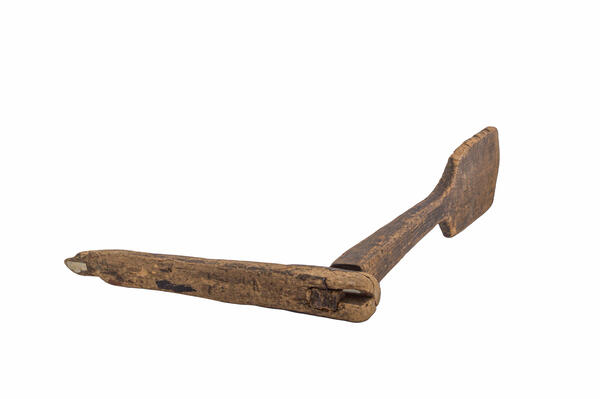
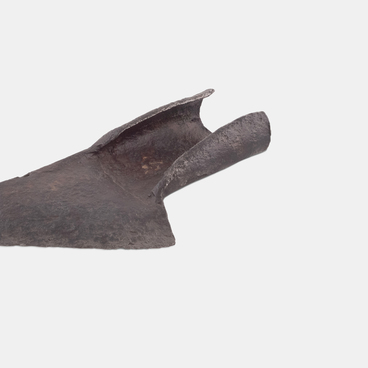
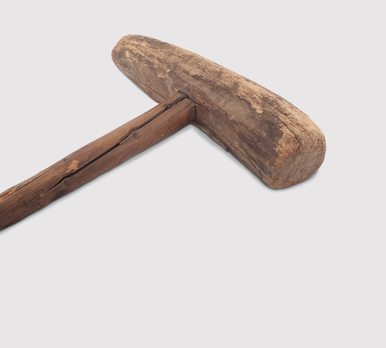
Hand spinning, the process of turning fibers, either of plant or animal origin, into yarn, is one of the most ancient crafts.
It was not until the 1830s that the Shors became closely acquainted with the economic culture of the Russians and mastered the process of spinning and knitting sheep wool. Before that time, the main raw materials were nettle and hemp fibers — first wild, later cultivated.
The traditional spinning tool of Shor women was the horizontal loom called “kendyr tybeg”. They wove fabrics and then sewed kendi rrobes, kѳbnek shirts, ştan pants, pѳryk hats, as well as men’s, women’s and children’s casual and festive clothes. The women used kendyr or deer tendon threads.
In his “Essays”, the ethnographer Leonid Pavlovich
Potapov gave a detailed description of this device: