

The key taiga treasures of Gornaya Shoria include valuable species of timber, game animals and pine nuts. Harvesting pine nuts has remained profitable to this day.
Cedar trees can have inaccessible crowns or be comfortable to climb due to having branches. The second type is believed to produce three times more seeds than the first type. Cedar forests are divided into nearby areas, shared by all members of the community, and distant ones, which are used for commercial harvesting. They have long been assigned to specific clans and families, just like hunting grounds. For a long time, those plots were inherited, and visiting a cedar forest without its owner’s consent was strictly prohibited.
Whole teams, including women and children, spent the entire period, from mid-August to late autumn, in the forest.
Preparation started in the middle of summer. A camp was built in the center of the cedar forest, near the spring: “odag” houses made of branches and poles (for one season) or logs (long-term dwellings) and a square log barn (on four pillars) called “anmar” for storing nuts.
Horses were used to bring food, equipment, guns, and ammunition, and the Shors also took their dogs. Like food, tools were kept in a log barn or house, mounted on high “chairs” to make the structures rodent proof.
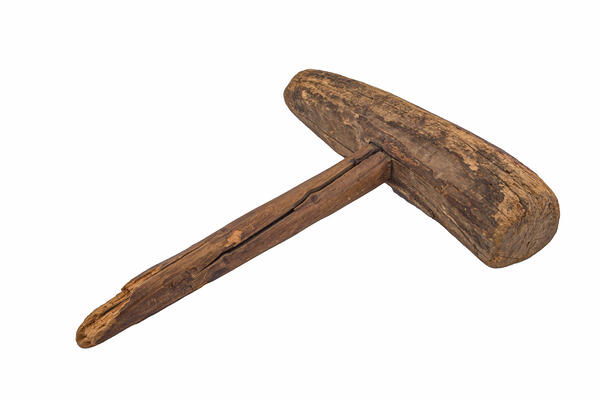
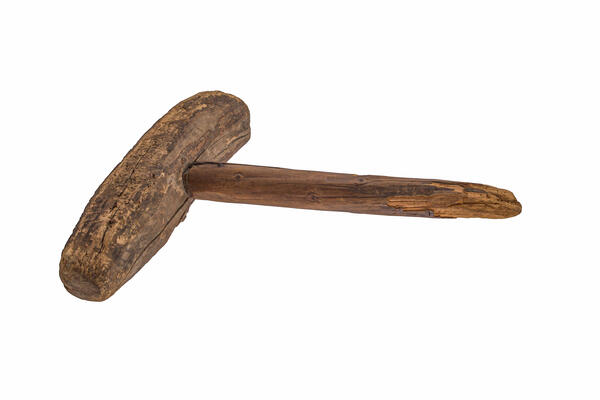
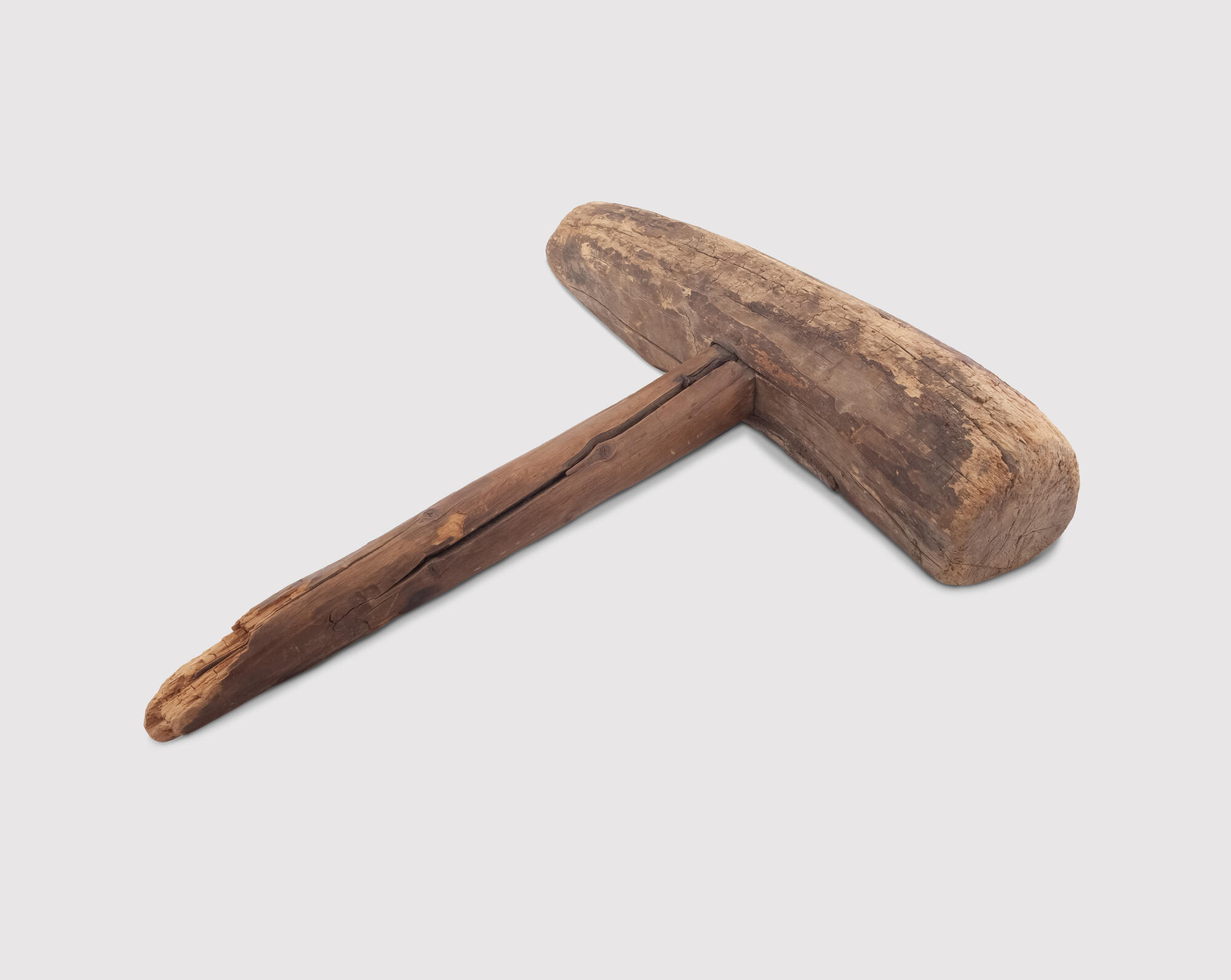
There were several ways to harvest nuts. In the taiga cedar forests, pickers climbed a tree using a “tapty” wooden ladder and pulled the cones with mallets or simply with their feet. They would also collect “tushkin” cones that had been caused to drop by gusty winds or by the pickers who used heavy mallets with a long handle to beat the trunks of inaccessible trees.
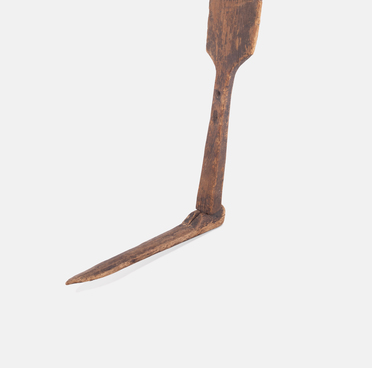
Women and children brought the cones to the camp in “annik Kaaba” bags or “tergesh” birch bark baskets. The cones were put into the barns and left there for several days to get rid of the resin. Then the men crushed the cones with “ushpe” rollers and ground them on “paspak” (“pabryk”) wooden graters. Then the nuts were sifted through a coarse-mesh “elek” sieve and winnowed using “sargash” hand tools. Winnowing could also be done by using wooden spatulas: the nuts were thrown onto a stretched canvas and tossed so that the waste was sifted out.
As soon as it began to snow, the nuts were loaded onto horses or sleighs and brought to the village.
Harvesting cedar nuts became especially popular in Gornaya Shoria in the late 19th and early 20th centuries, with the development of trade.