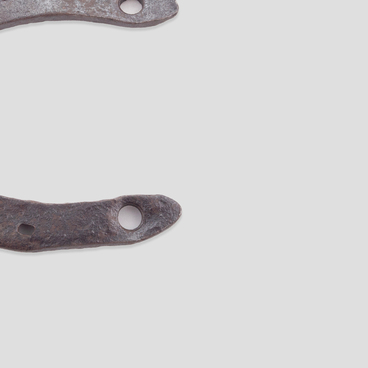
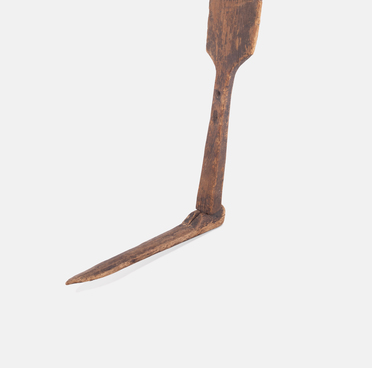
The ancestors of the
Shors practiced primitive ways of terrace farming since the Bronze Age and at
the end of the 19th century hoe-farming became almost universal. The
ethnographer Johann Gottlieb (Ivan Ivanovich) Georgi wrote:


Plow tip
Creation period
the early 20th century
Place of сreation
Gornaya Shoria, the Russian Empire
Dimensions
31x14x6 cm
Technique
iron, forging
Collection
0
Open in app #2
#5
Their [Shor] arable farming is not of a high standard, few people practice it, and the arable lands of such farmers can hardly be equal in size to large vegetable gardens: and therefore they use spades instead of plows.
#6
Nevertheless, this traditional method was practiced in the taiga part of Gornaya Shoria until collectivization in the 1930s.
Arable farming, based on the use of draft power of domestic animals when cultivating the land with different types of plows and other special tools, was introduced into Shor life at the end of the 19th — beginning of the 20th centuries.
Dmitry Vladimirovich Arzyutov notes that the inclusion of the northern (forest-steppe) group of the Shor ethnic group “in the powerful socio-economic processes that began with the arrival of the Russians” led to a significant degree of “adopting the Russian culture, ” while the southern Shors continued to represent “an example of hunters, gatherers and fishermen of the taiga.”
The northerners sowed cereal crops, scattering the seeds directly from birch bark boxes with their hands, then harrowed the area with the help of horses, tying a crooked bough to the saddle.
At the beginning of summer, the first stage ended. The area was fenced off from livestock with dead wood, with passages or gates left. In the second half of June the plot was weeded.
The Shors mainly planted barley and wheat, millet, oats, potatoes, and hemp. In September, they pulled out the harvest by hand, and then the rhizomes were cut off with an ax. The stems were tied in pairs into bundles, suspended on poles and dried between two pillars or under the roof of a house. After drying, the unripe ears were fried on an open fire and threshed with wooden mallets (at the beginning of the 20th century, a flail with a strap came into use), the grain was cleaned and winnowed.
The grain was put in leather bags, loaded onto horses, and taken to barns and storehouses. There it was put away into wooden compartments or birch bark boxes. #4
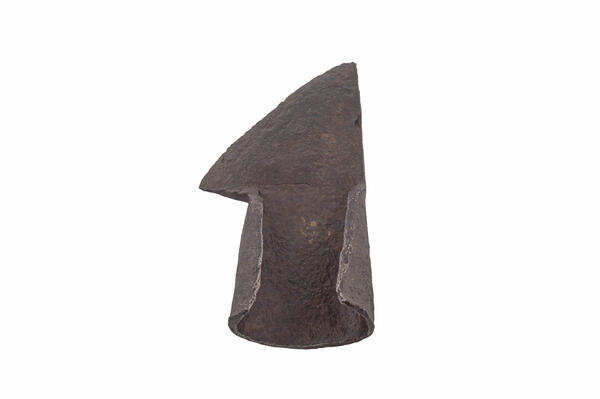
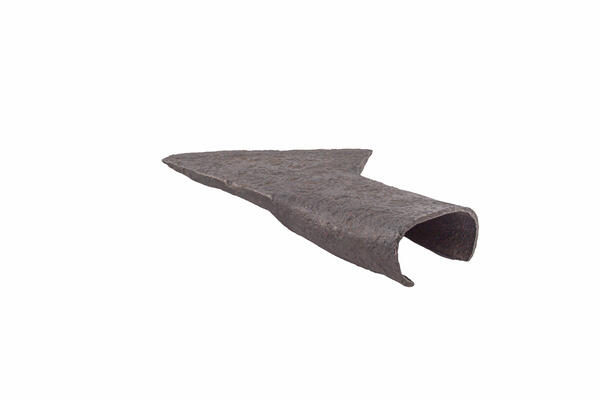
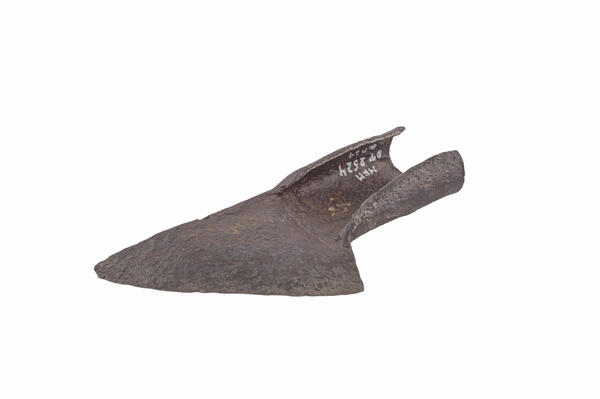
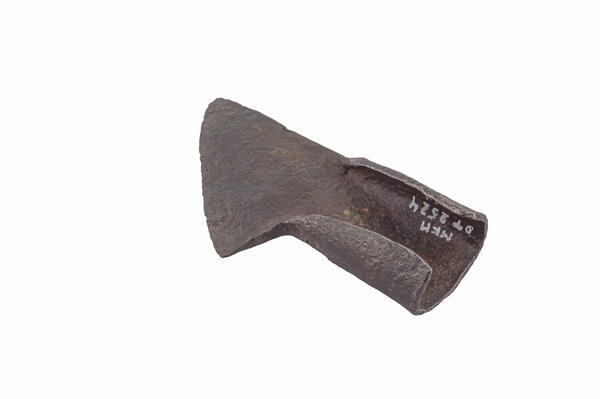
Plow tip
#3
Ministry of Culture of the Russian Federation
read morehide
00:00
00:00
1x
Plow tip
Creation period
the early 20th century
Place of сreation
Gornaya Shoria, the Russian Empire
Dimensions
31x14x6 cm
Technique
iron, forging
Collection
0
 Point your smartphone camera to open in the app
Open in app
Share