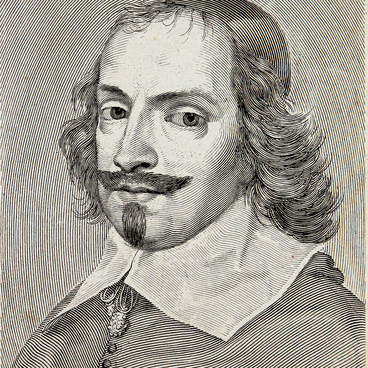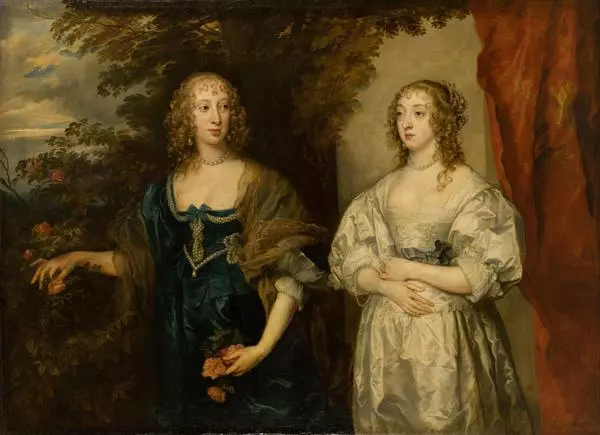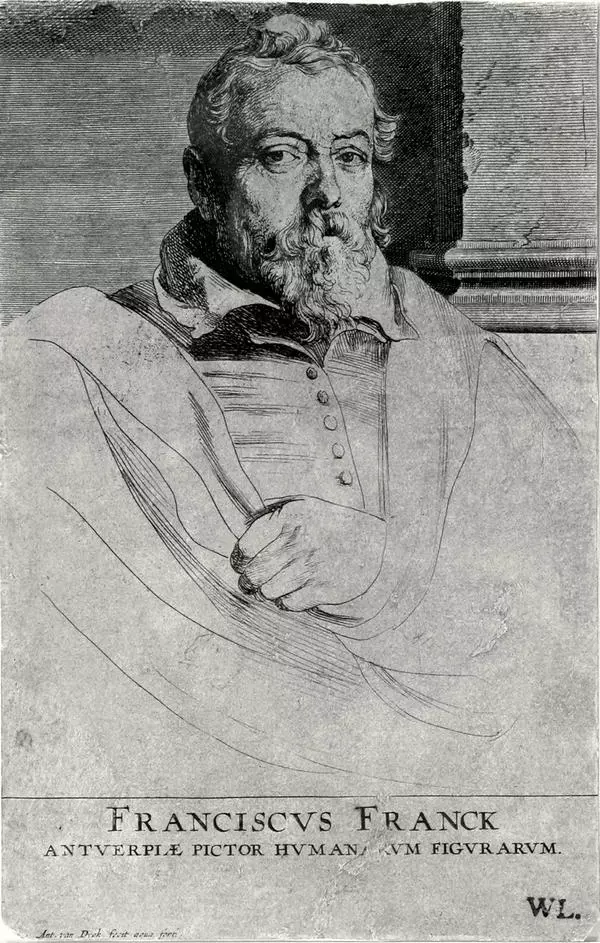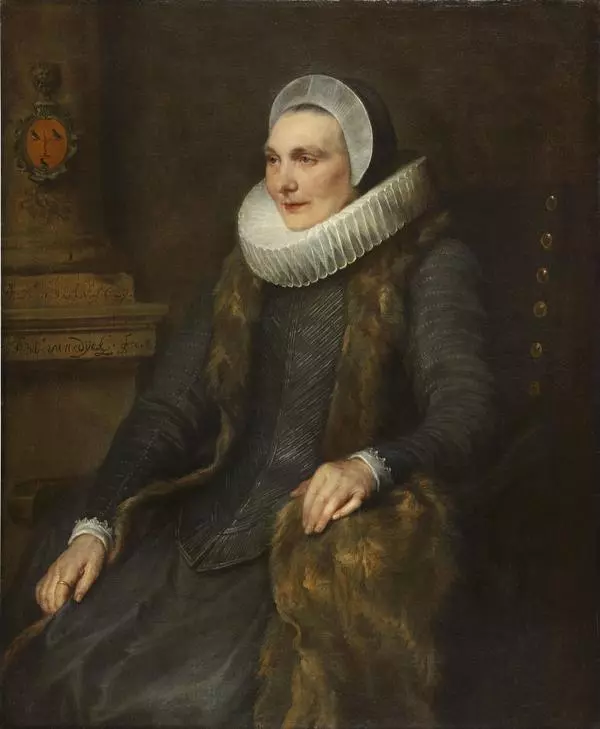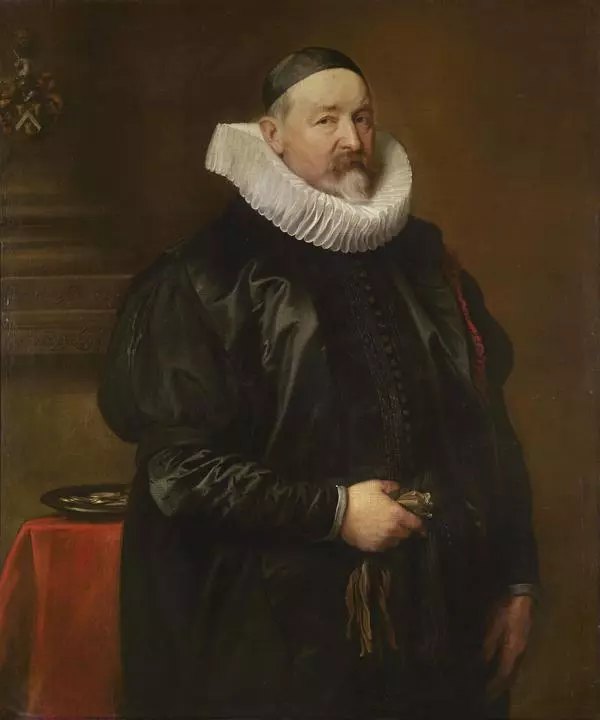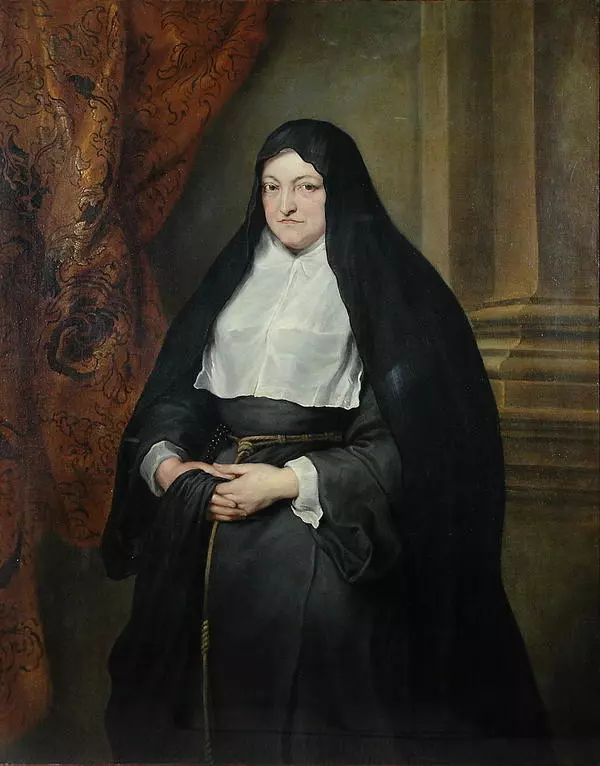


The etching work of Anthony Van Dyck is most closely associated with the portrait genre — specifically, his groundbreaking project known as the “Iconography”. Conceived as a visual pantheon of portrait etchings of illustrious contemporaries, the “Iconography” comprised approximately one hundred portraits in its first complete edition, published in Antwerp in 1645. Subsequent editions expanded the collection further. Though often associated with royalty and military leaders, the “Iconography” notably featured a broad spectrum of intellectuals and artistic figures — artists, scholars, and humanists — who, in fact, formed the very first group of portraits to open the publication.
Work on the “Iconography” primarily took place during Van Dyck’s stay in Antwerp between 1627 and 1632, though he continued to add portraits until around 1636. He typically created preparatory drawings — often from life — which were then turned into etchings by master engravers from the circle of Peter Paul Rubens, including Lucas Vorsterman, Paulus Pontius, and Schelte à Bolswert. Later editions of the “Iconography” also incorporated etchings made after Van Dyck’s painted portraits.
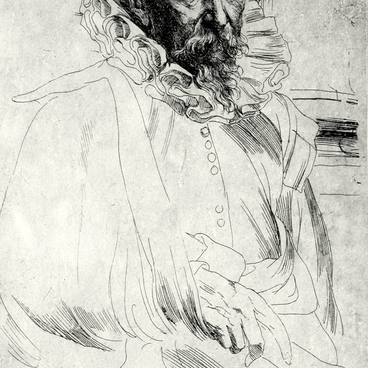
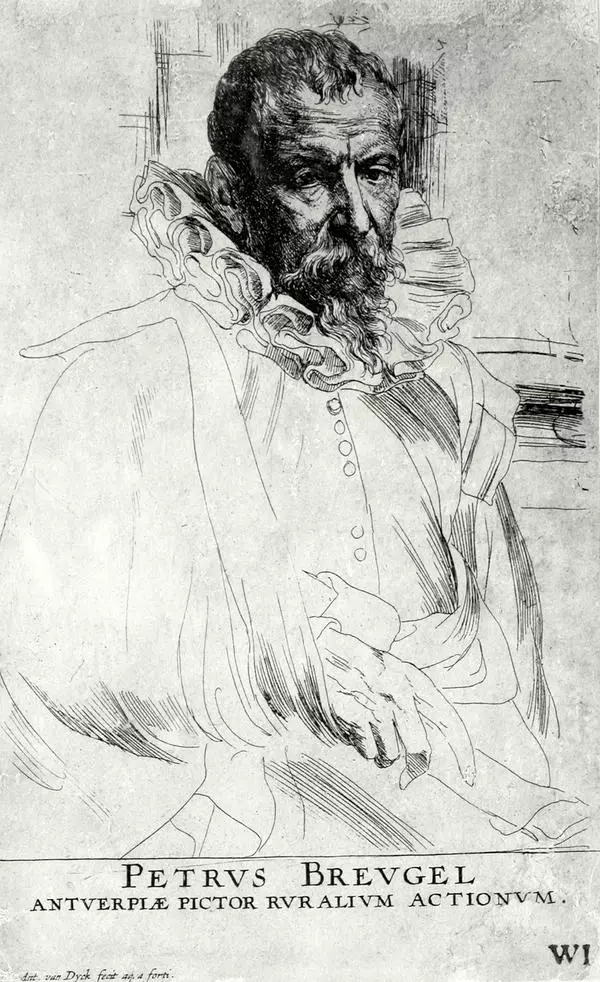
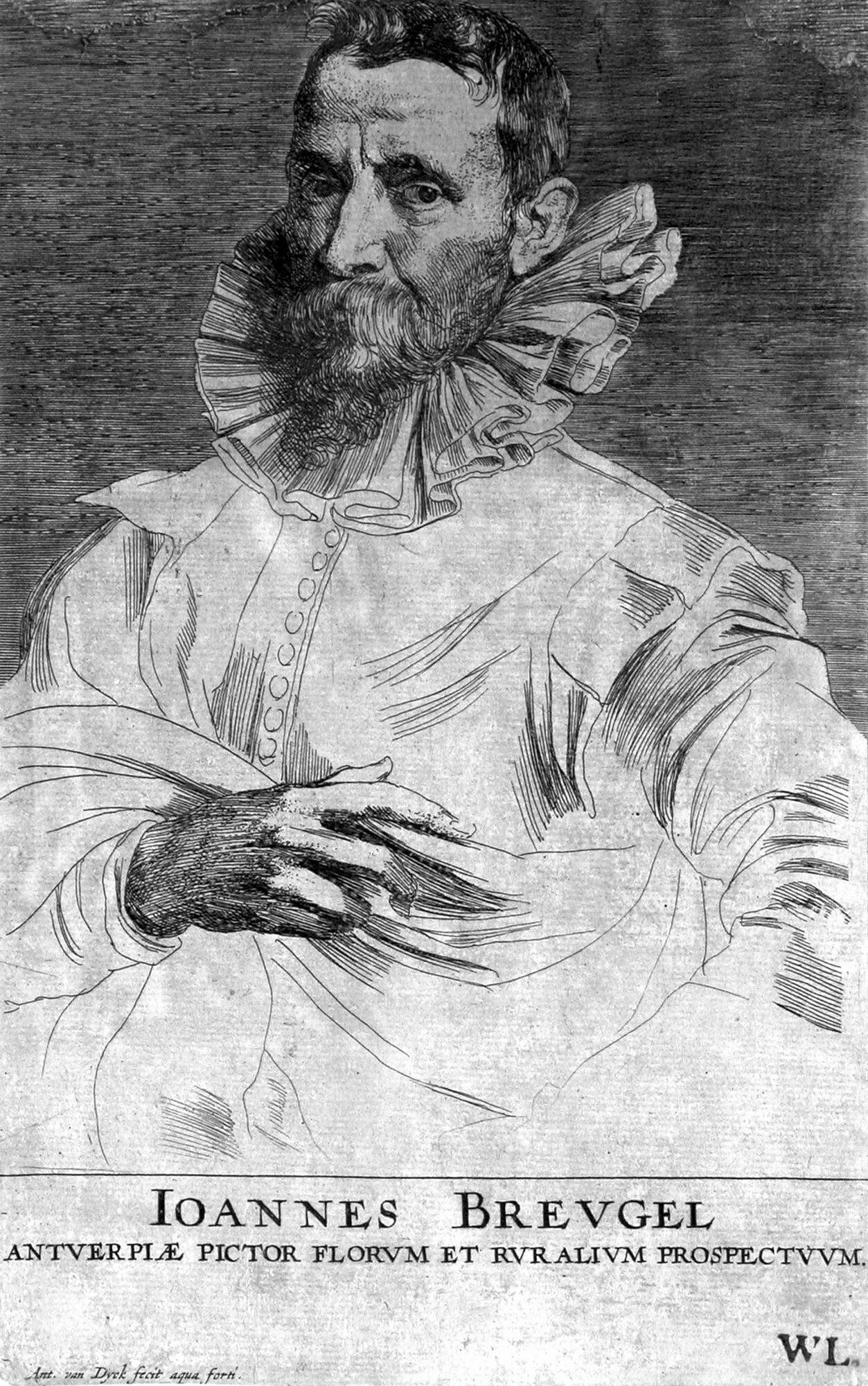
For fifteen portraits in the series, Van Dyck himself executed the initial etching sketches, which were subsequently finished by professional engravers. One such portrait is that of the artist Jan Brueghel the Elder. The version housed in the Irbit State Museum of Fine Art (along with two other etchings from its collection) presents the state in which Van Dyck left the plate — characterized by loosely suggested clothing contrasted with meticulously rendered facial features.
Jan Brueghel the Elder (1568–1625) was a Flemish painter and draftsman. His father was the renowned artist Pieter Bruegel the Elder. From 1596, Jan Brueghel lived in Antwerp, where he became court painter to the sovereigns of the Spanish Netherlands. He gained fame primarily as a landscape and still life painter, celebrated for his delicate brushwork, luminous color harmonies, and intricate detail — qualities that earned him the nickname “Velvet Brueghel.” His style fused Italian compositional ideals with the rich traditions of Northern European landscape painting.
His son, Jan Brueghel the Younger, trained in the workshop of Hendrick Van Balen — where he met the young Anthony Van Dyck. Van Dyck painted Jan Brueghel the Elder on multiple occasions. One such portrait, dated c. 1628–1632 and now housed in the Alte Pinakothek in Munich, served as the direct model for the etching in the “Iconography”. The identical pose and expression of Brueghel in both works confirm this connection.