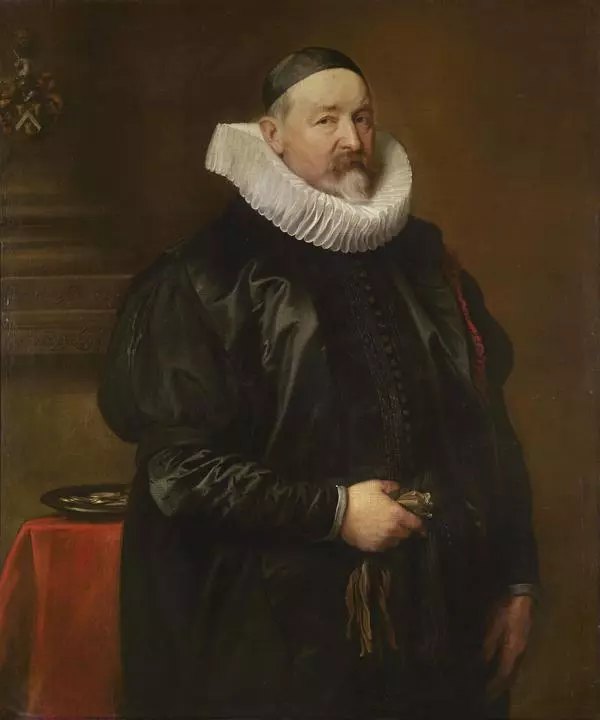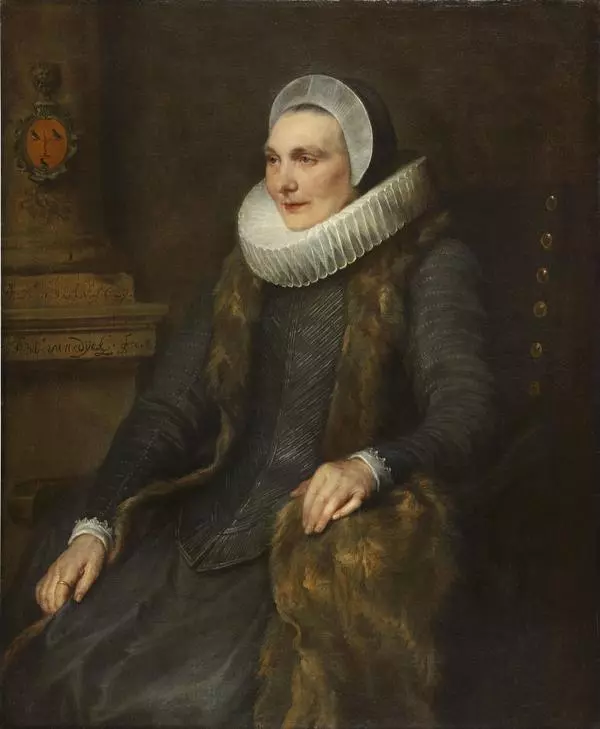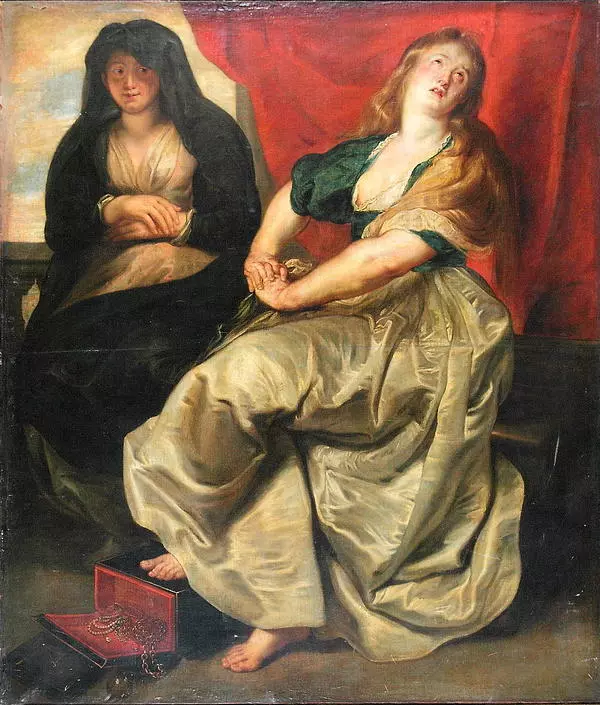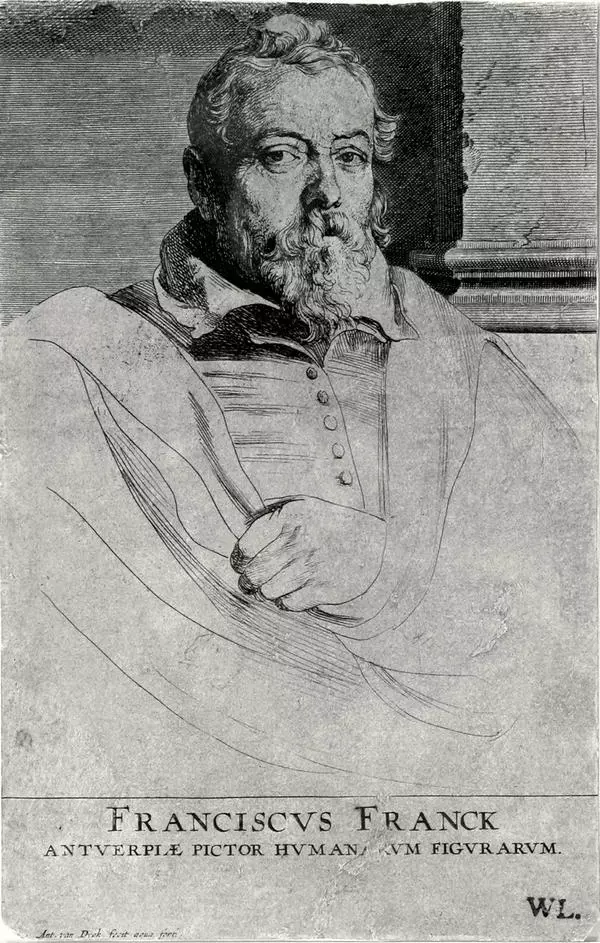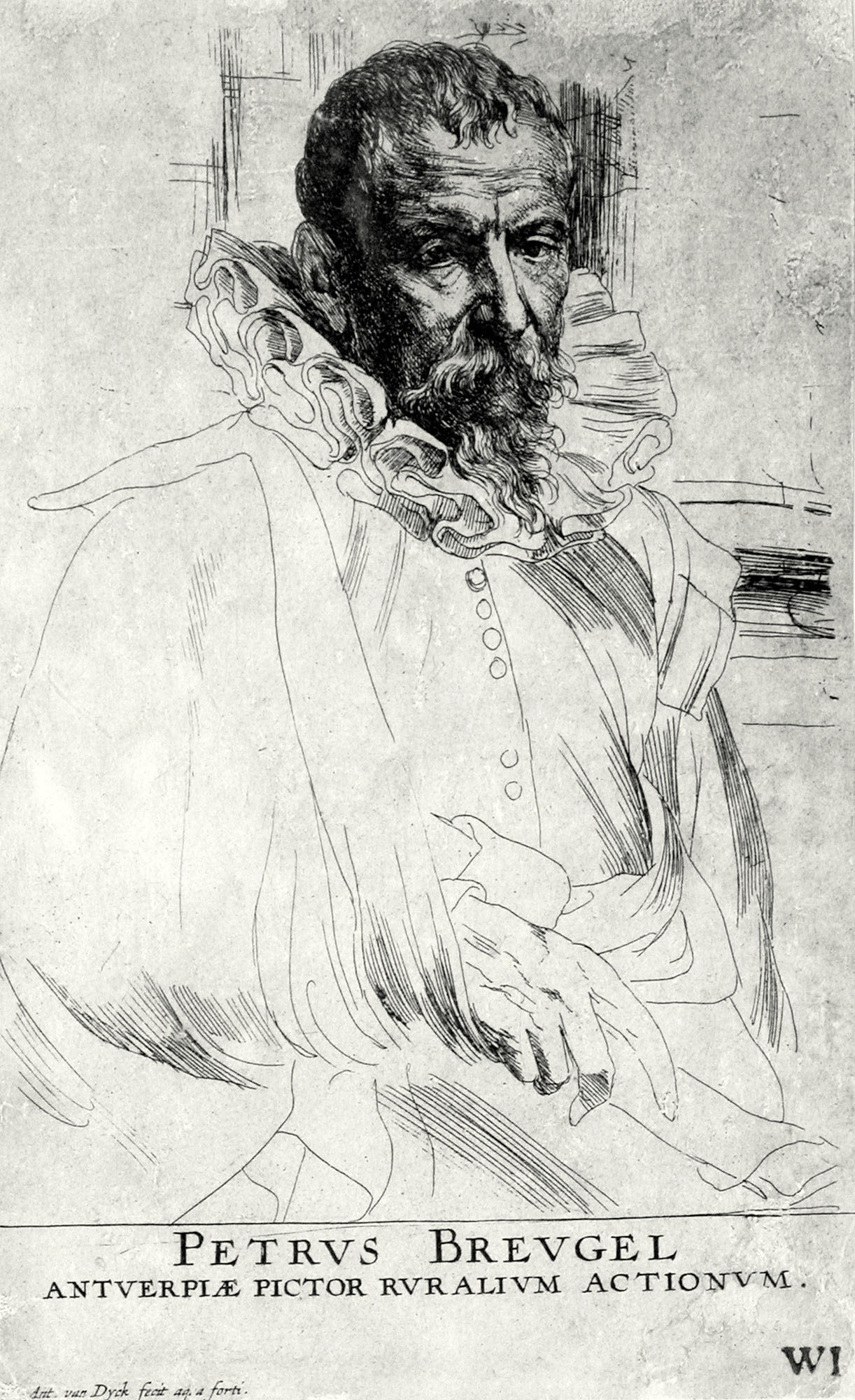


Anthony Van Dyck was an outstanding Flemish painter and engraver. He trained under Hendrick Van Balen in Antwerp and quickly emerged as an independent artist. His collaboration with Peter Paul Rubens proved decisive in shaping his early style.
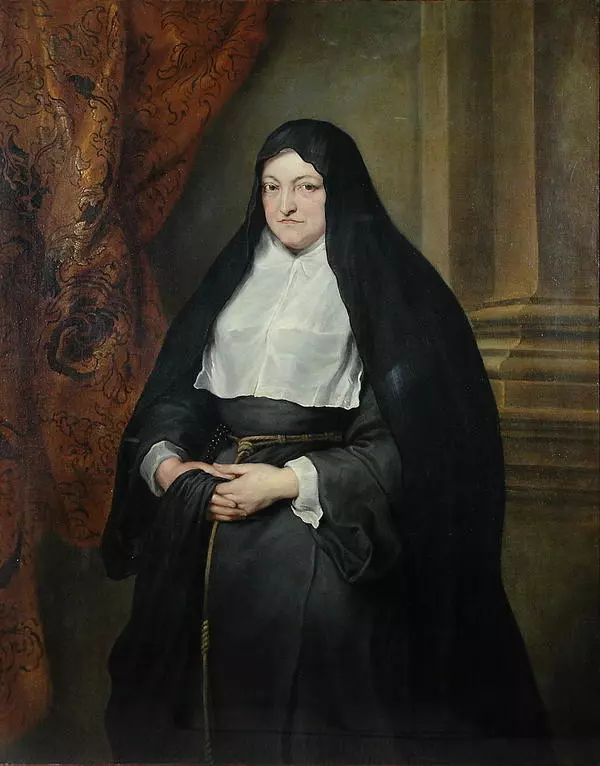
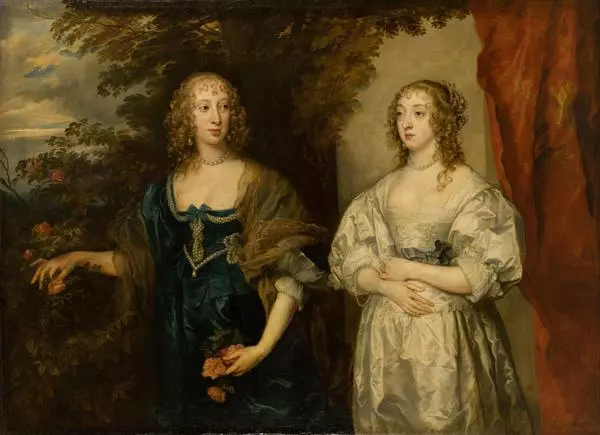
Between 1620 and 1621, Anthony Van Dyck made his first visit to England. From 1621 to 1627, he traveled extensively in Italy, working primarily in Rome, Genoa, Venice, and Palermo. In late 1627, the artist returned to Antwerp, where he served as court painter to Infanta Isabella Clara Eugenia, the Habsburg regent of the Spanish Netherlands. In 1632, he settled in London, where he became the principal court painter to King Charles I of England. Knighted and granted a coat of arms, he was officially titled Sir Anthony Van Dyck. Van Dyck painted religious and mythological subjects and was a master of etching.
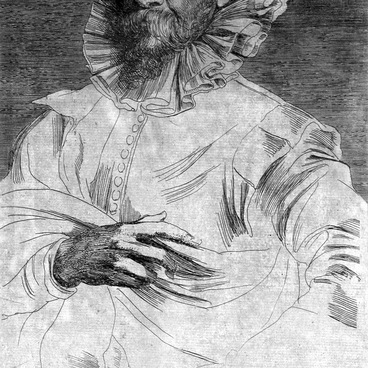
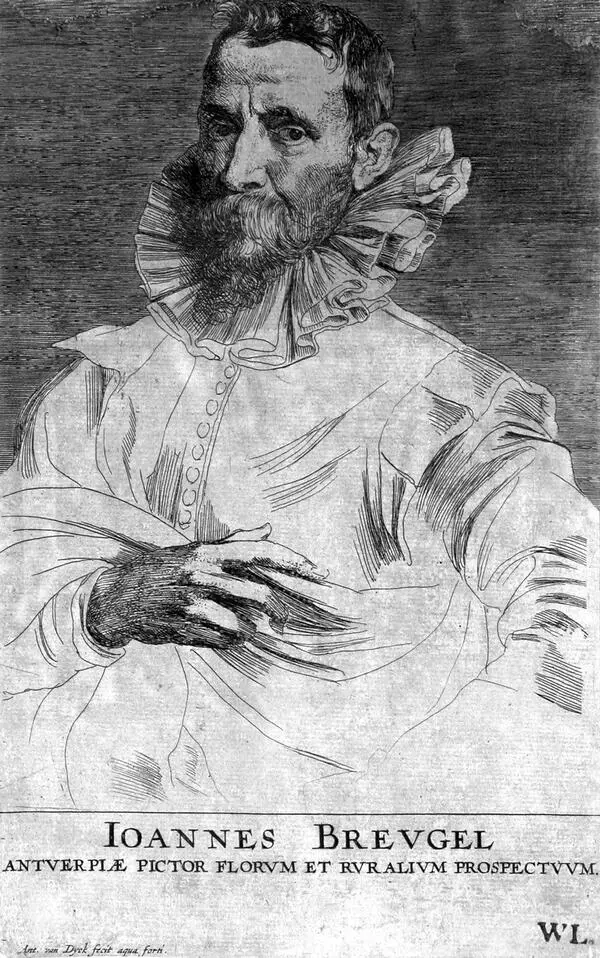
His most significant graphic project was the “Iconography” — a monumental series of engraved portraits of prominent contemporaries. Conceived as a visual pantheon of intellectual and political leaders of the age, the “Iconography” included approximately 100 portraits in its first complete edition (Antwerp, 1645), with later editions expanding the collection.
The series featured monarchs and military leaders — but notably opened with artists, scientists, and humanists. The majority of the etchings were executed during Van Dyck’s Antwerp period (1627–1632), though additions were made until at least 1636.
One of the figures included in the “Iconography” was Pieter Brueghel the Younger (1564–1638), nicknamed “Hellish Brueghel”, to distinguish him from his father, the great Pieter Bruegel the Elder. It is not surprising that Pieter the Younger reproduced and adapted his father’s most popular compositions. While many of his works are variations of his father’s originals, they are characterized by a sharper technique, more contrasting colors, and heightened dramatic intensity. His vivid genre scenes and depictions of village life are considered his finest works and clearly reflect the influence of Flemish realism.