

Hendrik Hondius I was a Flemish engraver, cartographer, and publisher who spent most of his career in the Dutch Republic. Born in Duffel, he was the son of a philologist. After his father’s death, the family moved to Antwerp, where his stepfather arranged for him to apprentice with the goldsmith Godfried van Ghelder. He later studied engraving, mathematics, and architecture.
In 1597, after traveling through Europe, Hondius settled in The Hague, joined the local Guild of Saint Luke, and married the daughter of a prominent local jeweler. In 1599, he received a ten-year publishing privilege from the States of Holland — one of the earliest such privileges granted in the Dutch Republic. This privilege protected his publications from unauthorized reprinting.
By the 1630s, Hondius shifted his focus from hands-on engraving to publishing, specializing in maps, military treatises (particularly on fortification), and official portraits. Roughly one-third of his output consisted of reissues from original plates by earlier masters. In the 1640s, he returned to printmaking, increasingly favoring etching over engraving, and continued working in this medium until the end of his life.
One of Hondius’s most significant publications was Pictorum aliquot celebrium praecipue Germaniae inferioris Effigies (“Effigies of Some Celebrated Painters, Chiefly of Lower Germany”), published in 1610. This ambitious collection included 69 engraved portraits of artists, primarily from the Netherlands and neighboring regions. Of these, 22 were reworkings of plates originally created for a similar project, a 1572 Antwerp publication by Dominicus Lampsonius, published by Hieronymus Cock.
In his 1610 edition, Hondius not only updated Lampsonius’s canon but significantly expanded it. He added portraits of German and English artists — broadening the scope beyond the “Low Countries” to present Netherlandish art as part of a pan-European tradition. Notably, he omitted the portrait of Hieronymus Cock, which had closed the 1572 edition. Hondius also added Latin verses next to each portrait. They were composed by contemporary humanists, offering poetic commentary on the artist’s character and achievements.
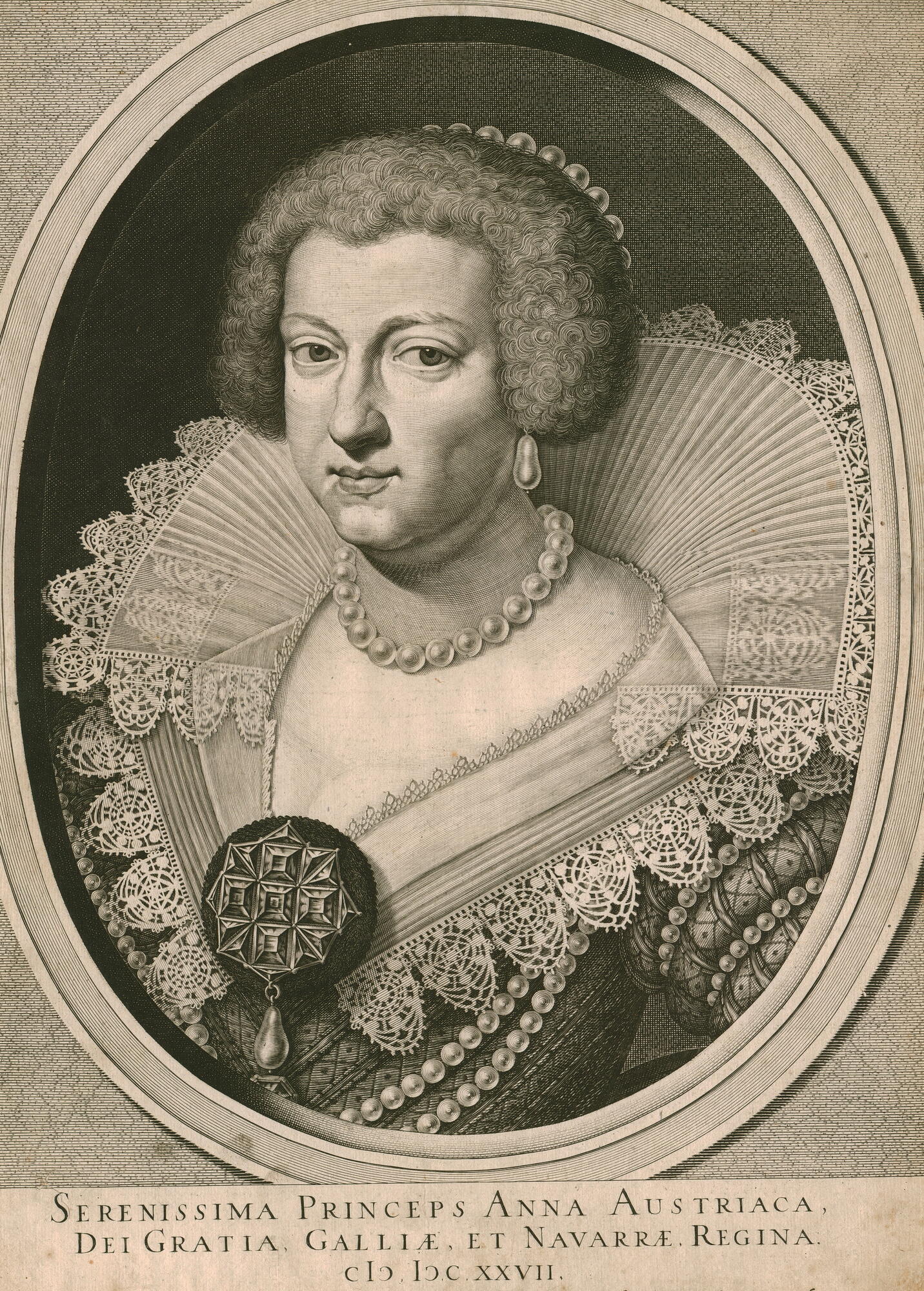
The work by Hendrik Hondius I from the collection of the Irbit State Museum of Fine Art depicts Anne of Austria, Queen of France and Navarre, the wife of Louis XIII and mother of Louis XIV. Anne became a celebrated figure in art and literature — often portrayed as a tragic, dignified, and politically astute queen. Her life combined personal drama, political intrigue and romantic legends. Artists and writers see her as an ideal heroine — beautiful, domineering, but vulnerable, which makes her image culturally relevant to this day.