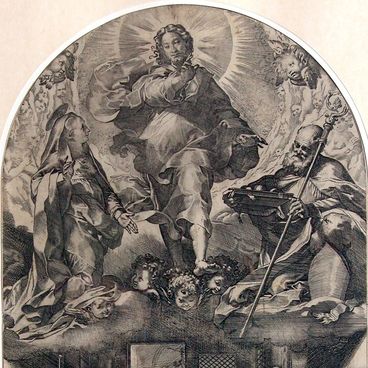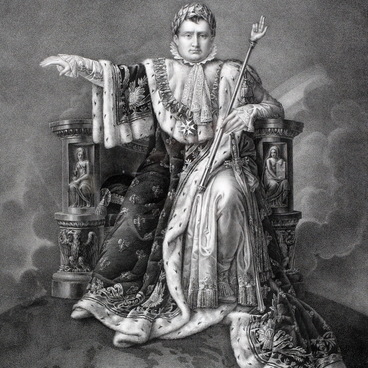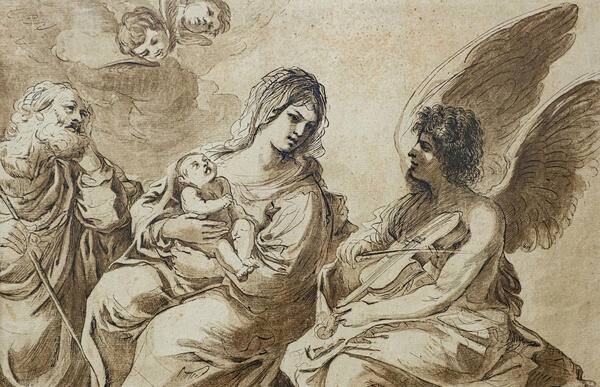


Francesco Bartolozzi (1727–1815) was an outstanding Italian engraver whose work became synonymous with grace, elegance, and technical precision. The son of a Florentine goldsmith, he inherited from his father a refined sensitivity to form and detail. Yet his talent extended far beyond the jeweler’s bench. He began his artistic training under the Florentine painters Giovanni Domenico Ferretti and Ignazio Hugford — but it was in engraving that he found his true vocation.
After moving to Venice, Bartolozzi refined his technique under the guidance of Joseph Wagner, quickly gaining acclaim for the extraordinary sophistication of his work. Following a brief stay in Rome — where he produced a celebrated series of engravings dedicated to Saint Nilus — Bartolozzi relocated to London in 1764, which would remain his home for the next four decades.
In England, he reached the pinnacle of his career, particularly through his mastery of the stipple engraving technique. He became renowned for reproducing the graceful compositions of Giovanni Battista Cipriani and Angelica Kauffman. His engravings for the famous Boydell Shakespeare Gallery — admired for their filigree-like detail — captivated 18th-century audiences. In 1769, he was elected a member of the Royal Academy, and later he was appointed Engraver to the King.
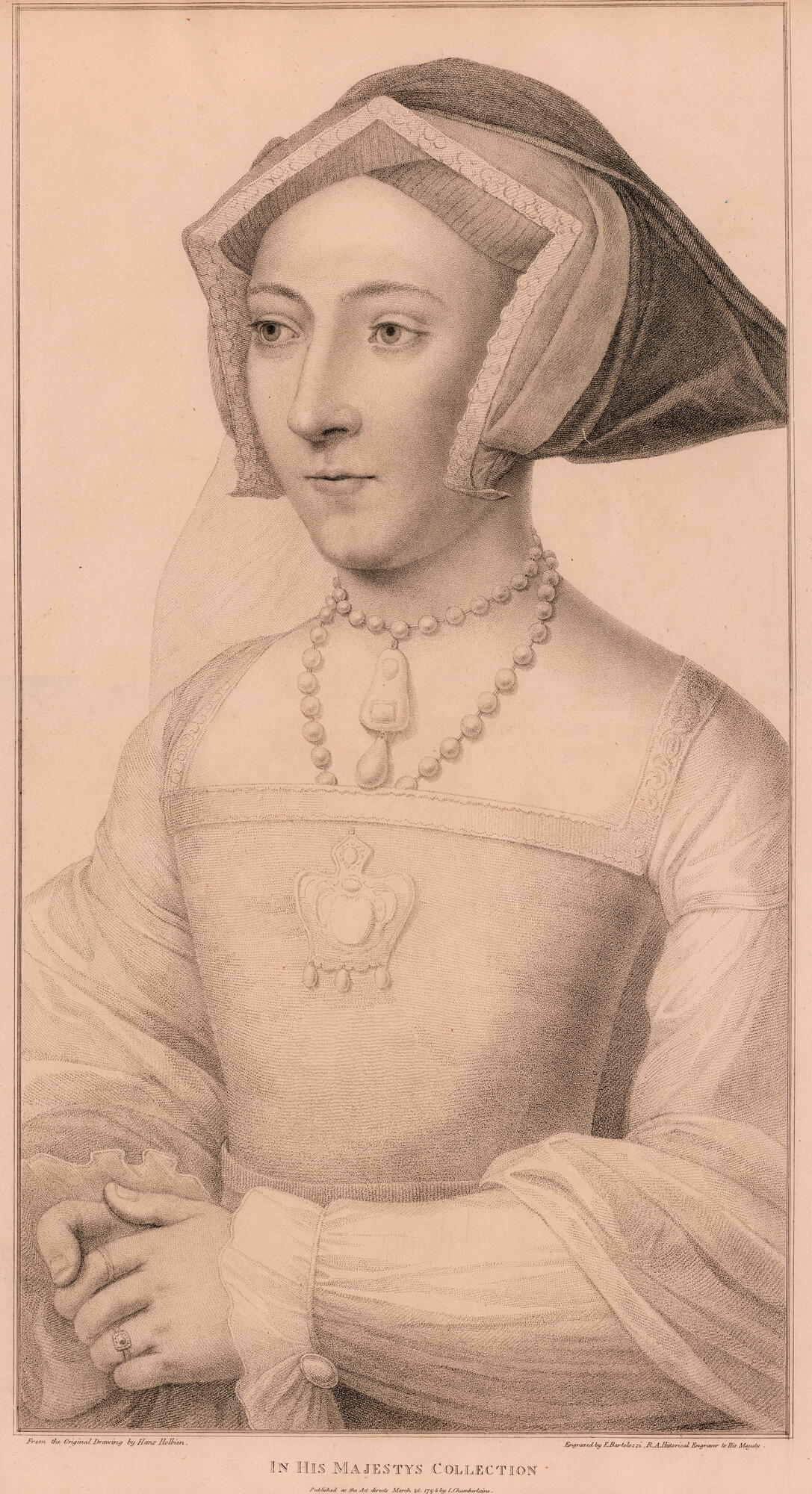
Bartolozzi also produced a celebrated series of engravings based on drawings by Hans Holbein the Younger — the great German artist who worked in England in the mid-16th century at the court of King Henry VIII. Holbein’s portrait drawings — depicting courtiers, diplomats, and members of the royal family — form one of the most vivid visual records of Tudor England. His works are, in essence, the “face of an era”, captured by the hand of the Northern Renaissance’s most perceptive portraitist.
Holbein portrayed three of Henry VIII’s wives: Jane Seymour, Anne of Cleves, and Catherine Howard. He was even dispatched to continental Europe to paint potential brides for the king. Bartolozzi, with his mastery of stipple engraving, breathed new life into Holbein’s 16th-century images. His prints functioned as a kind of visual time machine, allowing 18th-century viewers to encounter Holbein’s genius through the refined lens of Enlightenment print culture. “Portrait of Jane Seymour” from the collection of the Irbit State Museum of Fine Arts belongs to Bartolozzi’s landmark series: “Imitations of Original Drawings by Hans Holbein the Younger, Engraved by F. Bartolozzi”.