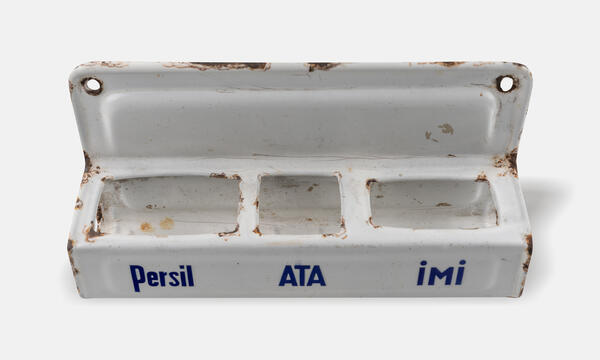
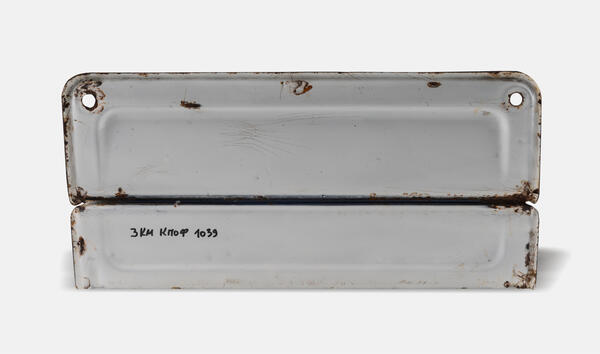
An enamel wall shelf for three brands of detergent — Persil, ATA, and IMI — could be found in almost every German kitchen in the 1930s. The iron shelf is painted with white enamel and features blue-colored names of the detergents that are still sold today. There is a separate compartment for a package of each detergent brand. All these products were manufactured by Henkel. The history of the German company, founded in 1876, began with Friedrich Karl Henkel — an entrepreneur who was equally interested in commerce and science.
In 1878, Henkel presented its new universal detergent that contained soda. Unlike similar products that were sold loose, this highly effective detergent was conveniently offered in prepackaged bags.
In 1907, the company’s chemists revolutionized the entire process of washing the laundry. They developed a powder that combined two components — sodium perborate and sodium silicate. The abbreviations of their names compose the product name. The powder produced a textile-friendly and odorless bleach, helping to eliminate the unpleasant smell of chlorine and the lengthy sunshine-dependent bleaching process. Persil put an end to laundry scrubbing by hand, a job that was not only exhausting but also damaged the textiles. Thanks to the new powder, a housewife merely had to soak the laundry and boil it once to make it white and fresh-smelling. Persil also had a disinfecting effect. With all these benefits, the new product won over consumers fast. The powder was sold in thin cardboard boxes that were filled by hand.
On June 1, 1920, Henkel began selling ATA, which was used for removing grease. In 1924, ATA was packaged in multilayer cardboard boxes, which was quite an innovative idea.
Another five years later, in 1929, Henkel launched a new detergent known as IMI: 32 million packs were sold in the first year alone. By the late 1930s, this versatile detergent for dishes, cutlery, pans, and pots was also being used for soaking heavily soiled work clothes.
Most likely, Henkel produced a
wall shelf like this for its cleaning and detergent products, which were always
in high demand.