Over 8,000 years ago, people learned to use stones to grind the seeds of various plants, nowadays classified as grains, into flour. A little later, they started using stone mortars to grind and pound grains. Gradually, they realized that grinding grains was easier than just pounding them.
Before the advent of mills, people used the stone tools known as a metate and a mano to process grain. With the invention of the millstone, metates became a thing of the past, but mortars and pestles are still used today. It is believed that this method of processing helps preserve the original flavor of ingredients, unlike electric kitchen appliances designed for grinding. For effective grinding, the inside of the mortar and the working surface of the pestle must be rough.
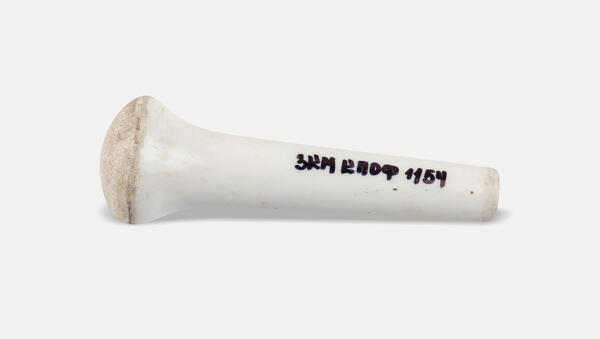
Mortars and pestles have been made from a variety of materials. Those made of copper withstood strong blows, allowing the user to crush any ingredient into dust and produce fine powder. Porcelain pestles were used to finely grind solids and achieve a thorough mixing of several ingredients. They are better suited for pounding and not grinding. Cast iron mortars are better for grinding dry spices and soft ingredients. The most wear-resistant mortars are the ones made of bronze and brass.
The mortar and pestle are some of the essential tools of a pharmacist. They have been used for centuries in the preparation of medicines. The harder the ingredients, the more durable the material of this laboratory equipment must be. Failure to comply with this requirement may result in small bits of the mortar and pestle mixing with the chemical, which can lead to significant errors in laboratory research, as the substance’s composition will not be perfectly correct.
During the period of mechanization in the early 20th century, the pestle and mortar were also used in pharmacies, of which there
were at least two in Cranz. Among the museum’s newer exhibits are medical
pestles. Their use in medicine is confirmed by the fact that both pestles are
numbered “1” and “4”. The items were donated to the Zelenogradsk Museum of
Local Lore by its long-time friend, the local historian Alexander Gorbovskikh.