The cultural deposit of the Idnakar hillfort is full of various objects that demonstrate the high skill of the Udmurts in processing non-ferrous metals: rings, earrings, bracelets, pendants, ear picks, chains, clasps and buckles of various shapes and sizes. In addition to being pleasing to the eye, metal jewelry acted as a talisman for its owner: people believed that metal ringing deterred evil spirits.
During the archaeological expedition of the Udmurt Institute of History, Language and Literature in 1976, a treasure of temple pendants was found on the territory of the medieval hillfort of Idnakar. They are oval-shaped metal jewelry with a flattened lower section and a wire hook. The hoard consisted of eight pieces, tied with white metal wire and wrapped in birch bark — all of them were never used.
Earrings and temple rings are among the main pieces of jewelry that the population of the Kama region had. Some small temple pendants can be mistaken for earrings, but most of them were worn as part of a woman’s headdress, not in the earlobe. This has been confirmed by the finds made in funerary monuments of Chepetsk.
Oval-shaped temple jewelry became widespread in the Middle Ages. These are pieces with a triangular side and flat crescent-shaped pendants in the lower section. In the Perm region of the Cis-Urals, this type of temple jewelry appeared in the 9th–10th centuries and soon became popular in other territories, such as the Udmurt and Northern regions of the Cis-Urals, the Vetluga-Vyatka interfluve, Transuralia, Rus, Scandinavia, the Southern Urals and Volga Bulgaria.
The technology of wire-forged jewelry reached its heyday in the 12th century. The archaeological layers of that time reveal many complex and intricate oval-shaped pendants, complemented by elegant décor with filigree and granulation.
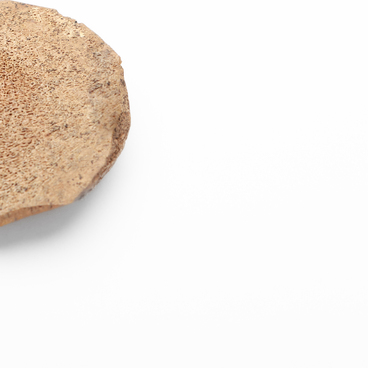
Udmurt jewelers made pendants using forging and drawing techniques. To thin the wire, they used bone drawing dies — plates with holes of different diameters. A pre-made copper rod was pulled through the holes, from larger to smaller, and gradually became thinner and longer.