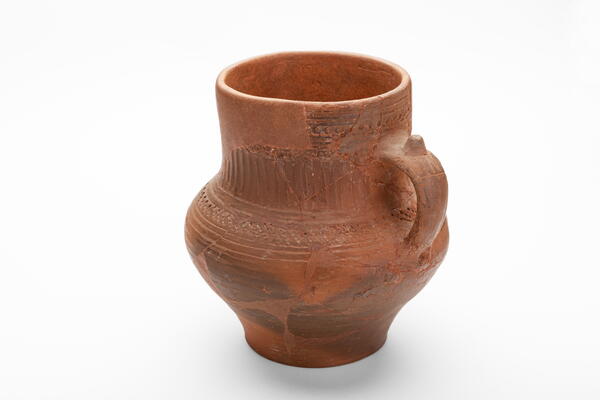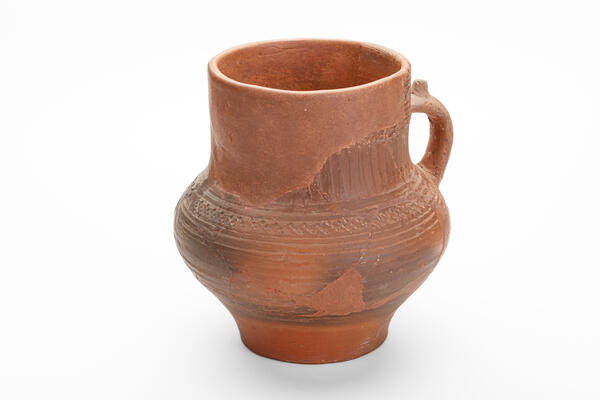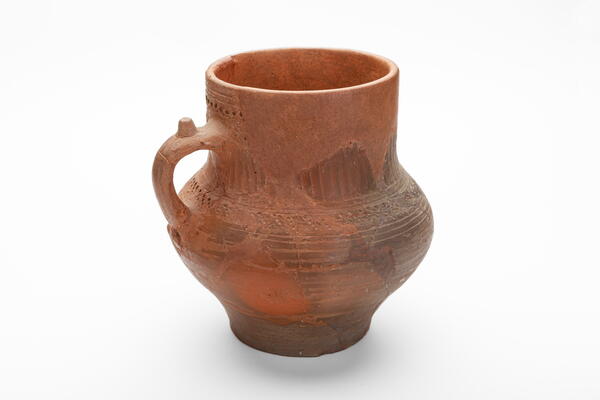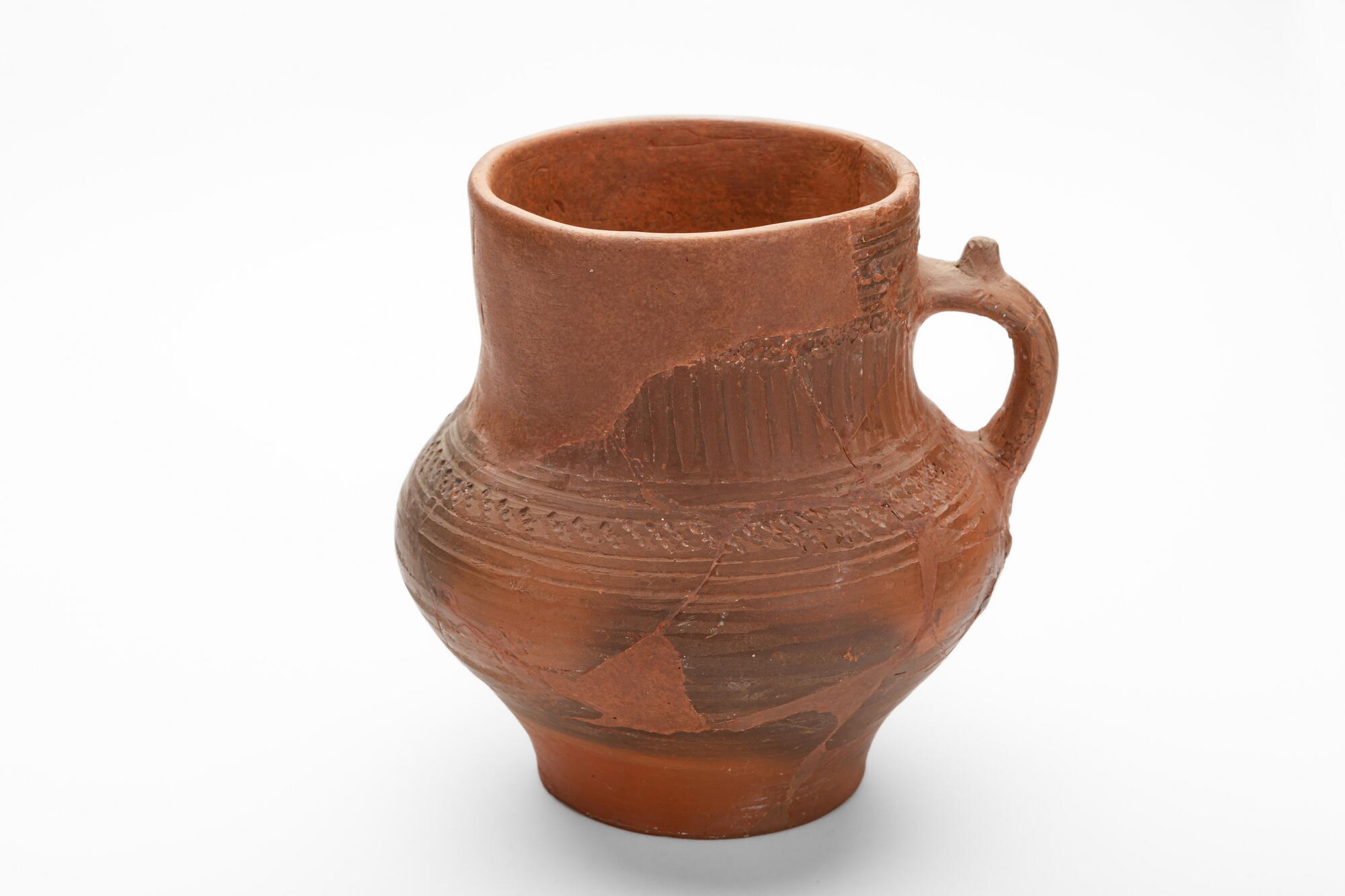


This ceramic vessel was made in the hand molding technique and decorated with impressions of a cord and a comb stamp. It was found during an archaeological expedition to the Idnakar hillfort in Soldyr in 1977.
The Polom-Chepetsk sites have preserved fragments of old molded vessels with characteristic decorative patterns, which were traditional in the Prikamye region. These products are attributed to Polom ceramics since their characteristic features were common for the Polom archaeological culture of the 5th–9th centuries.
The ceramic dough was wedged for a long time with feet and hands, and then modeling began. Udmurt craftsmen often sculpted vessels using coils of clay with their width ranging between 3 and 10 centimeters. First, a flat clay base was made, then coils were flattened and stacked together around the perimeter. When the desired shape was achieved, the coils were joined by carefully applying pressure with fingers, a piece of leather or a wooden paddle.
The finished clay vessel was sometimes polished or glazed. This happened in two steps — one a few hours after production and another after complete drying. Vessels were polished with special tools, pebbles, leather or fur.
The top section of the vessel — the rim, shoulders, and neck — was usually decorated. Patterns were applied to the vessel while the dough was still malleable; after that, the walls were smoothed with a piece of talcum but very carefully in order to preserve the pattern. Chepetsk craftsmen drew patterns or made impressions by stamping. Usually, a comb stamp was used, which left impressions of teeth on the clay.
The necks of vessels were decorated by wrapping the vessel with rope or pressing cord-wrapped sticks against it, leaving a cord-marked pattern. The vessel from the museum’s collection was decorated like this. Chepetsk vessels also featured geometric stamps made by pressing sticks, bones and animal teeth. Later, patterns included decorative impressions made with fingernails.
The finished ceramic product was left in the shade to dry for two to three weeks and then fired, hence the changing color of the ceramics — from gray-brown to red-black. To prevent the vessels from cracking, they were heated and cooled gradually.
Chepetsk clay vessels vary in size — from five centimeters to half a meter in height. Over time, the design of Polom ceramics changed: funeral monuments of the 11th–13th centuries no longer had patterned earthenware.