

Horses were the first type of livestock in the northern Shor economy. They were used mainly for riding and pulling wheeled vehicles. Wealthy traders who were interested in delivering goods were the first to appreciate the advantages of this means of transportation. As for the southern Shoria, horses were brought there later.
The Soviet ethnographer Leonid Pavlovich Potapov noted that horses were mainly used in the autumn, when it was necessary to transport hunting supplies to the temporary houses in the taiga or deliver bags of pine nuts back to the village. The elements of the Shor harness were neither particularly beautiful nor reliable.
However, breeders took horseshoes seriously. According to Tatyana Viktorovna Mayorova, at the beginning of the 20th century, in Kuznetsk alone there were “13 private forges, where [among other things] they forged horseshoes and horseshoe nails.” The Shor word for a horseshoe is “takka”; the past participle is “takkalyg”; the verb is “takkala”.
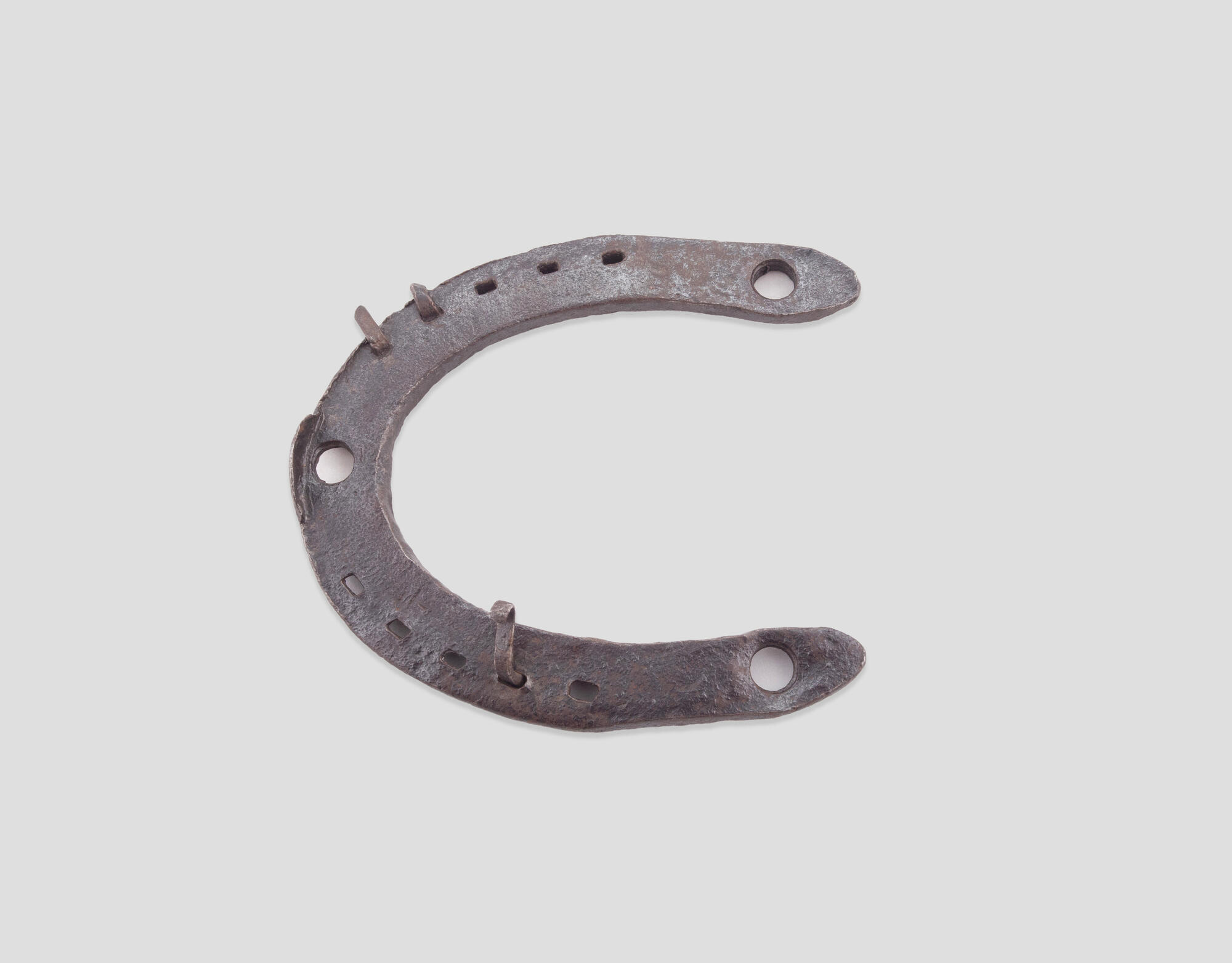
A horseshoe that protects a horse’s hooves is a flat piece of mild steel, processed and bent to fit the shape of the “sole” of the hoof.
The hooves of wild horses become hard enough since the animals are very active and able to choose the road and avoid obstacles such as sharp stones. Domestic horses have limited physical activity, and they must tread on a variety of surfaces, often while carrying a load.
All these conditions lead to rapid wear of the hoof, as well as cracks, and penetration of dirt and pathogens. As a result, the horse begins to experience pain when walking and it starts to lame until it refuses to move at all. Horseshoes can prevent such injuries and help the horse tread easily even on hard roads.
To attach horseshoes to the hooves, horseshoe nails are used. Such a nail consists of a neck, a head, a pin (or blade) and a point with a bevel, so that the nail would come out of the horseshoe at the intended height. The surface of the nail is smooth, without roughness or irregularities.
The horseshoe has the outer and inner part, the upper (adjacent to the hoof) and lower (facing the ground) surfaces, the outer and inner edges.
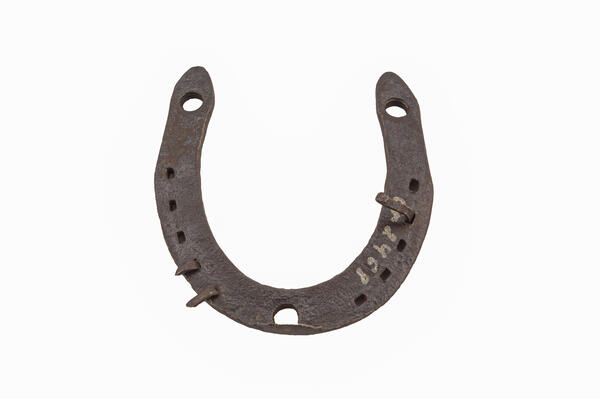
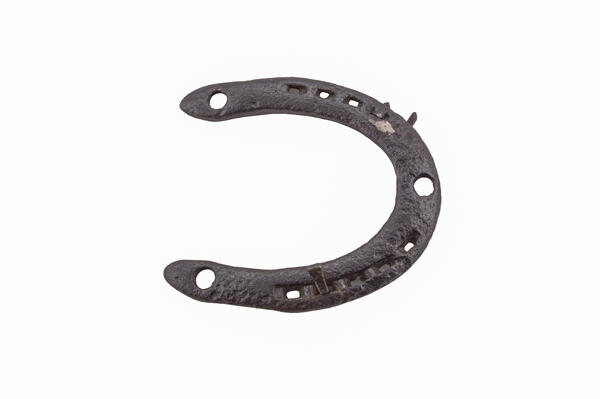
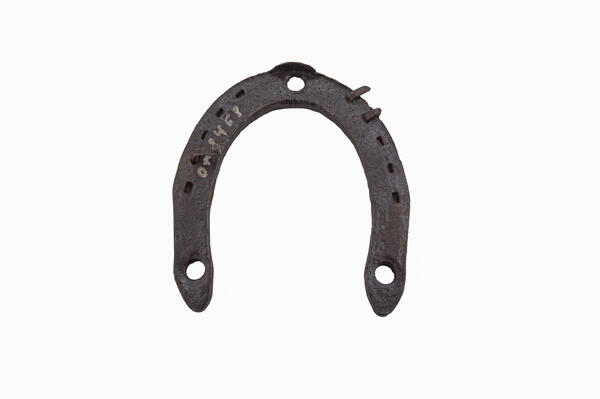
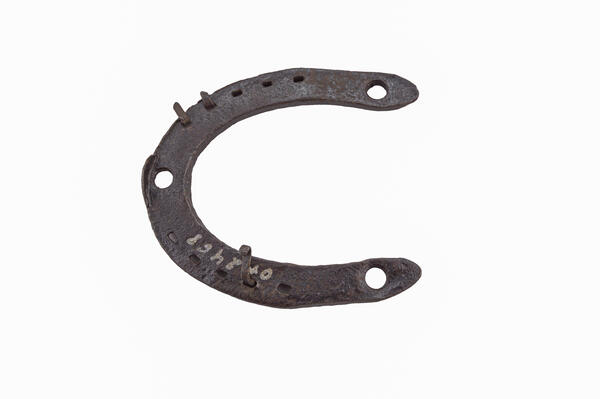
The museum exhibit features a thick winter metal
horseshoe with replaceable screw-in studs for the horse’s hind leg.