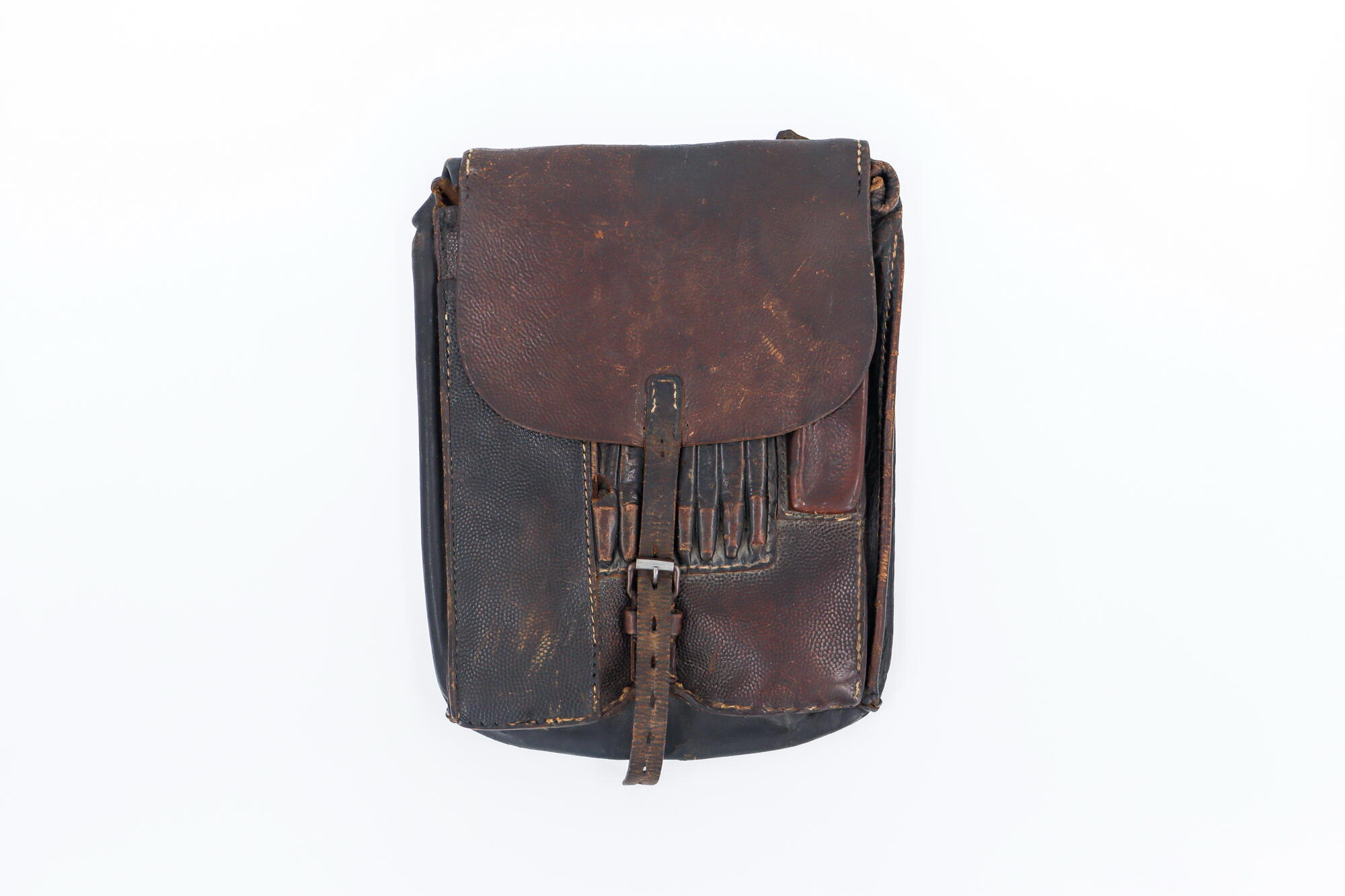


In Soviet times, at the front, a map case was the name for a special field bag for command personnel — sergeants, warrant officers, officers. According to one version, it came from a “tashka”, a leather bag of cavalry soldiers in the 17th–19th centuries, which was part of the equipment of the hussars.
In the Red Army, the map case became part of the equipment of the commanding staff in 1923. Before the Great Patriotic War, the production of field bags with a case made of a tarpaulin-like material (soaked thick cotton) was launched. Cow leather map cases were also common. The officers were instructed to use such items for storing maps, documents and reports.
At the same time, the map case made an officer an easy target for the enemy, since it was a conspicuous detail, and the Nazis were well versed in the Red Army equipment and tried to hit the commanders. Unranked soldiers had no map cases. They were forbidden to carry maps with them, and kept documents in the breast pockets of their uniform tunics.
The map case on display was donated to the museum by Ivan Afanasyevich Osintsev, a veteran of the Great Patriotic War.
He was born in the village of Maramzino, Beloyarsky district, Sverdlovsk region. A little over a year after the start of the war, he joined the Red Army, where he served until August 1946. He graduated from the Cherkasy Infantry School and completed advanced training courses for officers of the Airborne Forces.
Guard Lieutenant Osintsev occupied several positions throughout his military career: he was an instructor of the parachute service, where he made 50 jumps, a commander of a penal company and a commander of a platoon of anti-tank rifles. He fought at the 1st, 2nd, 3rd Ukrainian fronts, participated in the liberation of Hungary, Austria and Czechoslovakia. He was wounded twice and shell-shocked. Osintsev received the Order of the Red Banner and the Order of the Patriotic War, 1st and 2nd class, and numerous medals.
In the Red Army, the map case became part of the equipment of the commanding staff in 1923. Before the Great Patriotic War, the production of field bags with a case made of a tarpaulin-like material (soaked thick cotton) was launched. Cow leather map cases were also common. The officers were instructed to use such items for storing maps, documents and reports.
At the same time, the map case made an officer an easy target for the enemy, since it was a conspicuous detail, and the Nazis were well versed in the Red Army equipment and tried to hit the commanders. Unranked soldiers had no map cases. They were forbidden to carry maps with them, and kept documents in the breast pockets of their uniform tunics.
The map case on display was donated to the museum by Ivan Afanasyevich Osintsev, a veteran of the Great Patriotic War.
He was born in the village of Maramzino, Beloyarsky district, Sverdlovsk region. A little over a year after the start of the war, he joined the Red Army, where he served until August 1946. He graduated from the Cherkasy Infantry School and completed advanced training courses for officers of the Airborne Forces.
Guard Lieutenant Osintsev occupied several positions throughout his military career: he was an instructor of the parachute service, where he made 50 jumps, a commander of a penal company and a commander of a platoon of anti-tank rifles. He fought at the 1st, 2nd, 3rd Ukrainian fronts, participated in the liberation of Hungary, Austria and Czechoslovakia. He was wounded twice and shell-shocked. Osintsev received the Order of the Red Banner and the Order of the Patriotic War, 1st and 2nd class, and numerous medals.