

During the war, letters were of great importance. They were the only connection between close people and the source of information about relatives and friends. They shared news of life and death, fortified courage, strengthened belief in victory, and gave hope. It is impossible to overestimate how important front-line letters were for both soldiers and their families.
At the same time, a great portion of letters mailed by the Great Patriotic War soldiers mostly described their everyday life in detail: the soldiers wrote about the arrangement of living quarters, the daily routine, the food rations, the allowances, the condition of their shoes, the leisure activities, and the simple amusements they took part in.
Another popular topic the soldiers touched upon in the letters was the characteristics of comrades and commanders, as well as the relationship between them. Often the front-line soldiers reminisced about their homeland, relatives and friends, the pre-war life. Many shared their hopes and dreams for a peaceful future and the end of the war. They also described the weather conditions, the place where they had to fight, and the hostilities.
In wartime, messages were written on plain paper, special front-line stationery, or postcards. The cards were specially printed and served as additional propaganda and ideological message: they featured appeals and slogans that raised morale, images and quotes of Stalin, patriotic drawings, caricatures of the enemy, and so on.
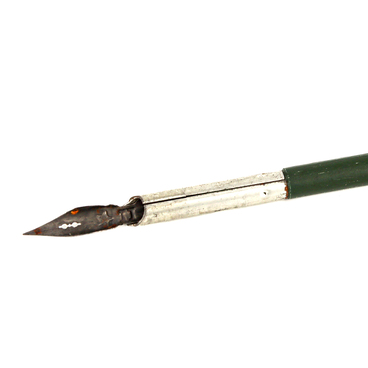
The soldiers wrote using an ordinary or indelible pencil: the latter, when used wet, produced a bright purple writing, much like ink, and could not be erased. There was also a double-ended “commander’s pencil” — red on one end and blue on the other. Fountain pens were used by staff officers, as well as other soldiers while in the hospital or the rear.
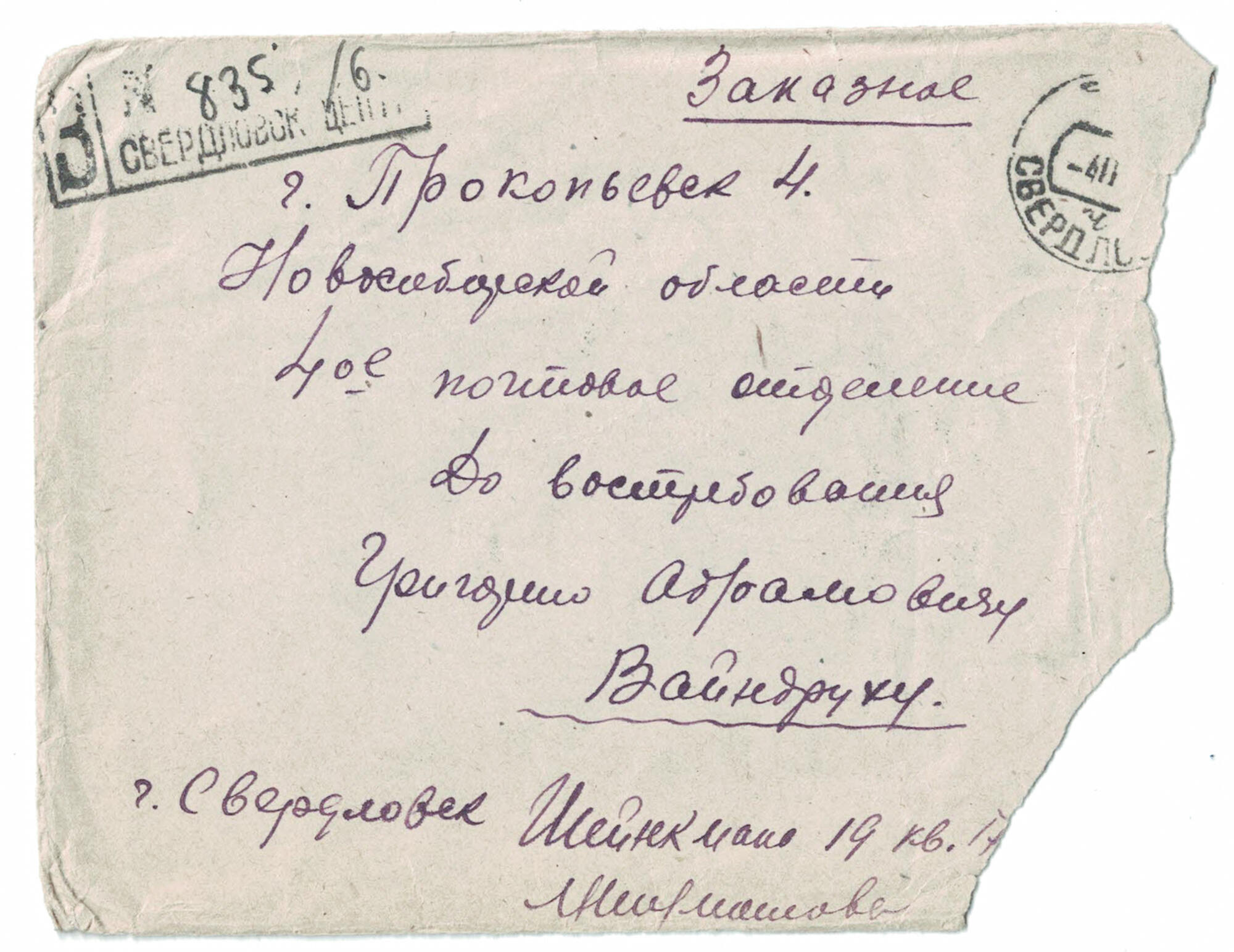
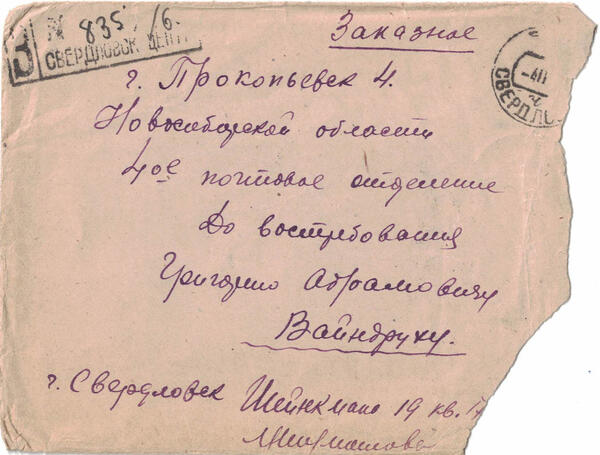
During the war, envelopes were not in use: a sheet of paper with the written text was folded in a special way and shaped like a triangle with the blank side out. The blank space was reserved for the sender’s address and the addressee’s last name, first name, and patronymic, as well as the number of the destination field post office. Other information, including the whereabouts of the soldier, was classified. The letter on display was sent between the cities located in the rear, that is why their names are indicated. Letters were not sealed, as each “triangle” was supposed to be checked according to the wartime obligatory censorship. The correspondence was free of charge both to and from the front.
Soldiers looked forward to every message from home. The Red Army soldiers often read aloud portions from the letters to their fellow soldiers, sharing the news. Since not all of them were literate, they often asked those among them who could write or had beautiful handwriting to help out. In hospitals, the wounded were assisted with writing or reading letters by medical personnel.
At the same time, a great portion of letters mailed by the Great Patriotic War soldiers mostly described their everyday life in detail: the soldiers wrote about the arrangement of living quarters, the daily routine, the food rations, the allowances, the condition of their shoes, the leisure activities, and the simple amusements they took part in.
Another popular topic the soldiers touched upon in the letters was the characteristics of comrades and commanders, as well as the relationship between them. Often the front-line soldiers reminisced about their homeland, relatives and friends, the pre-war life. Many shared their hopes and dreams for a peaceful future and the end of the war. They also described the weather conditions, the place where they had to fight, and the hostilities.
In wartime, messages were written on plain paper, special front-line stationery, or postcards. The cards were specially printed and served as additional propaganda and ideological message: they featured appeals and slogans that raised morale, images and quotes of Stalin, patriotic drawings, caricatures of the enemy, and so on.
The soldiers wrote using an ordinary or indelible pencil: the latter, when used wet, produced a bright purple writing, much like ink, and could not be erased. There was also a double-ended “commander’s pencil” — red on one end and blue on the other. Fountain pens were used by staff officers, as well as other soldiers while in the hospital or the rear.
During the war, envelopes were not in use: a sheet of paper with the written text was folded in a special way and shaped like a triangle with the blank side out. The blank space was reserved for the sender’s address and the addressee’s last name, first name, and patronymic, as well as the number of the destination field post office. Other information, including the whereabouts of the soldier, was classified. The letter on display was sent between the cities located in the rear, that is why their names are indicated. Letters were not sealed, as each “triangle” was supposed to be checked according to the wartime obligatory censorship. The correspondence was free of charge both to and from the front.
Soldiers looked forward to every message from home. The Red Army soldiers often read aloud portions from the letters to their fellow soldiers, sharing the news. Since not all of them were literate, they often asked those among them who could write or had beautiful handwriting to help out. In hospitals, the wounded were assisted with writing or reading letters by medical personnel.