

The earliest examples of writing date back to the 6th millennium BC: the inscriptions were carved in wood and stone using sharp objects. Later, people began to employ thin sticks called styluses to write on wax tablets; they also used brushes, chalk, and charcoal. With the advent of ink, quills came into use, most often made from goose feathers. However, the ruins of Pompeii also revealed a pen nib made of copper.
Feathers were washed and dried, then sharpened in a special way by making the rod oblique, their pointy end was split. The outer feathers from the left wing were considered the best for right-handed people, and vice versa. The quills eventually grew thinner and soggy and began to scratch too loudly. They were fixed by being sharpened with a tool called a penknife.
Modern steel ink pens appeared in the 18th century. The debate on the invention ownership is still going on between England and Germany. It is believed that the first steel ink pens were invented by Johannes Janssen in 1748, however, there was no reservoir in them, so splashes flew in all directions when such pens were used.
Half a century later, the Englishman James Perry improved the design by adding a longitudinal slit to the nib, which significantly changed the quality of writing for the better and made it more comfortable. By the 1820s, the steel pen acquired a modern look, and soon the mass production was launched first in Europe, then in Russia.
The first pens, produced by various Russian manufacturers, had a unique design. They could be dedicated to and named after a certain person or event. There were some famous designs, such as “Peter the Great” that featured an embossed image of the emperor, “Abolition of serfdom” with the corresponding inscription in Russian, and “Golgotha” with the crucified Christ. The writing utensils could also have the names of generals and admirals. Wealthy industrialists ordered ink pens named after themselves — with their own portraits.
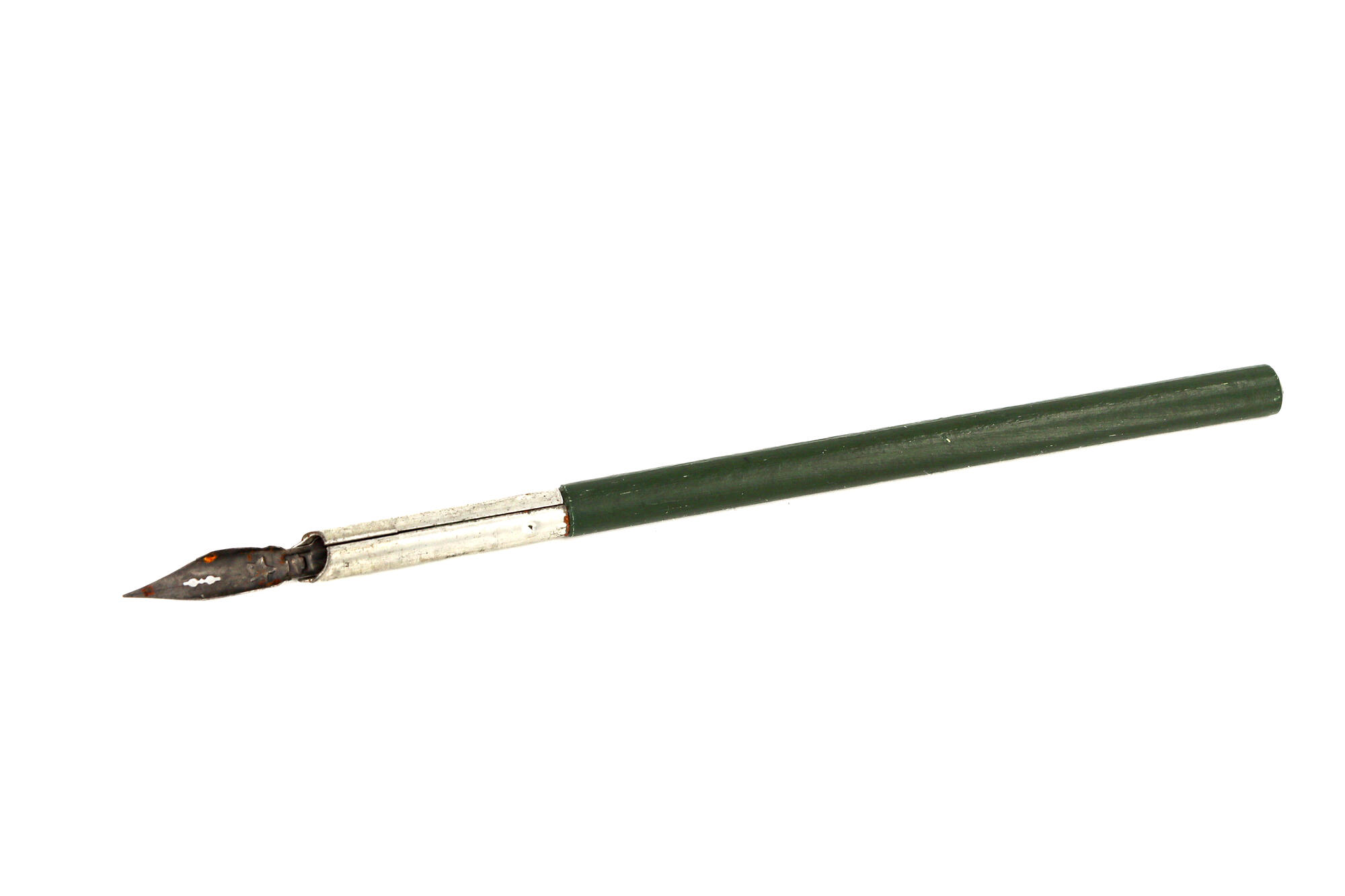
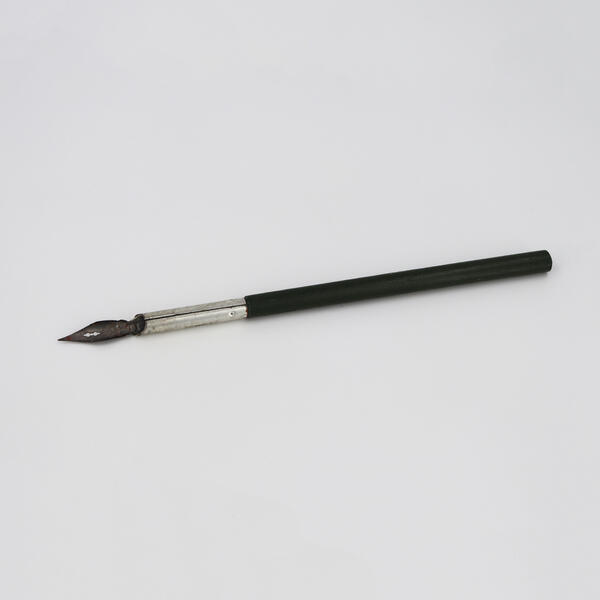
In Soviet times, mass-produced ink pens also had nicknames, although they were simpler and sounded like “a frog” and “a star”. The design of steel pens varied depending on their intended purpose: there were separate pens for studying, office work, drafting, making posters and maps, and writing music. The pen holder was invented simultaneously. The nib was reinforced with a grip section, and this is how the traditional ink pen appeared. Holders were mostly wooden, but could also be made of ivory, gold, and silver.
Later, fountain pens with open and hooded nibs came into fashion. Ink was poured into a special reservoir using a piston mechanism. When filled, such pens lasted for two or three days. Ink pens were widespread in the USSR until the end of the 1970s.
Feathers were washed and dried, then sharpened in a special way by making the rod oblique, their pointy end was split. The outer feathers from the left wing were considered the best for right-handed people, and vice versa. The quills eventually grew thinner and soggy and began to scratch too loudly. They were fixed by being sharpened with a tool called a penknife.
Modern steel ink pens appeared in the 18th century. The debate on the invention ownership is still going on between England and Germany. It is believed that the first steel ink pens were invented by Johannes Janssen in 1748, however, there was no reservoir in them, so splashes flew in all directions when such pens were used.
Half a century later, the Englishman James Perry improved the design by adding a longitudinal slit to the nib, which significantly changed the quality of writing for the better and made it more comfortable. By the 1820s, the steel pen acquired a modern look, and soon the mass production was launched first in Europe, then in Russia.
The first pens, produced by various Russian manufacturers, had a unique design. They could be dedicated to and named after a certain person or event. There were some famous designs, such as “Peter the Great” that featured an embossed image of the emperor, “Abolition of serfdom” with the corresponding inscription in Russian, and “Golgotha” with the crucified Christ. The writing utensils could also have the names of generals and admirals. Wealthy industrialists ordered ink pens named after themselves — with their own portraits.
In Soviet times, mass-produced ink pens also had nicknames, although they were simpler and sounded like “a frog” and “a star”. The design of steel pens varied depending on their intended purpose: there were separate pens for studying, office work, drafting, making posters and maps, and writing music. The pen holder was invented simultaneously. The nib was reinforced with a grip section, and this is how the traditional ink pen appeared. Holders were mostly wooden, but could also be made of ivory, gold, and silver.
Later, fountain pens with open and hooded nibs came into fashion. Ink was poured into a special reservoir using a piston mechanism. When filled, such pens lasted for two or three days. Ink pens were widespread in the USSR until the end of the 1970s.