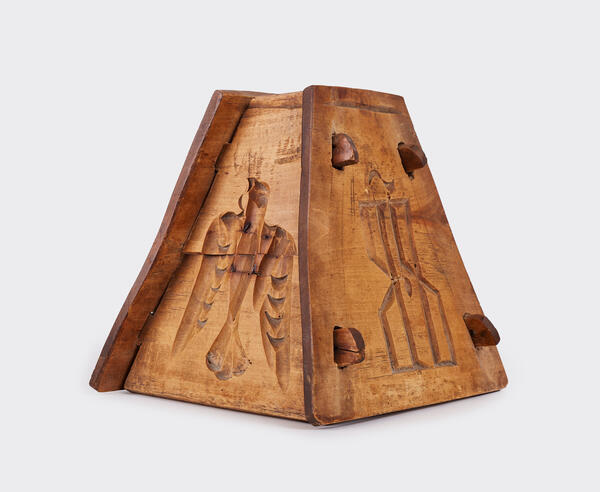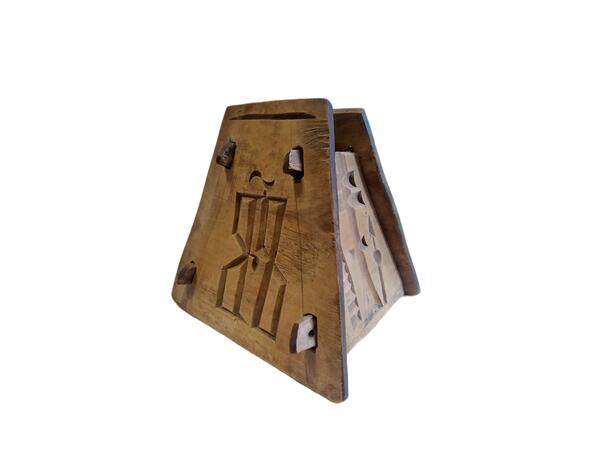
The Zheleznodorozhny Local Lore Museum presents an important attribute of every Orthodox household — a wooden paskha mold, which was made in the early 20th century.
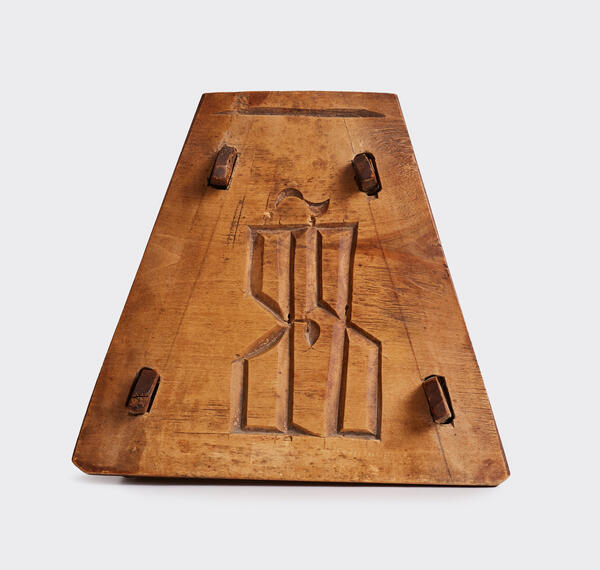
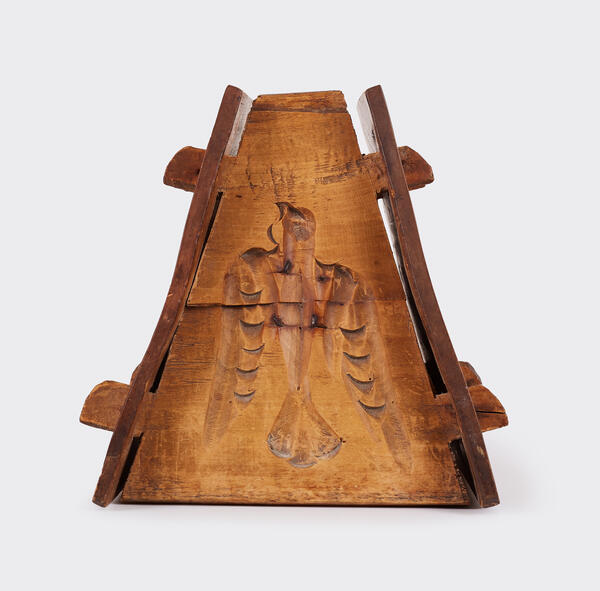
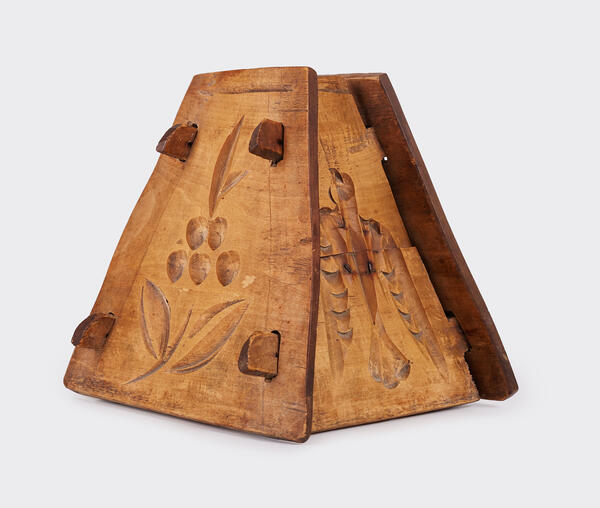
The mold is made of four trapezoidal planks with a deeply carved design. One side features a carved Orthodox cross and a spear — symbols of the suffering and resurrection of Christ, and a staircase to heaven, symbolizing the Most Holy Theotokos Mary; the other side has the Russian letters ХВ, which stand for “Christ is Risen”; the third side shows a dove, symbolizing the image of the Holy Spirit; the fourth side is decorated with a bunch of grapes — a symbol of spiritual life, salvation and rebirth.
Easter is the most important holiday of the Christian calendar, which has its own special traditions passed down generations. On this day, believers gather at the table to share the joy of the resurrection of Jesus and enjoy the generous treats.
The central dish of the festive Easter feast is a special ritual food — paskha made of cottage cheese. To prepare it, a special wooden paskha mold was traditionally used. Wooden paskha molds began to be actively used in the 18th century; before that time, the dish was prepared in the form of a thick mousse from fermented milk. It was called that way in Church Slavonic — “thick milk.” As soon as housewives began to use hard cottage cheese, they needed a special mold for paskha. Using a wooden mold, the food is shaped into a truncated pyramid, symbolizing Mount Golgotha, where Jesus Christ suffered for the entire human race. Cottage cheese, mixed with sugar, butter and cream and generously decorated with candied fruit, dried fruit or nuts, is a symbolic manna from heaven, divine food, gifted to the righteous by the Creator Himself. Paskha is also considered a symbol of Easter fun and the sweetness of heavenly life, a prototype of the kingdom of heaven and the land flowing with milk and honey, which a Russian peasant always dreamed of when envisioning the afterlife.
The great Russian writer Nikolai Vasilyevich Gogol
wrote about Easter, “Only in Russia this day is celebrated the way it should
be!”