The collection of the Rostov Regional Museum of Local Lore includes items from the kurgan complex “Five Brothers”, specifically kurgan No. 8. It was excavated in 1959 near the village (stanitsa) of Yelizavetovskaya.
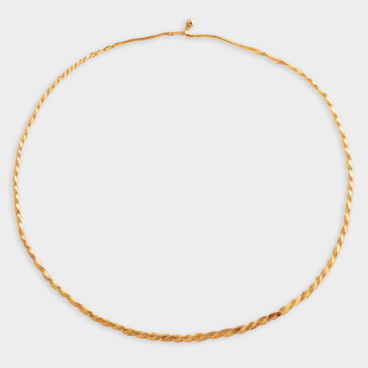
Over a thousand objects made of gold and silver, including jewelry, parts of horse harnesses, weapons, and ceremonial vessels, were found in this burial. The nature of the grave goods indicated the high status of the deceased individual. In popular scientific literature, this burial has been referred to as the “tomb of a Scythian King”.
In particular, ceremonial silverware was discovered in the burial mound. These items are typically associated with the graves of Scythian aristocrats.
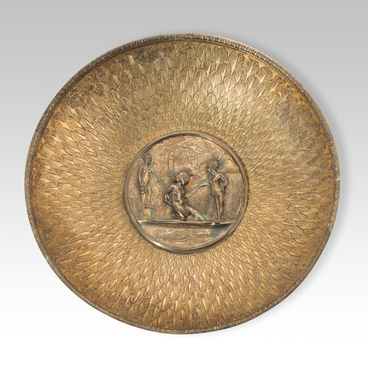
The artifacts were found near the skeletal remains of the deceased individual. One of them, a silver kylix, was located at the elbow of the individual’s right arm. The second object, a spherical silver cup, was discovered near the skull.
A kylix is an ancient Greek ceramic vessel with a shallow, round bowl, a wide mouth, and a leg. It has two horizontal handles attached to the sides. Unlike the kantharos, the kylix has handles that do not extend beyond the edge of the bowl’s rim. These vessels were typically ceramic, although some examples from the 4th–2nd centuries BCE were made from silver. Some silver kylikes from the 4th century BCE had a particularly flat bottom and stood on a tall leg, with side handles made from braided wire.
During the ancient Greek symposia, or drinking parties, the participants would drink wine mixed with water from kylikes. These vessels were often decorated with scenes of such feasts. The scenes were also accompanied by inscriptions, such as “Rejoice, drink and live happily.” The cups were also used to play the game called kottabos.
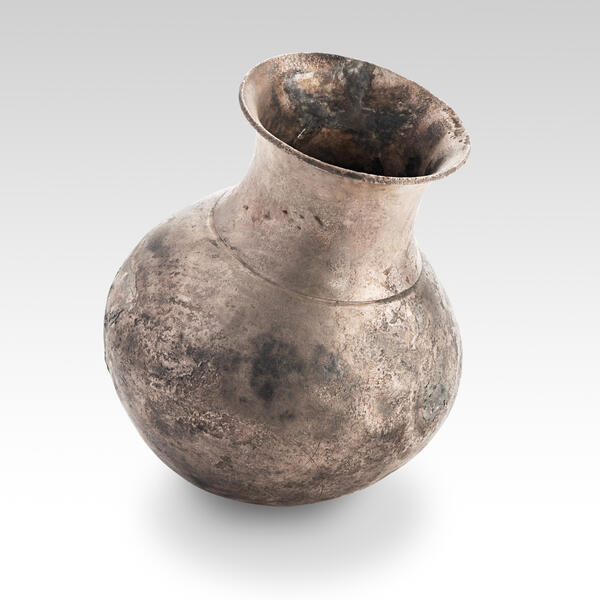
The other artifact, a small silver jug, has a high cylindrical throat. The exhibit is unique in that graffiti is applied under the edge of the rim, on the outer surface. Greek letters are written on the jug in two lines, and a rectangle with cross-shaped lines inscribed in it is scratched on the body.
Vessels, similar to the jug in shape and also made of precious metals, were found in Scythian royal burial mounds — in Solokha, Kul-Oba, Voronezh, and other sites. These jugs were typically used for rituals and are believed to be exclusive to the burials of Scythian elites.