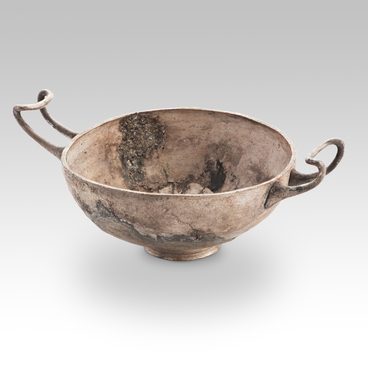
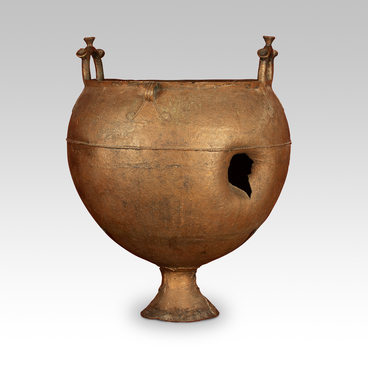
The kurgan “Sadovy”, located on the site of the modern city of Novocherkassk, was discovered in 1962. It was part of a larger site, known as the Khokhlach complex. During excavations, a burial was discovered beneath the mound that had been looted a very long time ago. However, several items have survived. These include a silver louterion (a vessel for ablutions), as well as parts of horse harnesses, gold plaques, and silver bowls.
Silver bowls are characteristic of late Hellenistic art and may have been produced in the Mediterranean region. Sicily was one such center of silverware production. Researchers also note works of artisans from Alexandria and Asia Minor. The medallions that adorned these products were particularly valuable and unique.
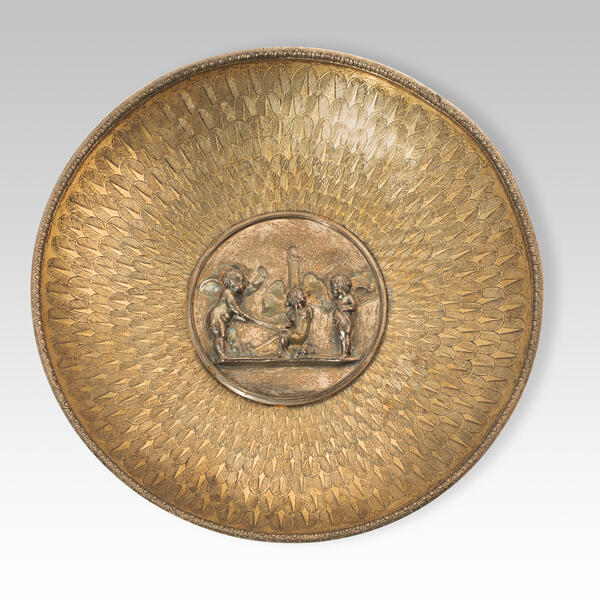
The bowl has a hemispherical shape. The outer surface of the vessel is completely smooth, and the edge is decorated with a frieze. On the inner surface, there is a chased pattern of feathers. In addition, the inside is gilded.
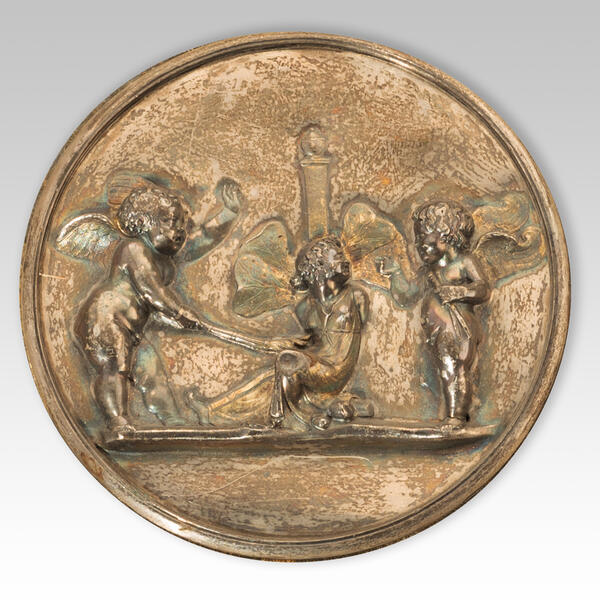
In the center, there is an overlay medallion depicting a scene from the Greek myth about the god of love, Amor, and Psyche, the goddess of the soul and breathing. Psyche is seated in the center, tied to a pillar. To her left and right, there are naked figures of little Cupids. One of them, on the right side, holds two arrows in its right hand. The Cupid on the left brings a lit torch closer to Psyche’s body.
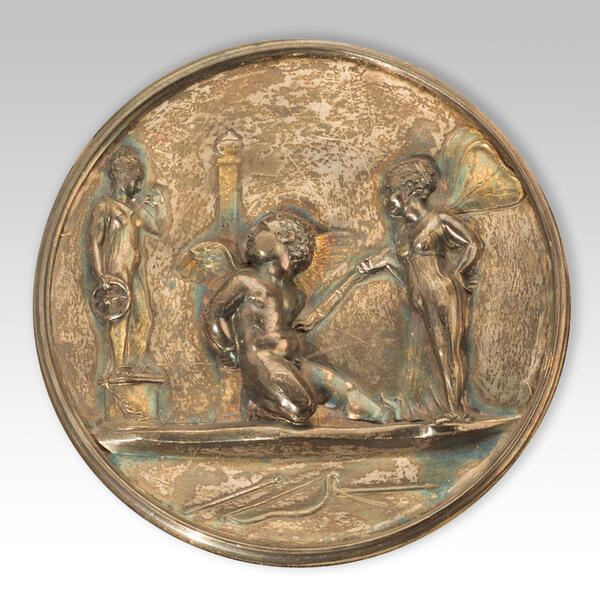
The second bowl features a scene of retribution. Amor is kneeling, tied to a column. In front of him, there is Psyche who burns him with a torch. In the lower side of the medallion, there is a bow and two arrows. All images on the medallion are made in high relief.
Historians have put forward several theories about how such luxury items may have come into the possession of the nomadic tribes. According to one theory, the Romans had a tradition of sending barbarian leaders precious dishes, expensive weapons and other gifts. With such offerings, they attempted to bribe and placate the nomads in order to avoid raids and live in peace. Therefore, the bowls found at the “Sadovy” site may have been brought to the Don region as diplomatic gifts for Sarmatian leaders. Alternatively, these items could have been seized by the nomads during battles as prizes of war. It is also plausible that the nomads would simply buy these luxury objects from the Romans.
Judging by the nature of the burial ground and the type of the funeral rite, the grave in the kurgan “Sadovy” can be dated to the 1st — early 2nd century. These finds indicate that a rich representative of the elite of one of the Sarmatian tribes could have been buried in this mound.