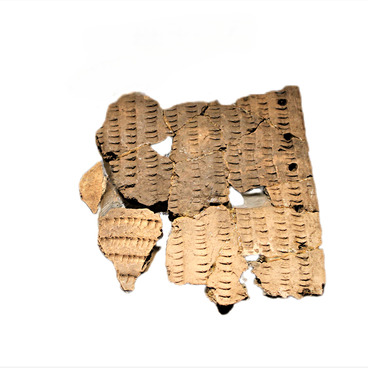
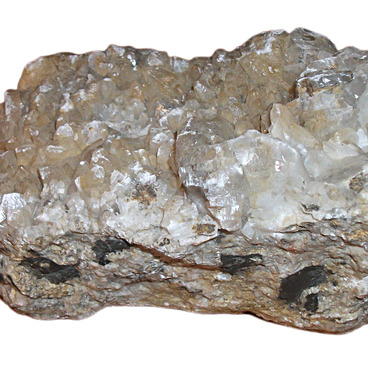
Flint flake, irregular shape, dark brown color.
A flake in archaeology is a product of human splitting of stone raw materials, nuclei, tusks, tubular bones. Flakes could be used as tools without secondary processing or as blanks for tools (“products on flakes”). They can also be waste products of the production of nuclei and tools.
To obtain flakes, percussion or pressing techniques were used. Signs of deliberate splitting are: a shock pad, a shock bump and a shock wave on one of the planes of the flake (abdomen), the presence of negatives of previous withdrawals or (in the case of splitting off the first chips) the natural surface of the raw material (primary flakes) on another plane (back).
Flakes whose width-to-length ratio is close to 1:2 are called lamellar. For small flakes (according to some classifications with a width of less than 1 cm), the term “scales” is also used.
A flake in archaeology is a product of human splitting of stone raw materials, nuclei, tusks, tubular bones. Flakes could be used as tools without secondary processing or as blanks for tools (“products on flakes”). They can also be waste products of the production of nuclei and tools.
To obtain flakes, percussion or pressing techniques were used. Signs of deliberate splitting are: a shock pad, a shock bump and a shock wave on one of the planes of the flake (abdomen), the presence of negatives of previous withdrawals or (in the case of splitting off the first chips) the natural surface of the raw material (primary flakes) on another plane (back).
Flakes whose width-to-length ratio is close to 1:2 are called lamellar. For small flakes (according to some classifications with a width of less than 1 cm), the term “scales” is also used.