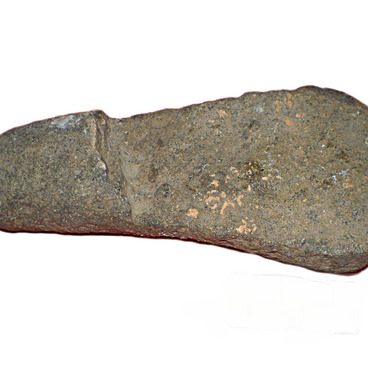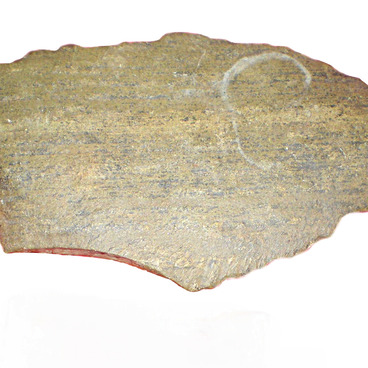


Archaeological finds found on the territory of the district testify to human activity on the Hangar during the Neolithic period: fragments of ceramics, tools, spearheads, remains of ancient animals.
The Neolithic era dates back to the developed Iron Age of the Middle Ages.
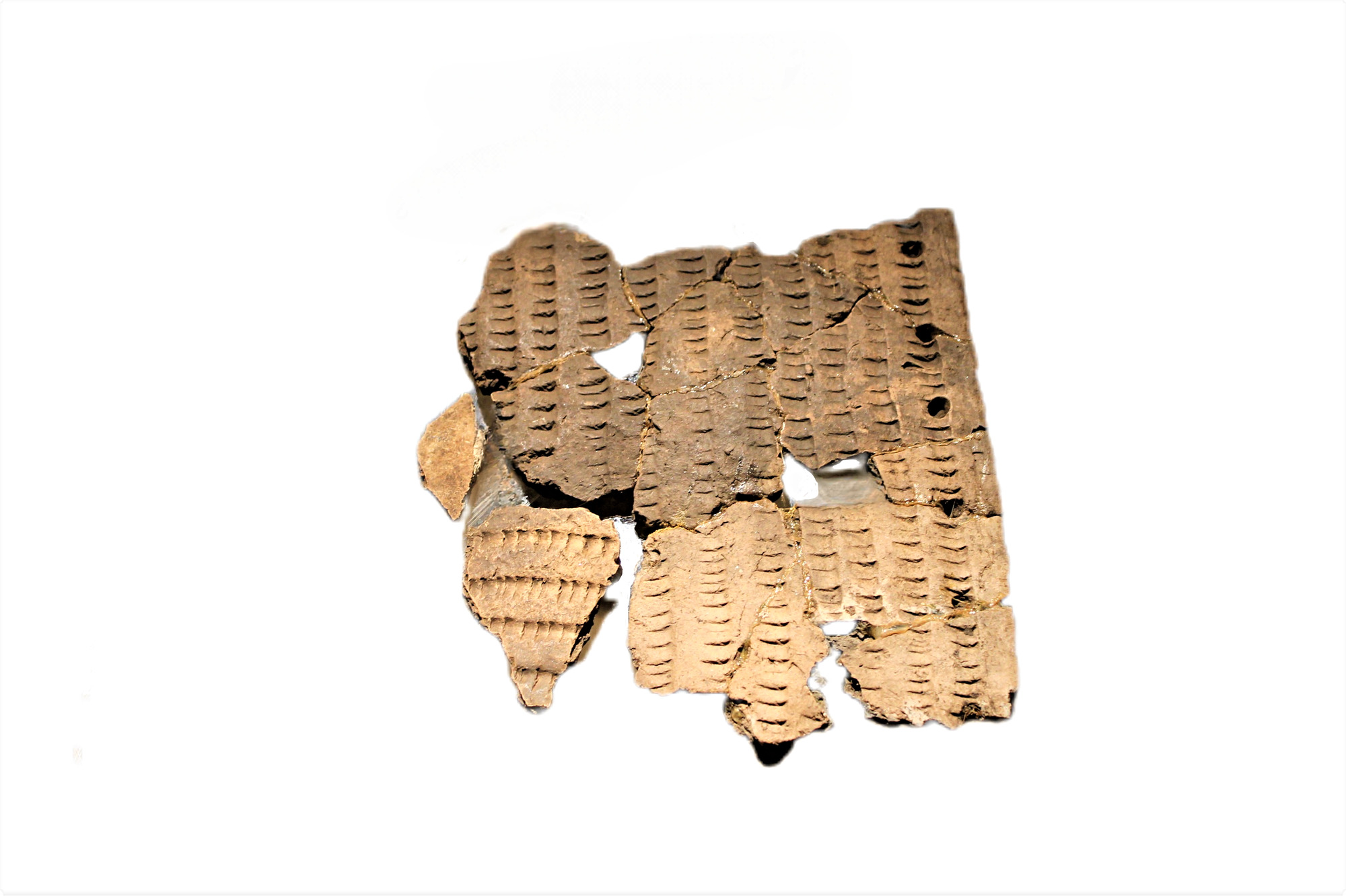
The glued fragments of ceramics form a lateral segment of the vessel from the corolla to the bottom part with a continuous ornamentation of the surface with rows of impressions of a receding spatula of rectangular shape. At the same time, the upper plane of the corolla is additionally ornamented with X-shaped indentations, and the outer side with a belt of cylindrical indentations.
Ceramics is one of the first materials created by man by processing natural raw materials — clay. And since baked clay, unlike other materials (wood, metals, fabrics) is not subject to atmospheric influences, ceramic products from all eras have reached us. Therefore, ceramics is undoubtedly a trace from the past centuries, according to which it is always possible to say with accuracy that “people lived in this place.”
Already in the Neolithic era, ceramics became an integral attribute of almost all archaeological cultures. Initially, ceramics were formed by hand and represented all kinds of household items — various vessels, sinkers, pots and more.
The first ceramic vessels were with a rounded bottom — they were dug into the ground or placed between stones, then dishes with a flat bottom began to appear, which meant the appearance of a prototype of furniture in the dwellings of ancient people (flat surfaces — tables, shelves). People began to move from simple forms to more complex and convenient ones, and the ornament that appeared also began to become more complicated. Instead of laconic notches, spiral curls, wavy lines, concentric circles, checkerboard and mesh drawings, sometimes conditional images of people and
animals began to appear.
The Neolithic era dates back to the developed Iron Age of the Middle Ages.
The glued fragments of ceramics form a lateral segment of the vessel from the corolla to the bottom part with a continuous ornamentation of the surface with rows of impressions of a receding spatula of rectangular shape. At the same time, the upper plane of the corolla is additionally ornamented with X-shaped indentations, and the outer side with a belt of cylindrical indentations.
Ceramics is one of the first materials created by man by processing natural raw materials — clay. And since baked clay, unlike other materials (wood, metals, fabrics) is not subject to atmospheric influences, ceramic products from all eras have reached us. Therefore, ceramics is undoubtedly a trace from the past centuries, according to which it is always possible to say with accuracy that “people lived in this place.”
Already in the Neolithic era, ceramics became an integral attribute of almost all archaeological cultures. Initially, ceramics were formed by hand and represented all kinds of household items — various vessels, sinkers, pots and more.
The first ceramic vessels were with a rounded bottom — they were dug into the ground or placed between stones, then dishes with a flat bottom began to appear, which meant the appearance of a prototype of furniture in the dwellings of ancient people (flat surfaces — tables, shelves). People began to move from simple forms to more complex and convenient ones, and the ornament that appeared also began to become more complicated. Instead of laconic notches, spiral curls, wavy lines, concentric circles, checkerboard and mesh drawings, sometimes conditional images of people and
animals began to appear.