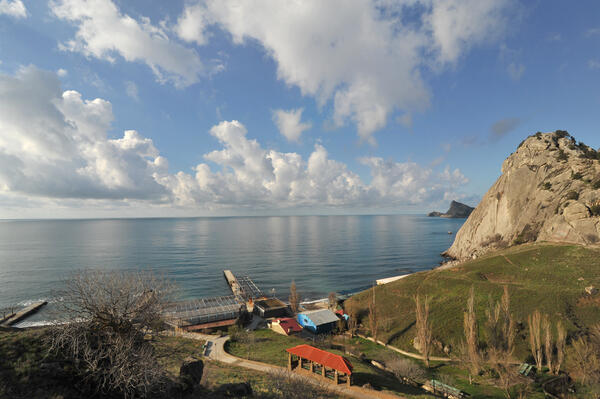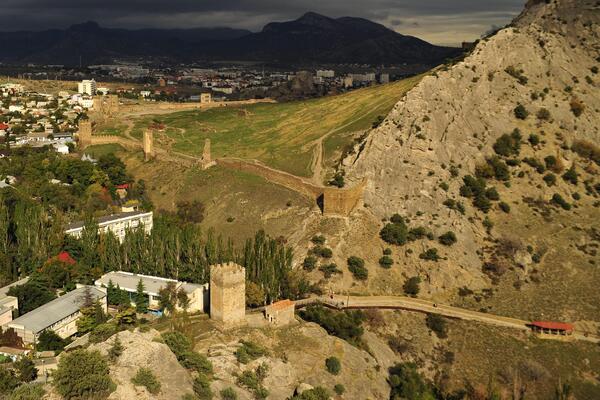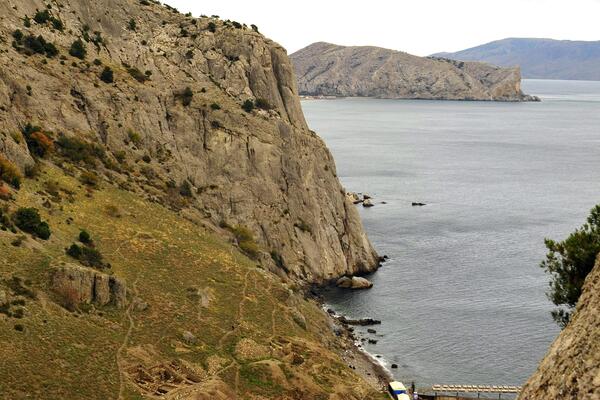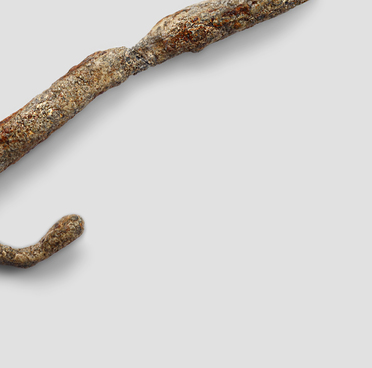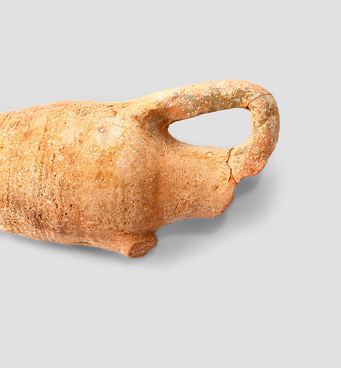
In the 6th–7th centuries, there was a fortified port part of Sugdeia (Soldaya) in the coastal zone of Sudak Bay (the Uyutnoye district), and in the 8th–9th centuries it was a major center of international trade. The period of prosperity of the town occurred in the 10th–14th centuries.
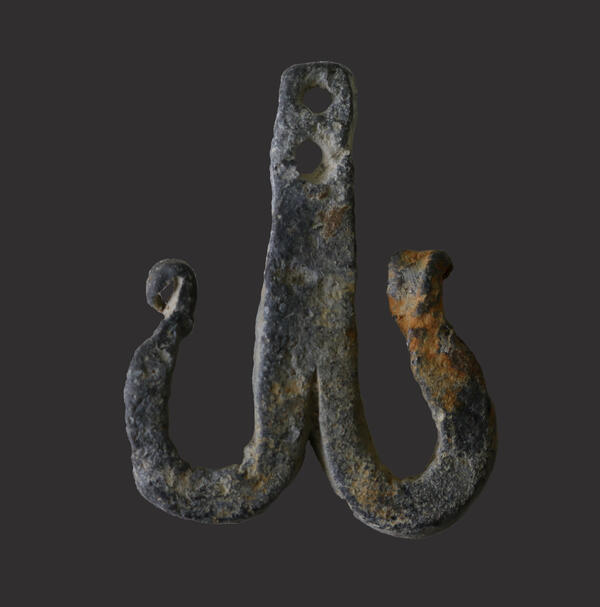
Perhaps, sailors established a sanctuary there, where prayers and sacrifices were made to the sea deities. The medieval votive offerings include the presented casting shaped like an anchor.
In 2015, archaeologists discovered several miniature lead anchors in the waters of the Sudak port and divided them into three categories depending on the manufacturing technology.
The first group consisted of three items made of a rectangular lead slab split on one side. Some researchers believe that partially split slabs, as well as weight slabs with a defined splitting line, could have been made right on board the ship during the raid in the harbor.
The second group is represented by items cast as a solid one-sided mold; in this case, they were made according to a predetermined design. Finally, the third group includes items cast in simpler, smoother and somewhat schematic molds.
Such items could be worn by sailors as amulets or probably thrown into the water as votive offerings to the sea deities in hopes of ensuring a successful voyage and a safe return home.
Even in the pre-Christian era, many cultures that were closely associated with the sea gave a ceremonial meaning to the image of an anchor. With the adoption of Christianity, it became widespread as a symbol of hope for salvation on earth and in the afterlife.
In Crimea, the veneration of the anchor symbols refers to 861 when relics of St. Clement of Rome were discovered in the vicinity of Chersonesus by Cyril, also known as Constantine the Philosopher.
Tradition says that the holy martyr Pope Clement was sent from Rome “beyond the Pontic Sea, to the desert lying near the city of Kherson”. There, thanks to his sermons and miracles that he performed through his prayers, many people were baptized, and Christian churches were erected instead of pagan temples. By the order of the Emperor Trajan, the bishop was executed by being tied to an anchor and thrown into the sea. However, in response to the prayers of the disciples, a miraculous ebbing of the sea revealed to the Christians a stone shrine with the martyr’s bones and the anchor lying next to them.