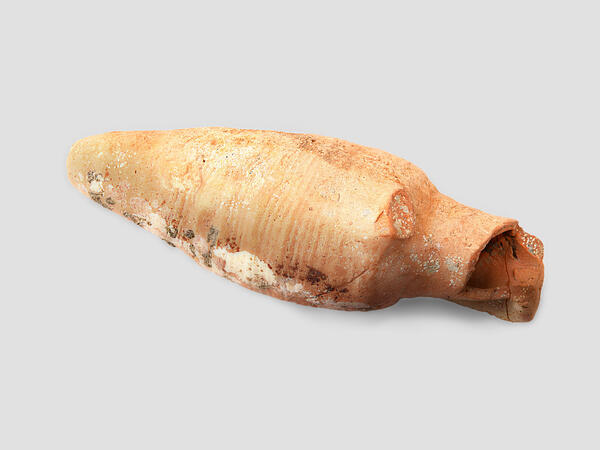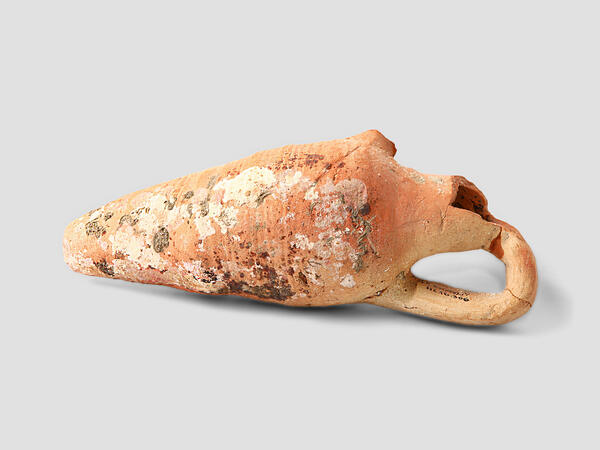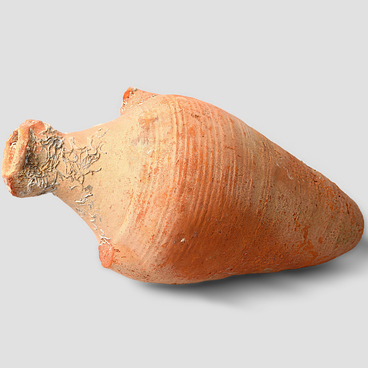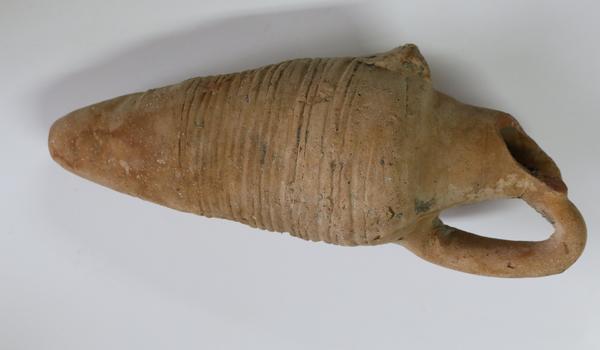
Amphorettes, or little amphoras, were commonly used to store aromatic oils. The displayed find is no exception: its inner surface shows traces of frankincense.
To prepare this incense, incisions were made on the incense tree of the genus Boswellia, which grows in Arabia and East Africa, and the resin was mixed with aromatic herbs and water, dried and then cut into long strips.
Frankincense was used in religious rituals in ancient Egypt and Mesopotamia. According to the Bible, God revealed the fragrant composition for burning frankincense in temples to the prophet Moses. In the Middle Ages, frankincense (or incense) found its way into Christian divine services.
The ritual purpose of the incense that was discovered inside this amphorette is also indicated by the fact that similar vessels are often found in churches and monasteries; sometimes thuribles (incense boxes) were decorated with graffiti depicting the cross.
Vessels of this type are a rare find in ancient settlements and villages. The small size and thick solid walls made amphorettes the best option for transporting spices by sea.
Spice trade, including aromatic resins, was actively developed by Italian merchants in the 13th century. Frankincense was supplied to the Northern and Southern Black Sea coasts from Egypt (the city of Alexandria) and East Asia. In the middle of the century, Tabriz played an important role in the maritime trade of spices: nutmeg, cloves, lavender and other spices were delivered there before being shipped to the ports of the Southern Black Sea region. Tabriz incense was of a higher quality than the Egyptian one. Transportation of these goods was expensive, but the cargo itself was subject to a lower tax.
The development of this trade was facilitated by a regular caravan route between Tabriz and Trebizond. Guillaume de Rubrouck, the Flemish Franciscan explorer and author of “The Journey of William of Rubruck to the Eastern Parts of the World”, claimed that spice trade was established between Sinop (Turkey) and Soldaya (that is, Sudak).
In 2002, an archaeological underwater expedition raised the presented amphorette from the bottom of the bay near the Novy Svet settlement.