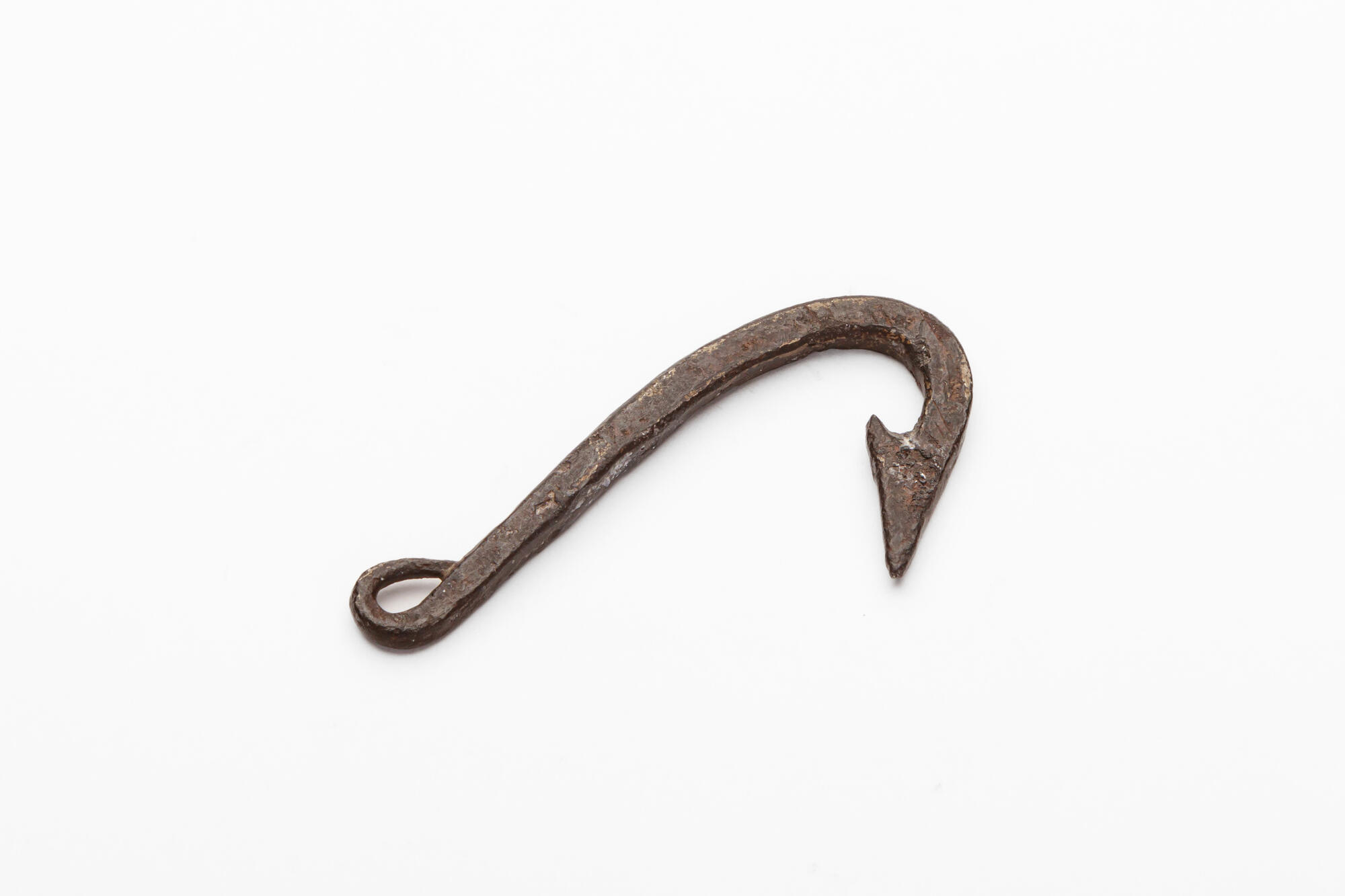


For the inhabitants of forest and coastal zones, hunting and fishing have always played an important role. In the Middle Ages, the Cheptsa River and its tributaries were full of water and abounded in fish, such as sterlet, pike, burbot, ruffe, bream and perch. Their scales and bones were found during excavations at the Idnakar site. One of the largest vertebrae belonged to a catfish weighing up to 150 kilograms. Archaeologists initially mistook the large fishing hooks used to catch this huge fish for ornaments.
Archaeologists have found many fishhooks made of iron and bronze of various sizes — from the smallest to the very large. The Udmurts also caught fish using sharp harpoons, spears, nets and traps. From early childhood, boys were introduced to hunting and fishing and taught to observe the habits of animals and birds, the migration of fish and the flow of rivers.
The main game animal of the Prikamye region was the beaver. Hunting for elk and reindeer was popular, as their meat occupied an important place in the diet of the local population. Other game animals included squirrel, hare, marten, wolf, bear, wolverine, fox, and roe deer.
The ancient people of Idnakar also hunted birds. The archaeological finds, made on the territory of the hillfort, include many bones of chickens, geese and up to ten species of wild duck, as well as remains of goshawks, eagle owls, snowy owls, willow grouses, black storks, as well as many bones of wood, black and hazel grouses; the latter were hunted using game calls made from bone.
A bow was the main hunting weapon. The excavations also revealed bone plates, parts of quivers, small bone shields to protect the wrist during shooting, and arrowheads of various shapes, including blunt ones, that were used when hunters needed to keep valuable fur intact.
Udmurt hunters also used spears and darts. They had a designated tool for each type of bird and animal: wooden traps for stoats, minks and otters, heavy steel traps for wolves, foxes and wolverines, and bird snares. Another of the earliest and most favorite occupations of the Udmurts was beekeeping. They collected honey from wild bees that lived in the forest in natural or artificial tree hollows.