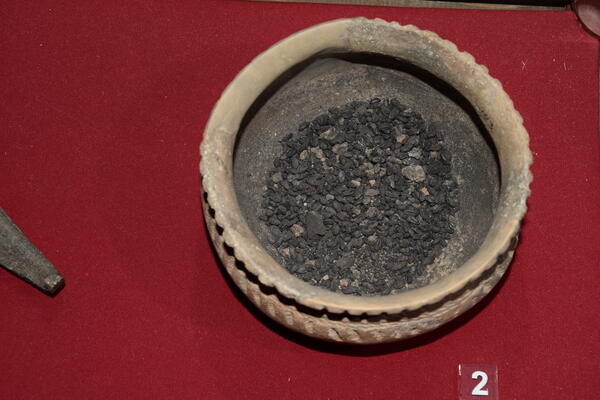
Prikamye is a valley of the Kama River, located in the southern taiga. It includes five subjects of the Russian Federation, including the Udmurt Republic. This region has dense coniferous forests and a temperate continental climate with a distinct four-season pattern. In the early Iron Age, the local population switched to mixed farming and had the slash-and-burn agriculture up until the 19th century:


Grains
Creation period
the 9th–13th centuries
Place of сreation
Udmurt Prikamye
Dimensions
5x4,8x1 cm
Technique
agriculture
Collection
0
Open in app #2
#8
… having found a convenient cape somewhere, the Udmurt traced the forest, that is, he cut tree trunks a yard from the ground and, when they dried a little, he chopped and burned them. He dug the remaining solid earth near the stumps and between the roots with a ‘kushtan’ or an iron pick, and then, after sowing the grains, he harrowed them, dragging a small spruce with branches and needles all over his field, so the earth was mixed, and the grains were covered with it. The next year, after reaping the grown grain, he left a long straw and burned it the following year, and then sowed and harrowed it again, just like he had done in the first year. A few years later, he would move to a different place and cultivate the land in the same way…
#9
Clearing of forests was a very laborious task; people worked in groups. The slash-and-burn farming system led to the formation of fallow soil — a burned-out area of forest that was no longer cultivated in order to recover the fertility of the soil. Fallow lands were often used for several years as pasture for livestock: it took at least 50 years to restore the forest landscape.
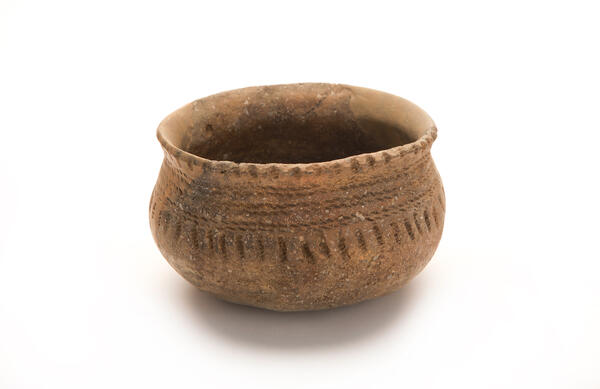
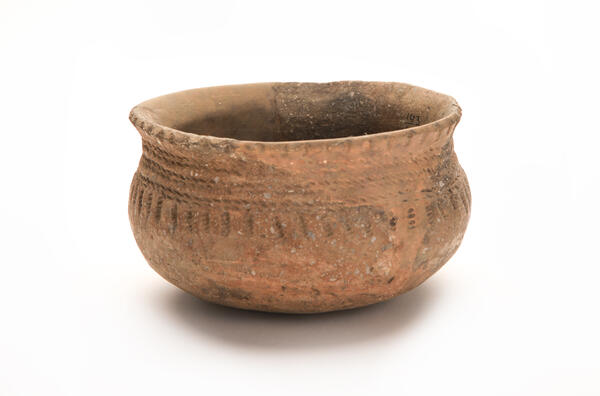
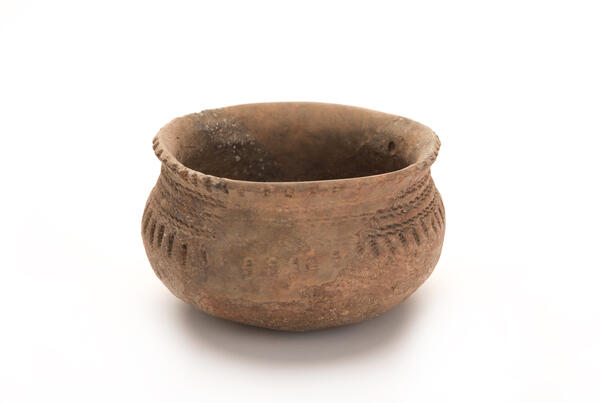
The Udmurts cultivated the land with the help of arable tools with iron tips and draft animal power. Iron opener tips — sharp tips for a wooden plow — found in the Cheptsa River valley date to the 9th century. More than 20 pieces were found on the territory of the Idnakar hillfort alone. It is still impossible to completely reconstruct the appearance of the Udmurt plow. The Udmurts used hunchback scythes and sickles for harvesting. They threshed grain with wooden flails, using hand millstones to process it — about a hundred of them were found on the territory of Idnakar.
The finds of burnt grain made in ancient Udmurt settlements helped to establish what kind of crops they cultivated. Spelt wheat, spring rye, and oats predominated; less common were wheat, barley and turnip seeds; only sometimes were there peas, dwarf wheat and wild barley. The Udmurts did not grow winter rye. However, they did grow such industrial crops as flax and hemp, which were used to make clothing, ropes, and awnings.
#7
Grains
#6
Ministry of Culture of the Russian Federation
read morehide
00:00
00:00
1x
Grains
Creation period
the 9th–13th centuries
Place of сreation
Udmurt Prikamye
Dimensions
5x4,8x1 cm
Technique
agriculture
Collection
0
 Point your smartphone camera to open in the app
Open in app
Share

