The Shors had small-scale arable farming: they used 0.1–0.3 hectares for primitive agriculture — an area about the size of one to three pens for holding livestock.
The farming technology of the northern and southern Shors was different: in the north they practiced plowing, in the south — hoeing. The first (northern) type of soil cultivation, brought to these regions by Russian settlers, involved the use of familiar Russian tools. These included a light wooden “salda” ard with an iron tip, a wooden harrow, and sickles. At the beginning of the 20th century, the wealthy Shors also used iron plows and simple horse-drawn reapers.
Hoe farming, which became widespread in the taiga regions of the Kuznetsk uezd, was more primitive and appeared earlier. According to some researchers, the ancestors of the Shors practiced it back in the Bronze Age.
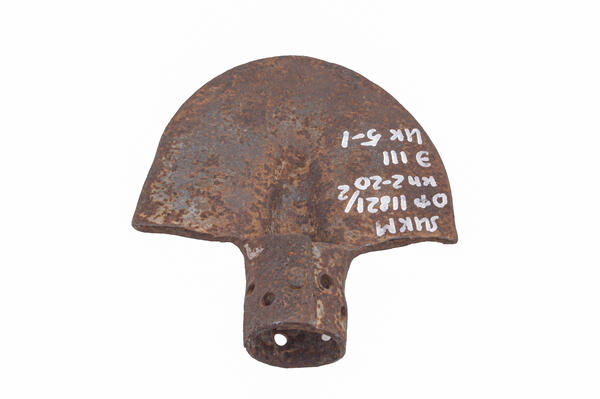
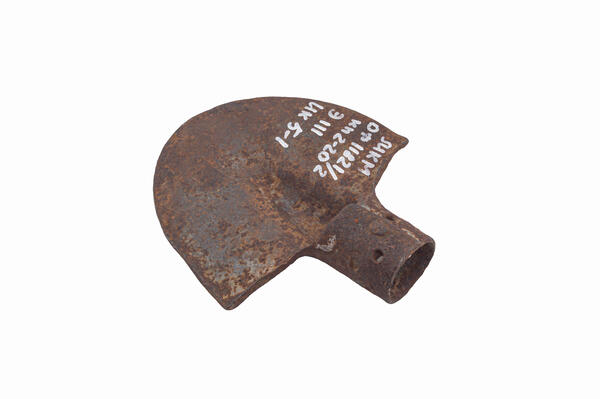
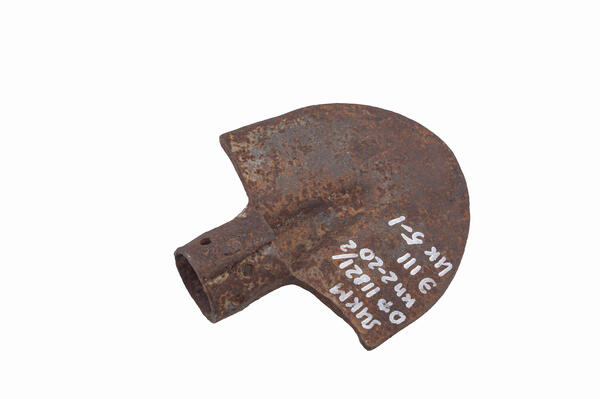
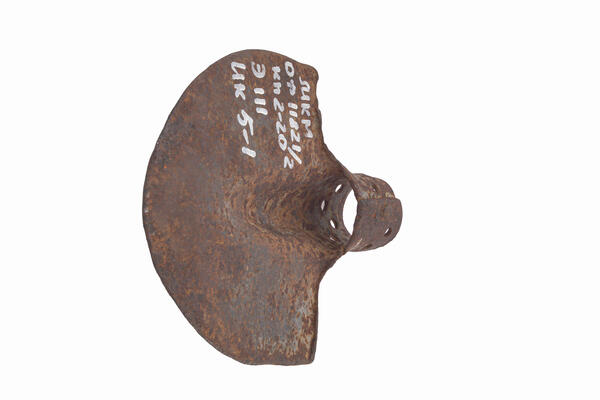
From the late Iron Age, the “abyl” hoe began to be used for loosening soil and getting rid of stones. Rocky soil was exclusively hoed; as for the places with relatively few stones, the soil was plowed with a horse-drawn “andazyn”, and the hoe was only used to loosen the soil.
Before hoeing, the Shors cleared the cultivated areas on the sunny slopes of the mountains from the forest by cutting and burning the plants: thanks to this, the grain ripened better and faster, before the frost appeared and damaged the crops. Those areas were cultivated for three to four years, then they were abandoned as the Shors moved to a new location. Sometimes the Shors would use territories of former dwellings, livestock camps or old forts to grow “kendyr” hemp, which was the only plant to grow in such places.
The land was cultivated throughout May, and since everyone, including children and elderly people, took part in the work, families, along with livestock, temporarily moved to arable land not far from the village. The Shors built temporary “odag” houses. The uluses were left empty, and this happened again in autumn when it was time to harvest the crops.
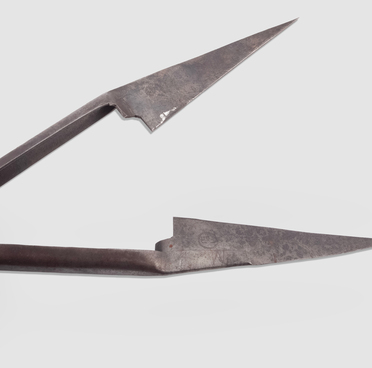
The “abyl” hoe head presented in the exhibition is a hand-held spade with an iron spatula mounted on a bent tree root.