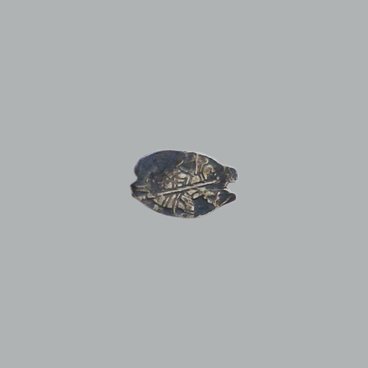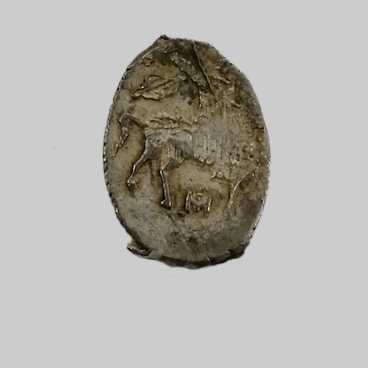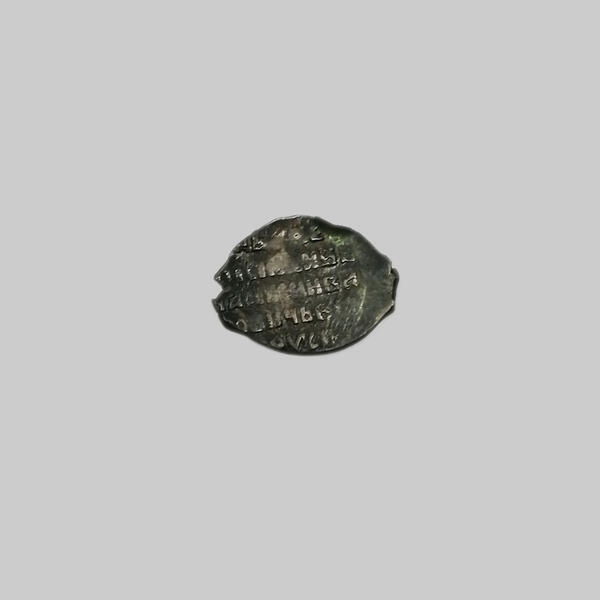
The Karasuksky Regional Museum’s collection includes a solid 950 silver kopek coin, minted during the reign of boyar Vasily IV. It is oval-shaped, weighing in at 0.64 grams. A rider with a flowing greatcoat on a horse, with a spear in his right hand is depicted on the coin’s obverse. The image has shifted during the minting process, meaning that the coin lacks the crown and parts of the horse’s head and legs. On the coin’s reverse a five-line inscription with the ruler’s name and title reads: ‘Tsar and Grand Prince of all Rus’ Vasily Ivanovich’. The coin is worn-down, with uneven and curved edges.
False Dmitry was murdered 17 May 1606, and on 1 June of the same year, Prince Vasily Ivanovich Shuysky, who had lead both the plot against the imposter and the Moscow Uprising, was crowned. From the very start of Vasily IV’s reign, the government started to experience serious difficulties, with the outbreak of the Peasant War under the leadership of Ivan Bolotnikov. In Autumn of 1607, the Moscow government had a new enemy emerge: False Dmitry II. This was the start of the Polish-Lithuanian intervention.
2 September 1608, Pskov swore its allegiance to the imposter. As 1607 ended and 1608 began, as a result of these events, the standardized weight of the kopek coins in Moscow dropped from 0.68 grams to 0.64 grams. Numismatic research points to the fact that under Vasily IV, there was an attempt to revive the practice of buying back money. This practice involved selling off the right to collect taxes and private citizens’ duties.
There are records of coins with Vasily IV’s name on them, although they have no link with Moscow coinage. However, the lack of a Mint designation under the horse is evidence of them being produced in Moscow. There are also records of an imitation coin, produced in Pskov, which copies the design of Boris Godunov’s coins, with the letters ‘PSRZ’. According to 26 different visually examined hoards of coins from 1606 and 1607, it appears that Moscow used the obverse master stamp, or stencil to create coin stamps during Feodor’s reign without letters and a new reversed stamp with the name and title of Vasily. The last time this graceful technique was used in Moscow was for the reverse stamp of False Dmitry’s I’s coins, and the later coins of Boris Godunov. The first issuance of coins was the largest. The coin held by the museum is known as ‘Kopek of Vasily Shuysky’ is from this first issuance. In other words, it refers to the Moscow Mint and to the first batch of coins issued under the new Tsar.
False Dmitry was murdered 17 May 1606, and on 1 June of the same year, Prince Vasily Ivanovich Shuysky, who had lead both the plot against the imposter and the Moscow Uprising, was crowned. From the very start of Vasily IV’s reign, the government started to experience serious difficulties, with the outbreak of the Peasant War under the leadership of Ivan Bolotnikov. In Autumn of 1607, the Moscow government had a new enemy emerge: False Dmitry II. This was the start of the Polish-Lithuanian intervention.
2 September 1608, Pskov swore its allegiance to the imposter. As 1607 ended and 1608 began, as a result of these events, the standardized weight of the kopek coins in Moscow dropped from 0.68 grams to 0.64 grams. Numismatic research points to the fact that under Vasily IV, there was an attempt to revive the practice of buying back money. This practice involved selling off the right to collect taxes and private citizens’ duties.
There are records of coins with Vasily IV’s name on them, although they have no link with Moscow coinage. However, the lack of a Mint designation under the horse is evidence of them being produced in Moscow. There are also records of an imitation coin, produced in Pskov, which copies the design of Boris Godunov’s coins, with the letters ‘PSRZ’. According to 26 different visually examined hoards of coins from 1606 and 1607, it appears that Moscow used the obverse master stamp, or stencil to create coin stamps during Feodor’s reign without letters and a new reversed stamp with the name and title of Vasily. The last time this graceful technique was used in Moscow was for the reverse stamp of False Dmitry’s I’s coins, and the later coins of Boris Godunov. The first issuance of coins was the largest. The coin held by the museum is known as ‘Kopek of Vasily Shuysky’ is from this first issuance. In other words, it refers to the Moscow Mint and to the first batch of coins issued under the new Tsar.