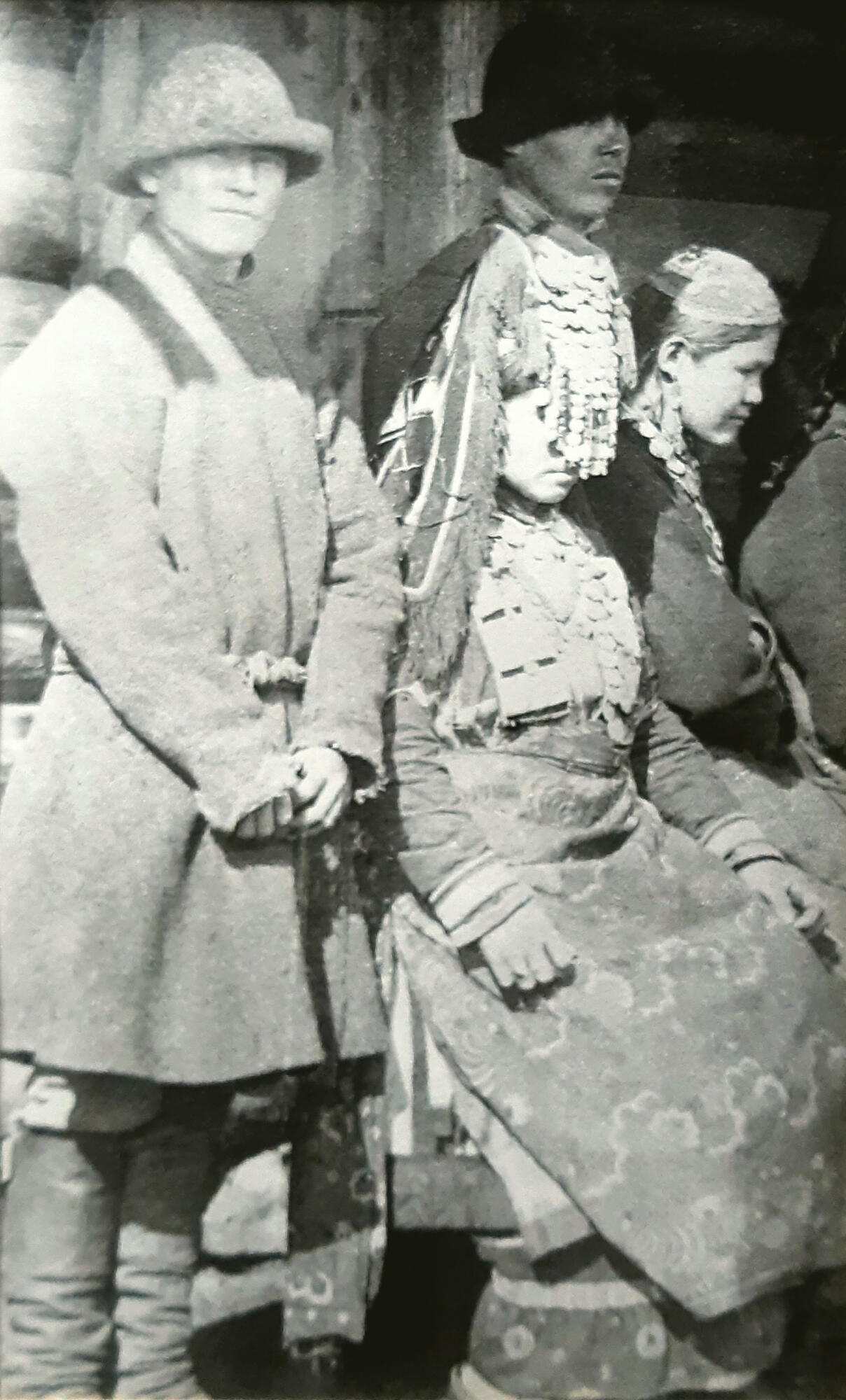


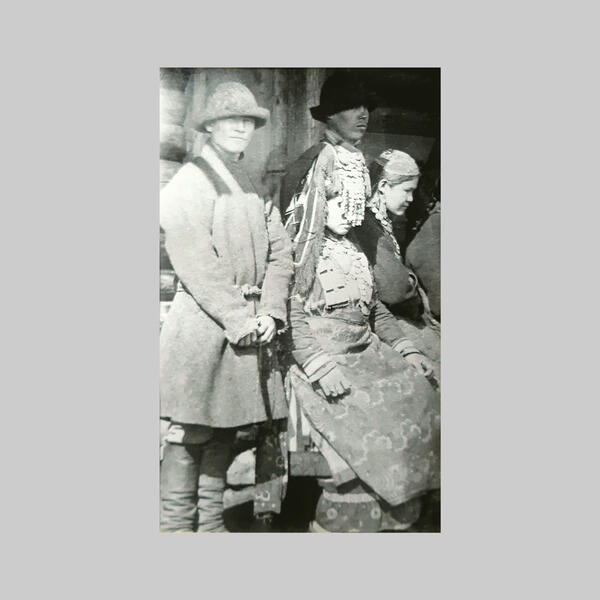
In the photo, you can see a married couple, the young Udmurts. The man is dressed in csual everyday clothes. The only festive detail in his costume is the leather boots. Only very rich peasants could afford wearing boots every day. The status of a newly married couple was determined by the woman’s costume. The Udmurt woman is wearing an aishon, a tall headdress made of birch-bark covered with a cloth and silver coins. The aishon is layered with a head blanket called a syulyk. The woman is also wearing a necklace with silver coins.
Wedding customs and traditions show rich cultural heritage of the Udmurts. Relatives eagerly helped the groom’s father and mother to choose a bride. A demchi’s (matchmaker) opinion and recommendations were very important. When she found a suitable candidate for becoming a bride in the neighbourhood, the demchi looked up the bride’s background and provided the groom’s relatives with this information.
The main criteria for choosing a future wife were as follows: diligence, kindness, good health, cleanliness, and orderliness. If the groom’s family liked the chosen girl, they started preparing for a marriage proposal. Upon arrival to the bride’s house, the demchi began an allegorical talk about the purpose of the visit. Matchmakers seldom received a positive answer during the first visit. In case of a negative answer, the wedding delegation left knitted gloves in the girl’s house. Later they returned allegedly to take the gloves but with the same question.
After the successful wedding proposal, the agreement stage followed. The parties were: the bride, the groom, and their close relatives. They discussed all important details of the wedding ceremony. After that, the bride’s mother laid butter and a loaf of bread on the table. One of the main national aspects of the wedding ceremony was its time. Weddings took place in winter (from the Epiphany Day till Maslenitsa) and in the fall (from the Pokrov day till the Nativity Fast). The time was chosen on purpose: there was no field work in this period.
The ceremony of putting on a woman’s headdress played a special role. It symbolized the changing status of a bride, her birth in a new status. People believed that the headdress was ‘hiding’ a girl, that it was the reason of her disappearance. Members of a wedding procession that arrived from the village, started ‘looking for the lost sister’ but ‘found’ another person, a married woman. Members of a wedding procession had to take a shawl instead of the bride and demanded compulsory treat, a barrel with wine. The morning after the wedding was usually spent on checking the dowry of the young wife. Guests opened the chest brought by the girl and hung out all its contents in the yard. After that, the young hostess treated her guests with dishes that she had cooked herself. Thus she expressed her cordiality and hospitality.
Wedding customs and traditions show rich cultural heritage of the Udmurts. Relatives eagerly helped the groom’s father and mother to choose a bride. A demchi’s (matchmaker) opinion and recommendations were very important. When she found a suitable candidate for becoming a bride in the neighbourhood, the demchi looked up the bride’s background and provided the groom’s relatives with this information.
The main criteria for choosing a future wife were as follows: diligence, kindness, good health, cleanliness, and orderliness. If the groom’s family liked the chosen girl, they started preparing for a marriage proposal. Upon arrival to the bride’s house, the demchi began an allegorical talk about the purpose of the visit. Matchmakers seldom received a positive answer during the first visit. In case of a negative answer, the wedding delegation left knitted gloves in the girl’s house. Later they returned allegedly to take the gloves but with the same question.
After the successful wedding proposal, the agreement stage followed. The parties were: the bride, the groom, and their close relatives. They discussed all important details of the wedding ceremony. After that, the bride’s mother laid butter and a loaf of bread on the table. One of the main national aspects of the wedding ceremony was its time. Weddings took place in winter (from the Epiphany Day till Maslenitsa) and in the fall (from the Pokrov day till the Nativity Fast). The time was chosen on purpose: there was no field work in this period.
The ceremony of putting on a woman’s headdress played a special role. It symbolized the changing status of a bride, her birth in a new status. People believed that the headdress was ‘hiding’ a girl, that it was the reason of her disappearance. Members of a wedding procession that arrived from the village, started ‘looking for the lost sister’ but ‘found’ another person, a married woman. Members of a wedding procession had to take a shawl instead of the bride and demanded compulsory treat, a barrel with wine. The morning after the wedding was usually spent on checking the dowry of the young wife. Guests opened the chest brought by the girl and hung out all its contents in the yard. After that, the young hostess treated her guests with dishes that she had cooked herself. Thus she expressed her cordiality and hospitality.