

A head towel (turban) was an important piece of headwear that had a decorative and protective function, communicating the woman’s social status and age. A bride’s dowry could contain as much as 19 head towels, with even more towels on select occasions. The dowry was crafted by young women themselves. They started crafting the pieces at a young age.
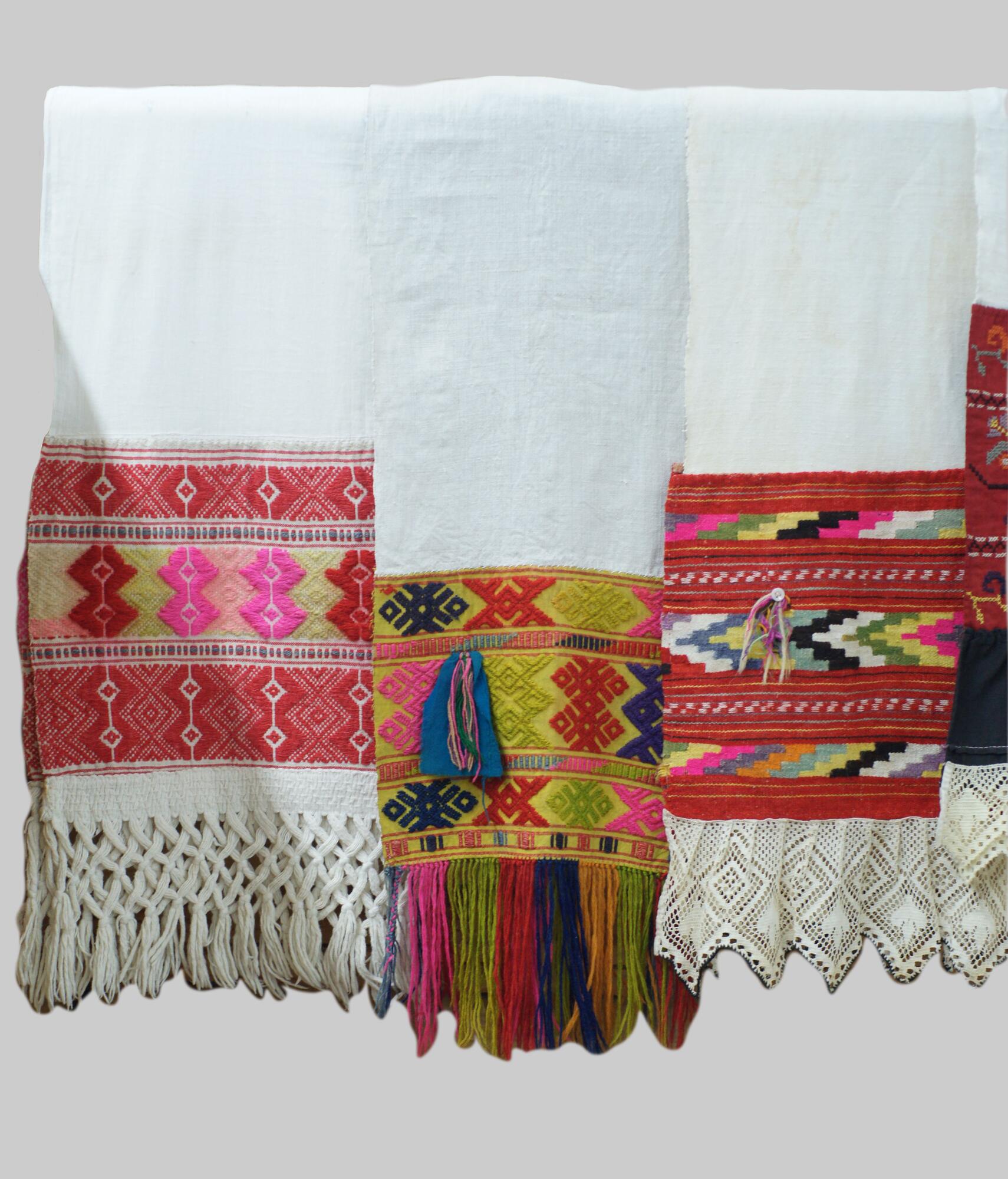
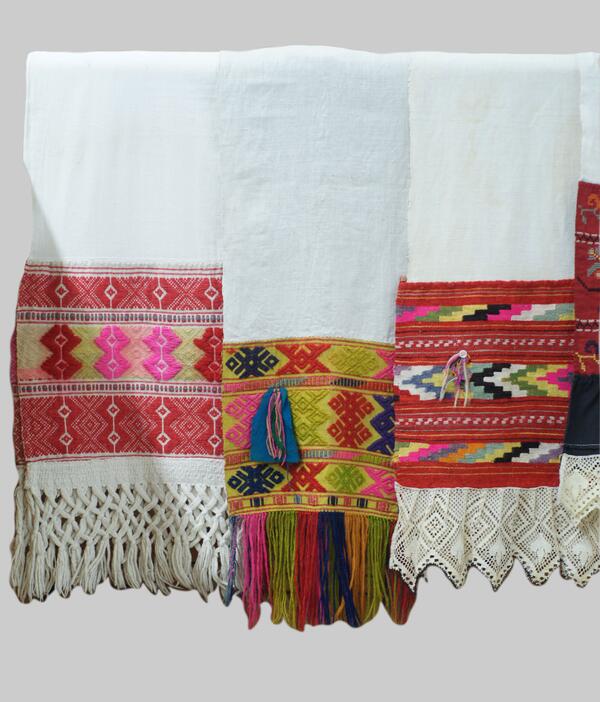
The bulk of the towel is white cloth, with both ends featuring a patterned weaving design. Many head towels had a tassel of bright threads and fabric (chuk), which was sewn on when the pattern was copied by another craftswoman, so as not to jinx the skill of the weaver who initially came up with the pattern.
Master weavers among women were tremendously respected. The fame of the craftswomen who ‘could capture an image of a flying bird’ spread far beyond their own villages. Udmurt women were weaving when they were not occupied with other duties — they’ve done a lot of weaving during winter. At the age of seven, a peasant girl was taught to spin, weave and sew. A bride’s dowry comprised mostly embroidered and woven products. The dowry exhibition, which was held in the groom’s house, was supposed to showcase the bride’s hard work and craftiness. At the wedding, the bride presented the products she crafted to the groom’s relatives.
Plant dyes were used to dye threads in most households. They were widespread among all peoples of the Volga and Ural regions. Madder or bedstraw extracts were typically used to dye the threads red. For blue dye, iron dross form the smithies was commonly used. Alder bark mixed with iron dross made the black dye. The main method of dyeing was fermentation of threads in a paint solution with some alum mixed in. The threads were fermented, dried, and then boiled in a paint solution without additives. The double dyeing method was also used.
The patterns on the ends of the head towels were a talisman of sorts. These were wide bands separated with a narrow patterned band. This composition reflected Udmurts' spiritual worldview: the upper world belonged to God, the world below was the spiritual world, and between them was the earthly world.
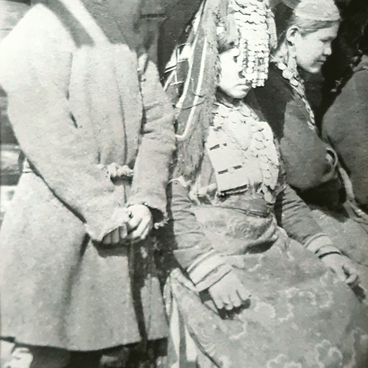
Women wore these head towels until the 1960s The towel was wrapped around one’s head, and its decorated ends were covering the back. Married women used to say that without the head towel the back is ‘unprotected’ (тыбыр гольык кыле кадь, тыбыр кер потэ — translated, it means ‘it’s like the back is naked; the back is shy’). A woman was expected to wear a head towel throughout most of her life. The bride’s head was first wrapped in a towel at the groom’s house, and the towel was no longer worn when a woman could no longer bear children. Once a woman has taken her turban off, the tradition only allowed her to wear a pelshet — a modest towel without any bright-colored threads.
The bulk of the towel is white cloth, with both ends featuring a patterned weaving design. Many head towels had a tassel of bright threads and fabric (chuk), which was sewn on when the pattern was copied by another craftswoman, so as not to jinx the skill of the weaver who initially came up with the pattern.
Master weavers among women were tremendously respected. The fame of the craftswomen who ‘could capture an image of a flying bird’ spread far beyond their own villages. Udmurt women were weaving when they were not occupied with other duties — they’ve done a lot of weaving during winter. At the age of seven, a peasant girl was taught to spin, weave and sew. A bride’s dowry comprised mostly embroidered and woven products. The dowry exhibition, which was held in the groom’s house, was supposed to showcase the bride’s hard work and craftiness. At the wedding, the bride presented the products she crafted to the groom’s relatives.
Plant dyes were used to dye threads in most households. They were widespread among all peoples of the Volga and Ural regions. Madder or bedstraw extracts were typically used to dye the threads red. For blue dye, iron dross form the smithies was commonly used. Alder bark mixed with iron dross made the black dye. The main method of dyeing was fermentation of threads in a paint solution with some alum mixed in. The threads were fermented, dried, and then boiled in a paint solution without additives. The double dyeing method was also used.
The patterns on the ends of the head towels were a talisman of sorts. These were wide bands separated with a narrow patterned band. This composition reflected Udmurts' spiritual worldview: the upper world belonged to God, the world below was the spiritual world, and between them was the earthly world.
Women wore these head towels until the 1960s The towel was wrapped around one’s head, and its decorated ends were covering the back. Married women used to say that without the head towel the back is ‘unprotected’ (тыбыр гольык кыле кадь, тыбыр кер потэ — translated, it means ‘it’s like the back is naked; the back is shy’). A woman was expected to wear a head towel throughout most of her life. The bride’s head was first wrapped in a towel at the groom’s house, and the towel was no longer worn when a woman could no longer bear children. Once a woman has taken her turban off, the tradition only allowed her to wear a pelshet — a modest towel without any bright-colored threads.