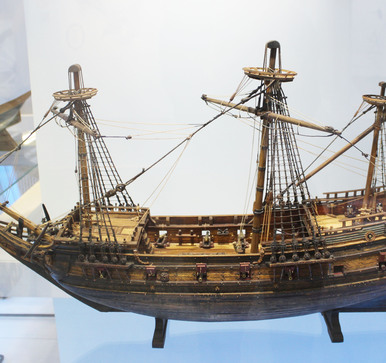
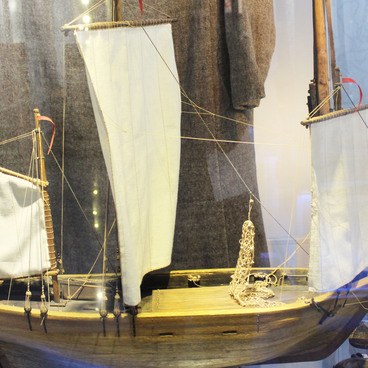
In 1894 in Norway during a severe storm with whiteout, a light sailboat designed by Colin Archer rescued 36 people while a salvage steamer Heimdallr could not even put out to sea. In Russia they decided to adopt the Norwegian experience and Colin Archer was contracted by them to build two ships of the same type.
These twins, christened Grand Duke Alexander Mikhailovich and Grand Duchess Xenia Alexandrovna, were a little bigger than their prototype. The external shell of the keeled two-mast sailboats was manufactured from oak and the inner one from yellow deal. .The ships were painted white above the waterline. They were based in two salvage stations specially opened on the Murman coast of Barents Sea.
Alexander and Xenia were charged to keep the sea permanently during a stormy weather and to render assistance to ships in distress if situation so required. The small sailboats stayed on high seas up to 230 days a year with no change of the crew composed of a skipper and three sailors. Many famous seamen of the North passed through the mill on these boats.
As early as in the first navigation of 1903, Grand Duke Alexander Mikhailovich under the command of Coastal voyage navigator V. Olonkin saved from imminent death four catcher boats with 14 fishermen; apart from that 22 catcher boats were towed to encampments ‘because fishermen only start asking for help when they begin to relinquish the hope of safe return.’
The second salvage boat was just as effective. In 1904 Grand Duchess Xenia Alexandrovna led by Skipper I.P. Anufriyev within one day (August 18) in the first instance towed successfully a half-waterlogged shnyaka (small flat-bottomed fishing boat) with people to an encampment and shortly afterwards saved another shnyaka which was waiting for help one day and a half. After that the boat-cruiser continued her patrolling duty until 7 p.m. and only returned to Lodeynaya Bay at nightfall. For dedication to saving people and ships the Board of Lifesaving Society awarded Silver Medal to Navigator V. Olonkin, Deep-sea skipper I.P. Anufriyev was honored with accolade; the sailors were given gifts of money.
The boats saved ships from disaster, rendered medical assistance to people, warmed and fed the aggrieved. The Pomors rated high the risky daily routine of courageous seamen and always expressed deep gratitude to them. Just in the first 8 years of service Xenia and Alexander saved 43 vessels with 143 fishermen and prevented a great many accidents.
After October Revolution Grand Duchess Xenia Alexandrovna was renamed into Storm, and Grand Duke Alexander Mikhailovich received the name Komsomolets. They continued their difficult service at the Murman coast. Reportedly, the boat-cruisers had sailed in the North until 1941 when Great Patriotic War broke.
These twins, christened Grand Duke Alexander Mikhailovich and Grand Duchess Xenia Alexandrovna, were a little bigger than their prototype. The external shell of the keeled two-mast sailboats was manufactured from oak and the inner one from yellow deal. .The ships were painted white above the waterline. They were based in two salvage stations specially opened on the Murman coast of Barents Sea.
Alexander and Xenia were charged to keep the sea permanently during a stormy weather and to render assistance to ships in distress if situation so required. The small sailboats stayed on high seas up to 230 days a year with no change of the crew composed of a skipper and three sailors. Many famous seamen of the North passed through the mill on these boats.
As early as in the first navigation of 1903, Grand Duke Alexander Mikhailovich under the command of Coastal voyage navigator V. Olonkin saved from imminent death four catcher boats with 14 fishermen; apart from that 22 catcher boats were towed to encampments ‘because fishermen only start asking for help when they begin to relinquish the hope of safe return.’
The second salvage boat was just as effective. In 1904 Grand Duchess Xenia Alexandrovna led by Skipper I.P. Anufriyev within one day (August 18) in the first instance towed successfully a half-waterlogged shnyaka (small flat-bottomed fishing boat) with people to an encampment and shortly afterwards saved another shnyaka which was waiting for help one day and a half. After that the boat-cruiser continued her patrolling duty until 7 p.m. and only returned to Lodeynaya Bay at nightfall. For dedication to saving people and ships the Board of Lifesaving Society awarded Silver Medal to Navigator V. Olonkin, Deep-sea skipper I.P. Anufriyev was honored with accolade; the sailors were given gifts of money.
The boats saved ships from disaster, rendered medical assistance to people, warmed and fed the aggrieved. The Pomors rated high the risky daily routine of courageous seamen and always expressed deep gratitude to them. Just in the first 8 years of service Xenia and Alexander saved 43 vessels with 143 fishermen and prevented a great many accidents.
After October Revolution Grand Duchess Xenia Alexandrovna was renamed into Storm, and Grand Duke Alexander Mikhailovich received the name Komsomolets. They continued their difficult service at the Murman coast. Reportedly, the boat-cruisers had sailed in the North until 1941 when Great Patriotic War broke.