The history of Russian shipbuilding goes back into the time of Peter I who initiated the creation of own national fleet in the empire possessing one of the largest land domains. Sure enough, ladyas (boats) were built earlier but they were primitively hand-crafted and intended for transportation of merchandise only. At that time in Russia they did not even think of a real navy while Holland, England and Germany had for long commanded the seas by then.
Peter I personally went abroad to look into the matter of shipbuilding and then founded the largest in Russia Admiralty Warf in the mouth of Neva River in 1704. Small dockyards had already been operating by that time on Svir, Volkhva and Luga rivers. They build compact battleships for Azov Fleet, but Peter I had already got entangled in Great Northern War and was interested in blocking Chudskoye and Pskovskoye lakes by means of a flotilla.
On his instructions, shipyards were founded in the region of Ladoga as well as near Arkhangelsk. It was there where experienced Dutch shipwrights were selected personally by the tsar, built small frigates, which were sufficiently light and maneuverable warships. But they were in increasingly short supply, therefore the Russian tsar bought out from the English a number of ships for the Northern Fleet. All in all by the end of the war the fleet defending the northern approaches to Russia numbered 48 warships.
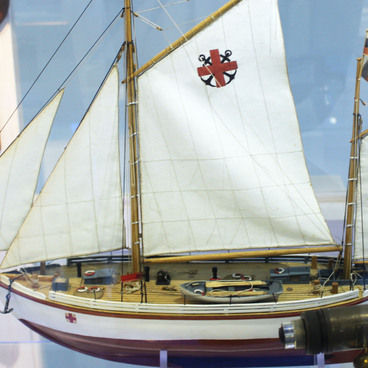
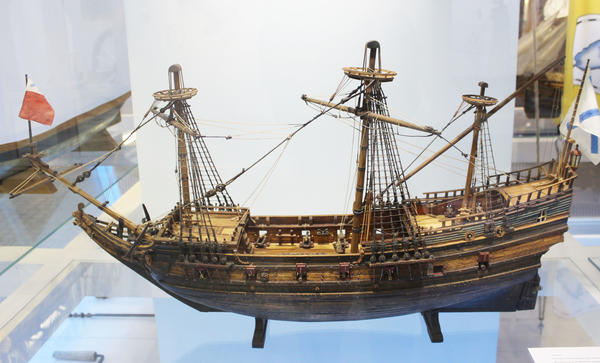
Light sailboat Svyatoy Ilya (St. Elias) stood out of them. Her length was 24,3 meters only and her full-laden draft was 2,5 meters. She was built by the English in the island of Solombala not far from Arkhangelsk. They received an order for several combatant frigates at a time. The works were superintended by English shipwright Joseph Nye. Svyatoy Ilya armed with 25 naval guns, was launched in 1702. She was the first and the smallest out of three combatant frigates built in Solombala Shipyard. Each of two other frigates, Svyatoy Peter and Svyatoy Pavel, carried 32 guns.
In 1703, Frigate Svyatoy Ilya joined the White Sea Flotilla and actively participated in the Great Northern War. In 1710, the ship merged in the Baltic Fleet and was redeployed to Copenhagen for patrolling the North Sea. The course of the war was changing, therefore the frigate was periodically reassigned from one fleet to another. In 1711, the ship came back to the White Sea and was registered with the Port of Arkhangelsk, but as early as 1712 sailed for Riga to join the Baltic Fleet. That voyage became the final one for Svyatoy Ilya as the frigate sank in a Baltic Sea storm.
As a tribute to her, a new frigate also christened Svyatoy Ilya was built at the Admiralty Warf in 1714. That was the only warship laid down in Sankt Petersburg during the Great Northern War.
Peter I personally went abroad to look into the matter of shipbuilding and then founded the largest in Russia Admiralty Warf in the mouth of Neva River in 1704. Small dockyards had already been operating by that time on Svir, Volkhva and Luga rivers. They build compact battleships for Azov Fleet, but Peter I had already got entangled in Great Northern War and was interested in blocking Chudskoye and Pskovskoye lakes by means of a flotilla.
On his instructions, shipyards were founded in the region of Ladoga as well as near Arkhangelsk. It was there where experienced Dutch shipwrights were selected personally by the tsar, built small frigates, which were sufficiently light and maneuverable warships. But they were in increasingly short supply, therefore the Russian tsar bought out from the English a number of ships for the Northern Fleet. All in all by the end of the war the fleet defending the northern approaches to Russia numbered 48 warships.
Light sailboat Svyatoy Ilya (St. Elias) stood out of them. Her length was 24,3 meters only and her full-laden draft was 2,5 meters. She was built by the English in the island of Solombala not far from Arkhangelsk. They received an order for several combatant frigates at a time. The works were superintended by English shipwright Joseph Nye. Svyatoy Ilya armed with 25 naval guns, was launched in 1702. She was the first and the smallest out of three combatant frigates built in Solombala Shipyard. Each of two other frigates, Svyatoy Peter and Svyatoy Pavel, carried 32 guns.
In 1703, Frigate Svyatoy Ilya joined the White Sea Flotilla and actively participated in the Great Northern War. In 1710, the ship merged in the Baltic Fleet and was redeployed to Copenhagen for patrolling the North Sea. The course of the war was changing, therefore the frigate was periodically reassigned from one fleet to another. In 1711, the ship came back to the White Sea and was registered with the Port of Arkhangelsk, but as early as 1712 sailed for Riga to join the Baltic Fleet. That voyage became the final one for Svyatoy Ilya as the frigate sank in a Baltic Sea storm.
As a tribute to her, a new frigate also christened Svyatoy Ilya was built at the Admiralty Warf in 1714. That was the only warship laid down in Sankt Petersburg during the Great Northern War.