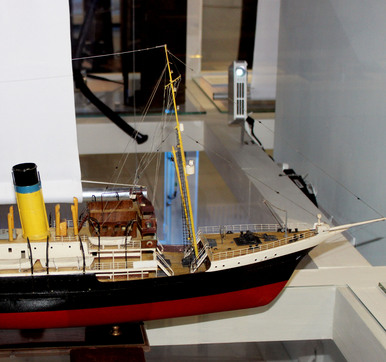
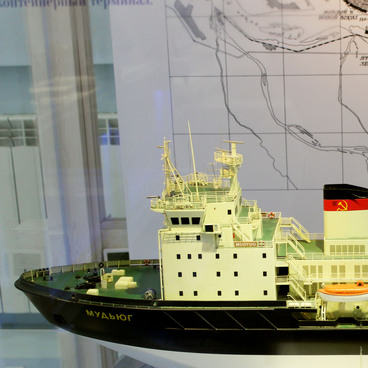
After the end of the military clash with Japan lost by Russia, the country’s leadership arrived at a conclusion that a thorough exploration should be made of the territory in the region of Eurasia northern shores. A hydrographic expedition in the Arctic Ocean was organized. To implement the planned voyage, two sister ship icebreakers were laid down in Saint Petersburg in 1907. The ships which knew no equals at that time were christened Taymyr and Vaygach. These names were given to the ships after a peninsula and an island situated on the way to Asia that passed along the country northern coast.
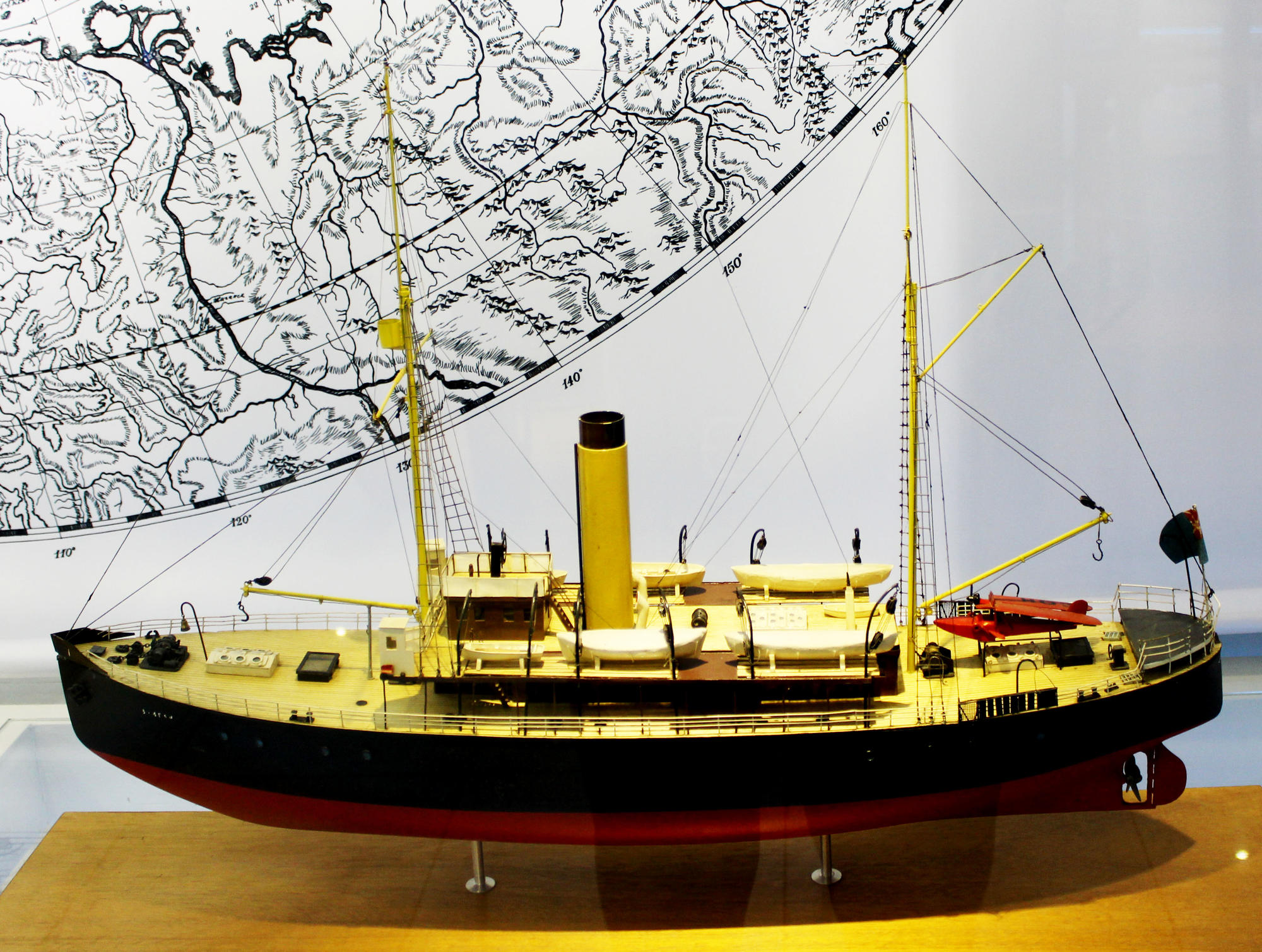


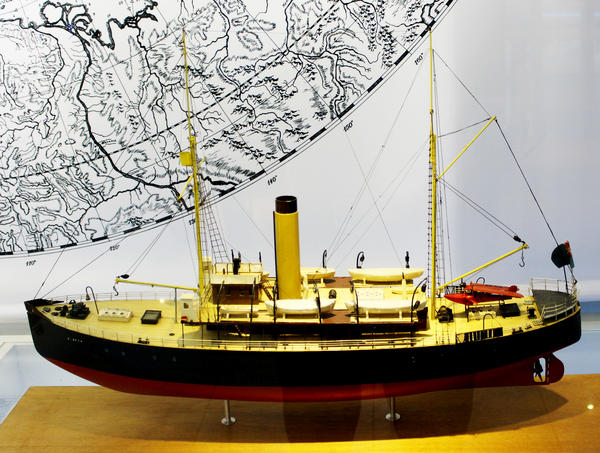
Model of Ice-Breaking Steamer Vaygach
Creation period
1989 year
Dimensions
54х88х21 cm
Technique
assembly work
Collection
Exhibition
5
Open in app#1
Khudyakov V.M.
Model of Ice-Breaking Steamer Vaygach
#2
#5
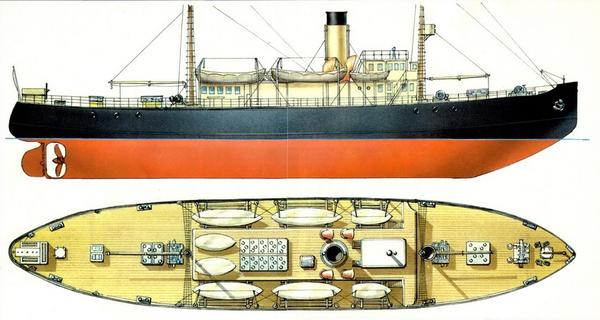
The drawing of the Taymyr-type ice-breaking steamer projection
#3
Steamship Vaygach of 1359 tons displacement and 60 meters long was built by workers of the Nevsky Marine Engineering Plant. A 1200 house power triple-expansion engine was used as the propelling force. The vessel maximum speed was 9 knots. At economical speed of 7 knots, the icebreaker could cover the distance of 7700 miles.
Her service started in 1909. Alexander Vasilyevich Kolchak was the first captain of the steamer. The Commander-In-Chief-to-be was a polar explorer in those days. Vaygach joined the Imperial Russian Navy.
In the summer of 1916, the icebreaker was transferred from the Baltic Fleet to the Arctic Ocean Flotilla and operated there until Arkhangelsk was taken by the Red Army on February 17, 1918. Further on, the vessel equipped with 4 guns was turned into a Read Navy boat.
Her service started in 1909. Alexander Vasilyevich Kolchak was the first captain of the steamer. The Commander-In-Chief-to-be was a polar explorer in those days. Vaygach joined the Imperial Russian Navy.
In the summer of 1916, the icebreaker was transferred from the Baltic Fleet to the Arctic Ocean Flotilla and operated there until Arkhangelsk was taken by the Red Army on February 17, 1918. Further on, the vessel equipped with 4 guns was turned into a Read Navy boat.
#11
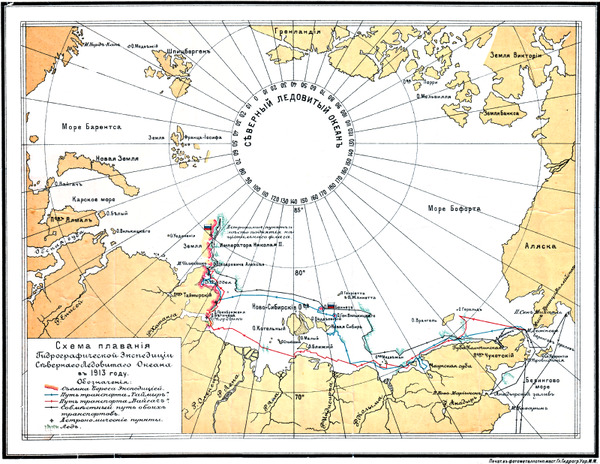
The sea route pattern of GESLO (Geographic Expedition in the Arctic Ocean)
The principal achievement of the icebreaker was the hydrographic expedition in the Arctic Ocean which started in 1910 and lasted for 5 years. Both vessels, Taymyr and Vaygach, were sent to explore the territory. Boris Andreyevich Vilkitsky headed the expedition. The staff of the steamers was composed of battle-hardened seamen and medical professionals.
The steamships sailed westbound in the northern aquatic area. On the way, the expedition made a detailed description of the East Siberia coast and adjacent islands, collected valuable information on currents, ice and climate. In 1913, the crew of the icebreakers discovered Emperor Nicholas II Land (Severnaya Zemlya today). This achievement is considered to be the last important geographic discovery across the globe. After a long and difficult voyage, the expedition arrived in Arkhangelsk in September 1915. In 1918, the heroic life of Vaygach ended when she ran against a rock and sank.
The steamships sailed westbound in the northern aquatic area. On the way, the expedition made a detailed description of the East Siberia coast and adjacent islands, collected valuable information on currents, ice and climate. In 1913, the crew of the icebreakers discovered Emperor Nicholas II Land (Severnaya Zemlya today). This achievement is considered to be the last important geographic discovery across the globe. After a long and difficult voyage, the expedition arrived in Arkhangelsk in September 1915. In 1918, the heroic life of Vaygach ended when she ran against a rock and sank.
#6
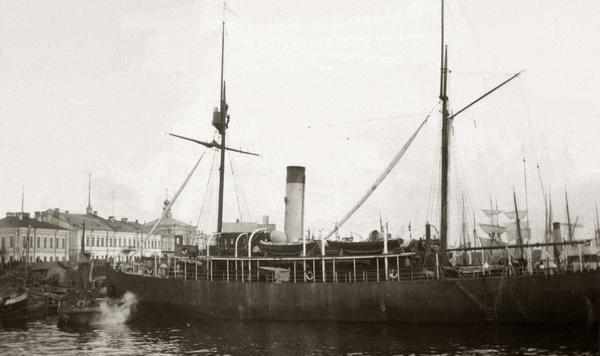
GESLO vessels alongside the Sobornaya Quay in Arkhangelsk
#10
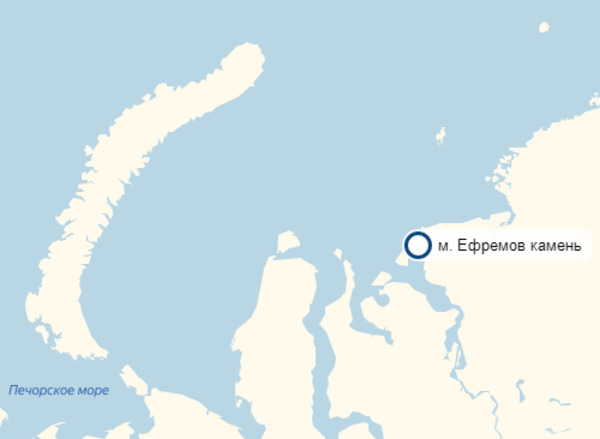
The place of death of the ship Vaigach
#12
State Northern Maritime Museum
read morehide
00:00
00:00
1x
Model of Ice-Breaking Steamer Vaygach
Creation period
1989 year
Dimensions
54х88х21 cm
Technique
assembly work
Collection
Exhibition
5
 Point your smartphone camera to open in the app
Open in app
Share