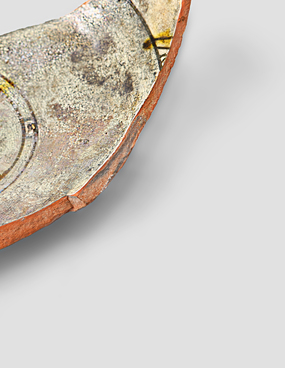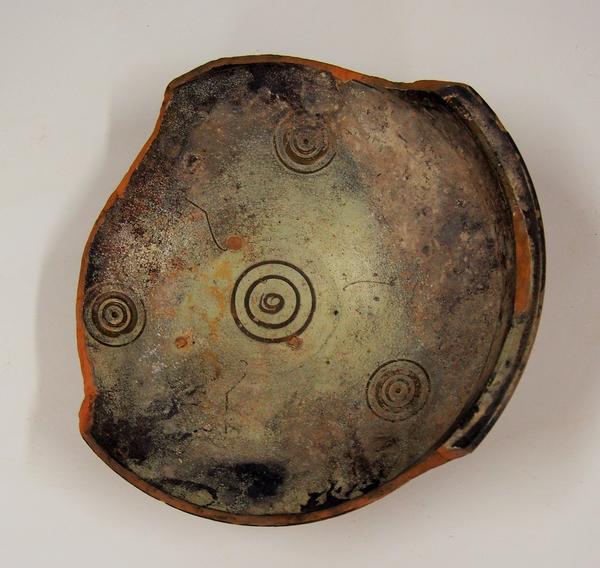
This redware glazed bowl belongs to the Zeuxippus Ware type.
This type of pottery got its name from the Baths of Zeuxippus built in the center of Constantinople under Emperor Septimius Severus (193–211). The baths were richly decorated with mosaics and numerous statues of gods, historical and mythological characters, mostly Greek. In the central courtyard, there were gymnasiums and shops.
It was in this place that archaeologists discovered a large quantity of pottery, now known as Zeuxippus Ware. It was found in Constantinople, as well as in Chersonesus, Sudak and at shipwreck sites. In other regions, that is, between Thessaloniki and Italy, original pottery pieces and local imitations are a rare occurrence.
Larisa Vasilievna Sedikova, a historian and researcher of the Chersonese settlements, notes that the wares are characterized by “thin dense walls, elegant cut-in patterns, applied on a layer of engobe, and transparent, in some places colored, shiny glazes.”
For the first time, the Zeuxippus Ware ceramics were distinguished by the Soviet historian and archaeologist Anatoly Leopoldovich Yakobson. He also divided it into two groups, dating one of them to the 11th–12th centuries and the other to the 12th–13th centuries.
Professor Valentin Nikolayevich Danilenko claimed that Zeuxippus ceramics were developed in the 13th century. The scientist noted the important role that Venetian and Genoese merchants played in spreading the products of this category throughout the cities of the Byzantine Empire; this claim is supported by this exhibit, found on the Italian ship.
Larisa Sedikova believes that today Zeuxippus pottery should be considered “one of the most widespread types of imported dishware of 13th-century Chersonesus.”
In the 13th century, potters began to use a new device — a clay tripod with small pyramid-shaped legs. Such stands were placed during the second, “glazing” stage of firing between the products, preventing them from sticking together. The feet of the stand left characteristic marks on the clay, which helped in dating the vessels.