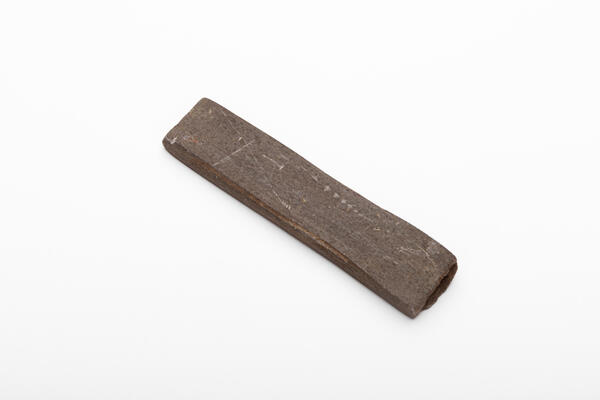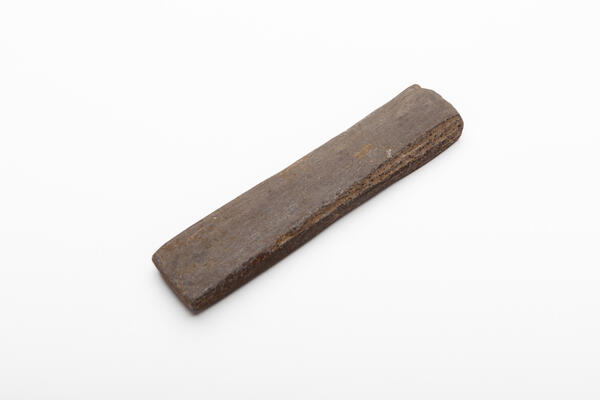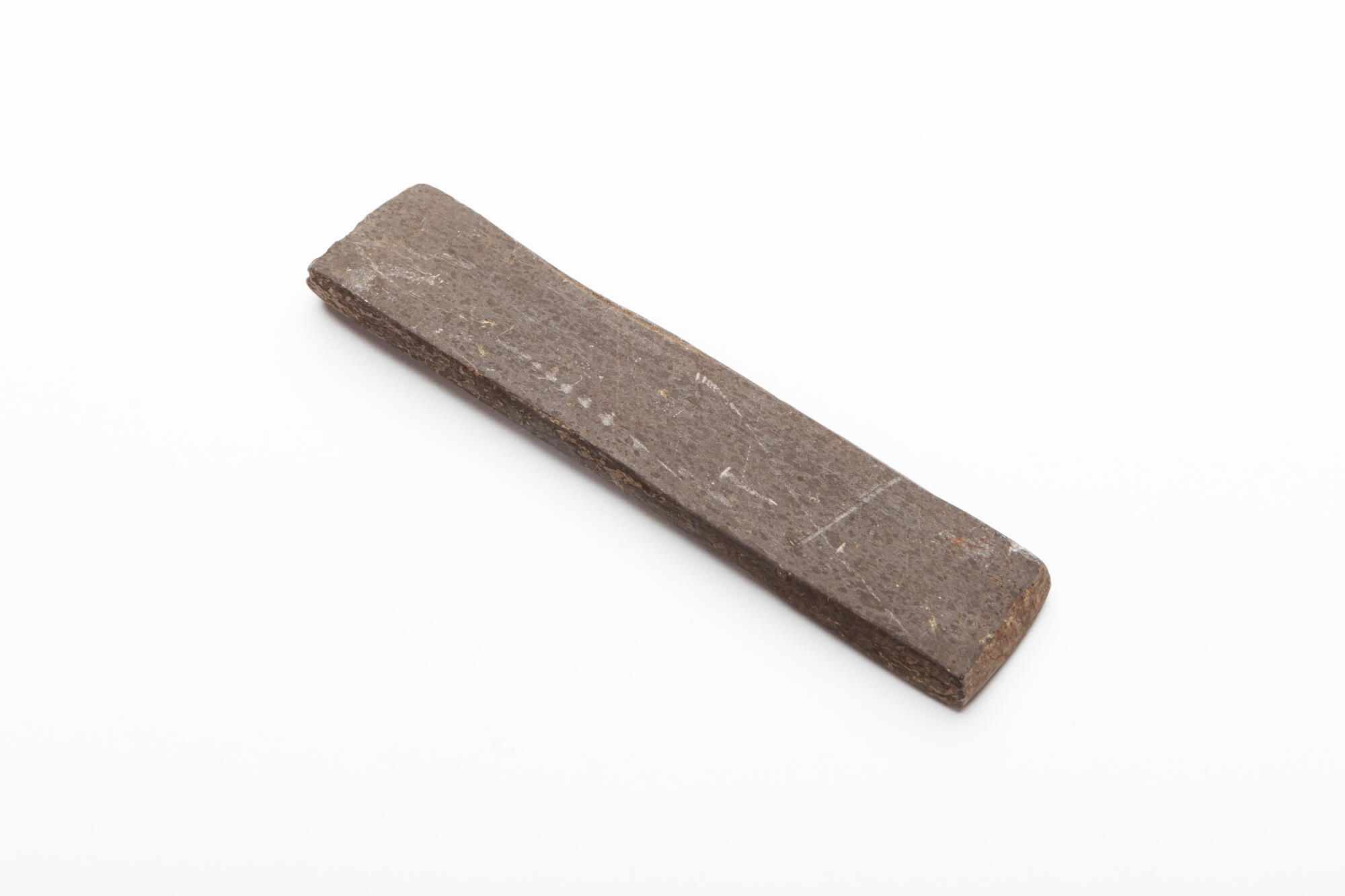


A whetstone is a hard rock used for sharpening knives, tools and other metal objects. In the Middle Ages, the Idnakar hillfort was one of the centers of metal processing in the Prikamye region. In metallurgy, Northern Udmurts used local raw materials such as bog ore. Its quality was quite low, which was mostly negligible given how easy its extraction was.
The search for ores was carried out by dosers. They used different signs of the presence of ore, beliefs and signs. For example, they stuck a sharpened peg into a layer of soil, listened to the sound, looked at the color of the rock, and even tasted the soil that stuck to the peg. If it was acidic, the turf was immediately removed, and underneath there would be an ore layer up to 35 centimeters thick.
The ore was crushed, roasted, sieved, washed and freed from gangue. After this, it was placed in a bloomery, alternating with layers of charcoal. Air was blown into the melting furnace using bellows. The resulting boiled iron — bloom — was carefully forged to knock out the remaining slag from it.
Then the soft iron was blistered, saturated with carbon and kept at high temperature in a fireproof vessel with crushed bones and horns, hooves, and charcoal. This processing method was suitable only for small objects, such as awls, knives and arrowheads. To make larger tools, a hard steel blade was welded onto a soft iron base.
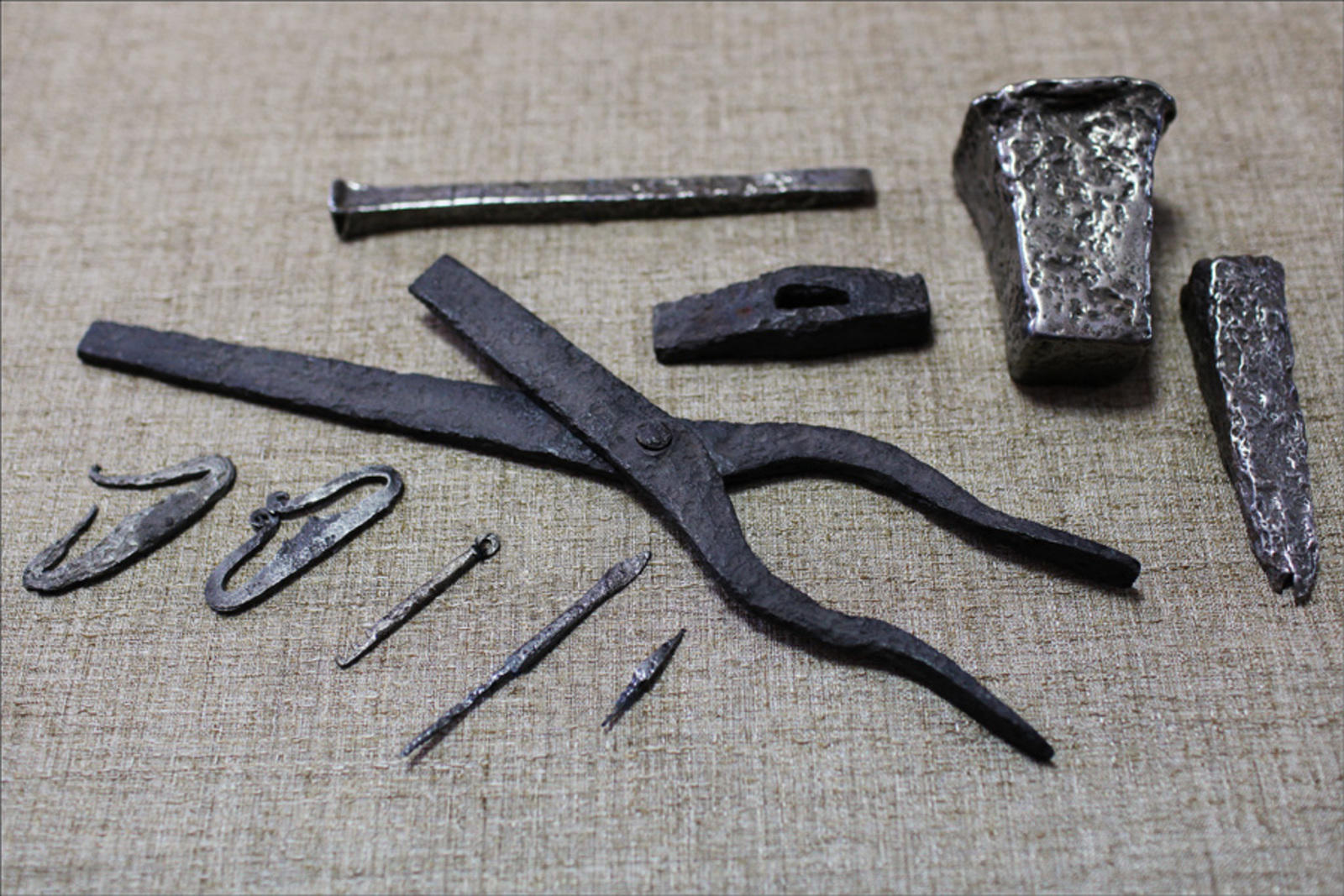
Prikamye blacksmiths knew eight technologies of forging knives and were highly skilled craftsmen, which is evidenced by the finds in Idnakar. Prikamye blacksmiths mastered most of the known methods of metal processing: hand forging, bending, twisting, chiseling, piercing and welding.
When forging, a blacksmith could not do without a hammer or sledgehammer, an anvil and tongs. Metal was cut with chisels — wedge-shaped tools. Pritchels were used to punch holes in metal. Blacksmiths made agricultural tools, axes, adzes, knives, household tools, arrowheads, spears, darts, elements of horse harness and much more. Whetstones were used to keep cutting tools in working condition.