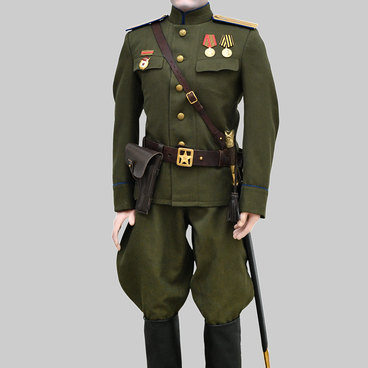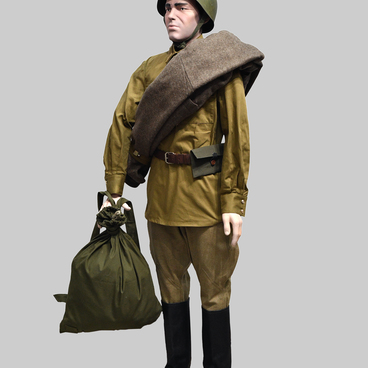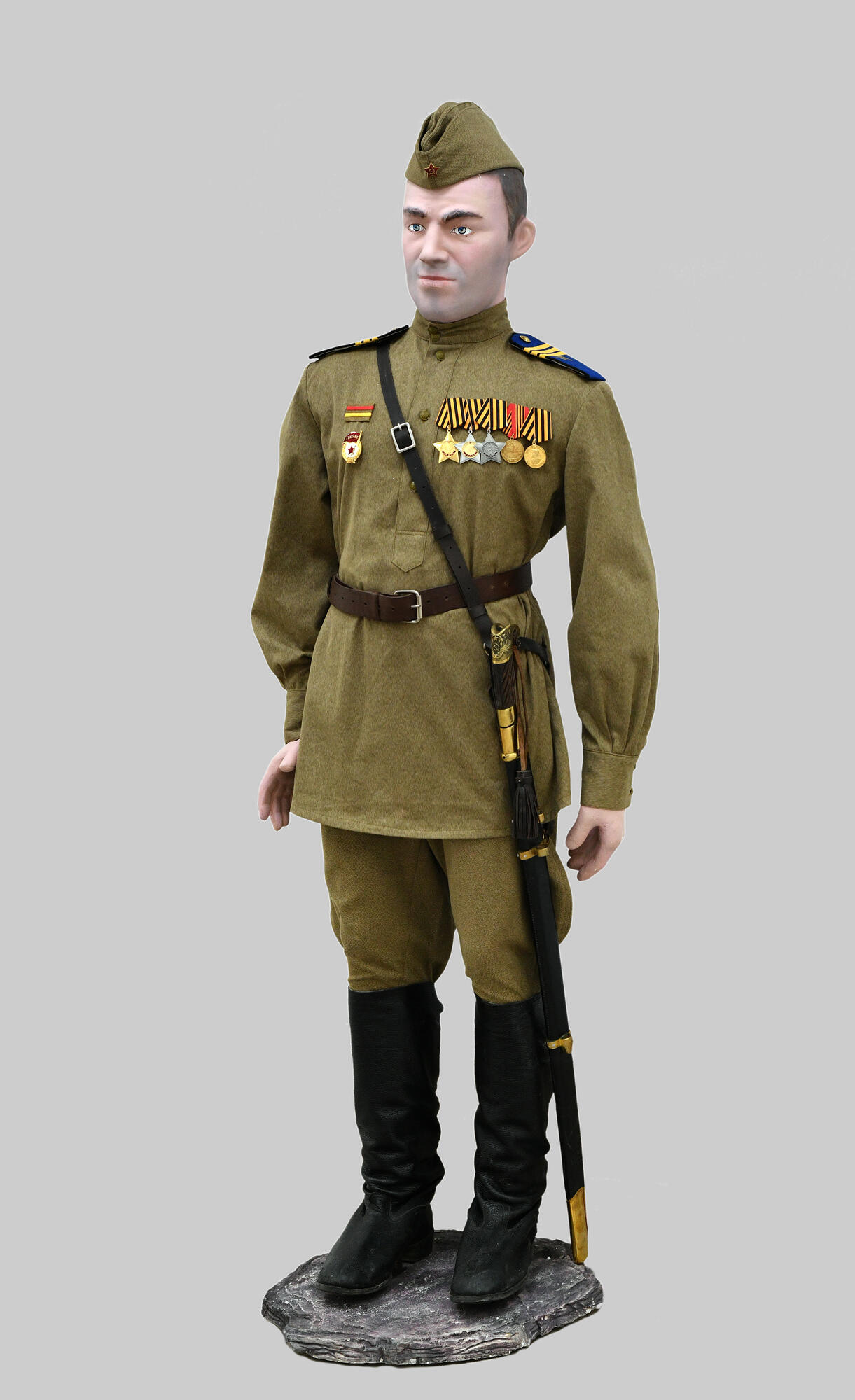


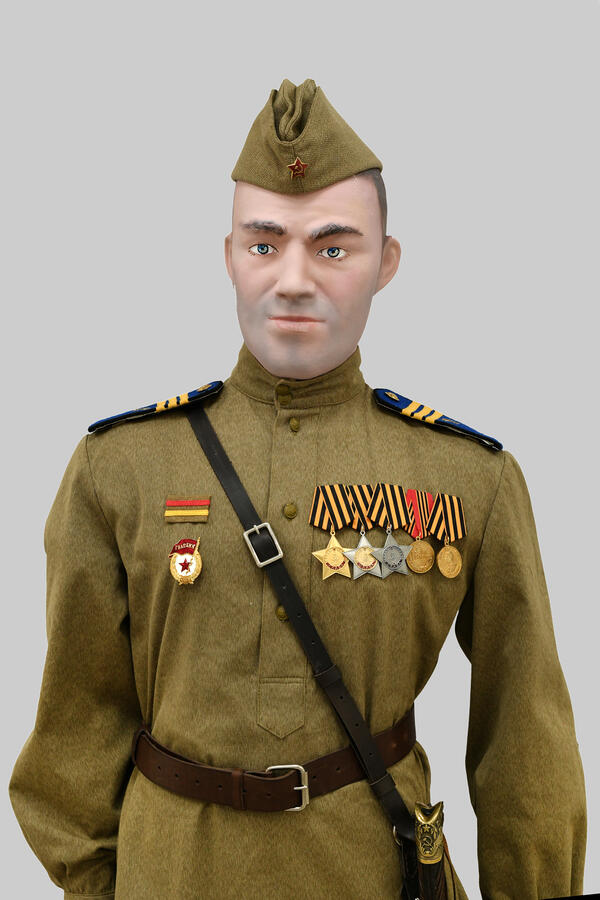
In 1943, the USSR People’s Commissariat of Defense introduced a new uniform in the Red Army. The military shirt of the new model had a stand-up collar instead of a turndown one. But the main innovation was the reintroduction of shoulder boards that had disappeared since the Bolshevik revolution. Shoulder boards were necessary to determine the military rank and the branch of the army. They were introduced by the decree of the Presidium of the Supreme Soviet of the USSR on January 6, 1943. The very system of insignia was borrowed from the army of pre-revolutionary Russia. The size and shape of the shoulder boards of soldiers and junior officers was absolutely the same as in the tsarist army, but differed in the number and color of stripes, and symbols.
There were two types of shoulder boards: field shoulder boards for the field uniform and everyday ones for all types of uniform, except for the field one. Everyday shoulder boards of junior officers and soldiers were in a colored fabric with colored trim. Their color indicated the branch of the army — for cavalry it was dark blue. Everyday shoulder boards also had golden emblems according to the branch of the army and yellow numbers and letters denoting the army unit. Shoulder boards could have golden brass 20-mm buttons with a star with a sickle and a hammer in the center.
Wound stripes were sewn on the right side of the shirt at the level of the middle button, and if there was a pocket — above the right chest pocket. After the war, they were worn on all forms of clothing on the right side of the chest just above orders and medals.
There were two types of shoulder boards: field shoulder boards for the field uniform and everyday ones for all types of uniform, except for the field one. Everyday shoulder boards of junior officers and soldiers were in a colored fabric with colored trim. Their color indicated the branch of the army — for cavalry it was dark blue. Everyday shoulder boards also had golden emblems according to the branch of the army and yellow numbers and letters denoting the army unit. Shoulder boards could have golden brass 20-mm buttons with a star with a sickle and a hammer in the center.
Wound stripes were sewn on the right side of the shirt at the level of the middle button, and if there was a pocket — above the right chest pocket. After the war, they were worn on all forms of clothing on the right side of the chest just above orders and medals.