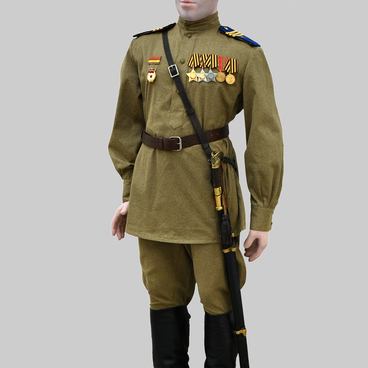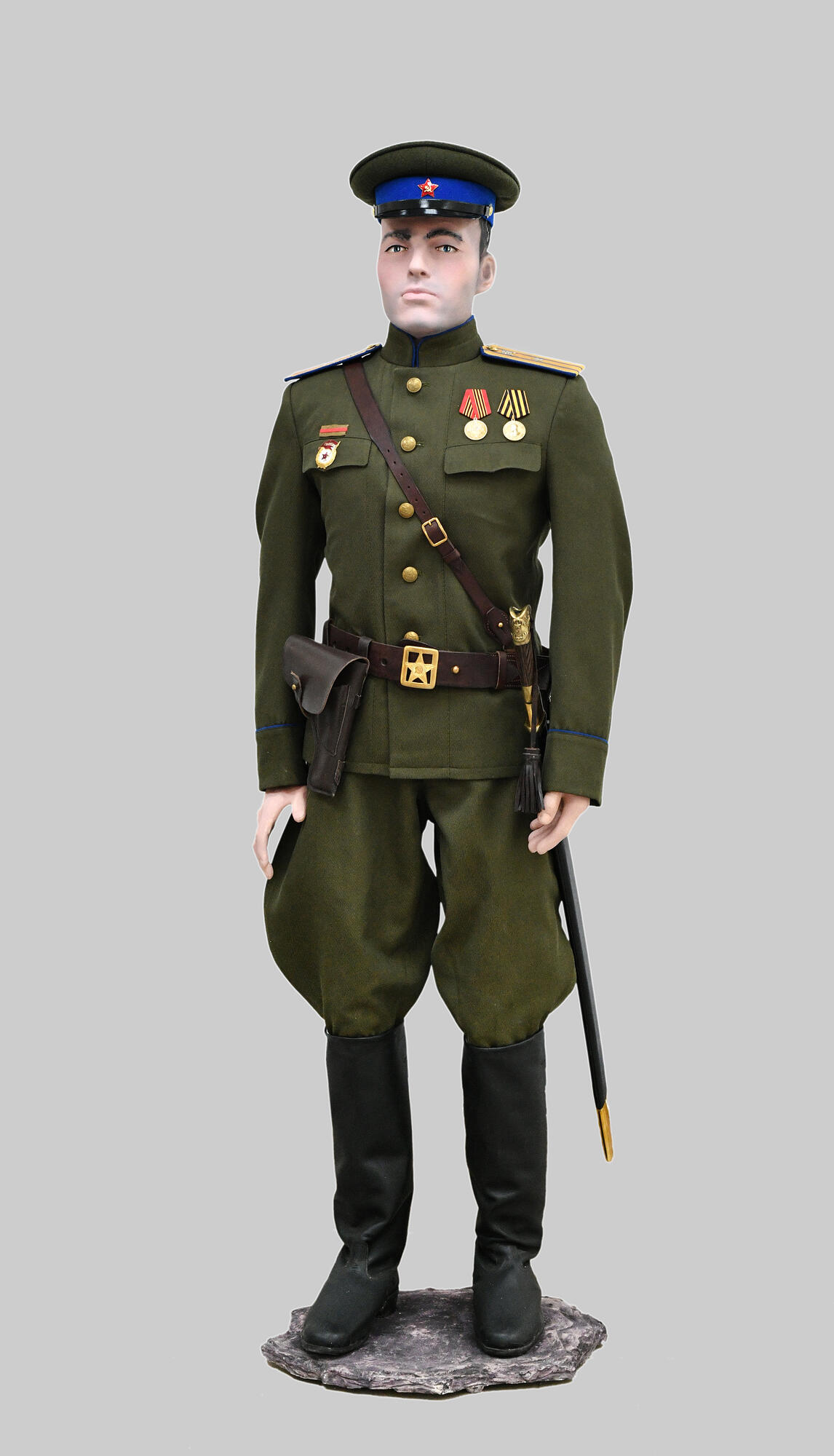


In 1943, the Red Army received a new uniform and insignia system. Largely they repeated the uniform and insignia of the tsarist army. The new rules canceled the division of uniforms into service, dress and full dress ones, since there was no need for the dress and full dress uniform in wartime. Some details of the full dress uniform were used in the uniforms of the Special Forces that carried the guard duty, as well as in the officer’s uniform. In addition, officers retained their dress uniform.
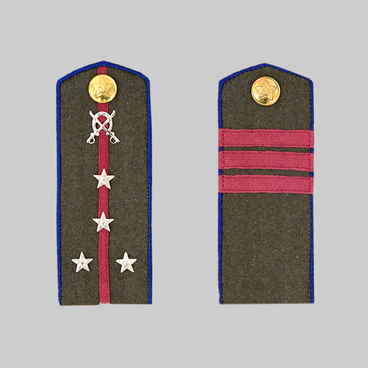
Shoulder boards were the main distinguishing feature of the new uniform. The officer’s shoulder boards were not trimmed. The branch of the army could be determined by the color of the stripes. Senior officers (from major to colonel) had two stripes on their shoulder boards, and junior officers (from junior lieutenant to captain) had one. For doctors, veterinarians and non-combatants, the stripes were red with a brownish tint. In addition, a small golden or silver badge was worn on the shoulder boards near the button, indicating the branch of the army. The color of the emblem depended on the type of troops.
The officers wore a peaked cap with a black leather chinstrap. The color of the band depended on the branch of the army. The crown of the cap was usually khaki, but the NKVD troops (abbreviation for the People’s Commissariat for Internal Affairs) often used caps with a light blue crown, members of a tank crew wore gray caps, and the Don Cossacks wore gray-blue ones. The type of headgear for officers was also described. Generals and colonels had to wear a woolen hat called “papakha”, while the rest of the officers received “ushankas” — hats with earflaps.
By the beginning of the Berlin operation (April 20, 1945), it was possible to fully provide all its participants with new summer uniforms — officers, sergeants and soldiers. Several thousand tons of new uniforms were delivered to the fronts and armies of the first echelon line, along with the ammunition, fuel, spare parts and food necessary for the offensive.
Shoulder boards were the main distinguishing feature of the new uniform. The officer’s shoulder boards were not trimmed. The branch of the army could be determined by the color of the stripes. Senior officers (from major to colonel) had two stripes on their shoulder boards, and junior officers (from junior lieutenant to captain) had one. For doctors, veterinarians and non-combatants, the stripes were red with a brownish tint. In addition, a small golden or silver badge was worn on the shoulder boards near the button, indicating the branch of the army. The color of the emblem depended on the type of troops.
The officers wore a peaked cap with a black leather chinstrap. The color of the band depended on the branch of the army. The crown of the cap was usually khaki, but the NKVD troops (abbreviation for the People’s Commissariat for Internal Affairs) often used caps with a light blue crown, members of a tank crew wore gray caps, and the Don Cossacks wore gray-blue ones. The type of headgear for officers was also described. Generals and colonels had to wear a woolen hat called “papakha”, while the rest of the officers received “ushankas” — hats with earflaps.
By the beginning of the Berlin operation (April 20, 1945), it was possible to fully provide all its participants with new summer uniforms — officers, sergeants and soldiers. Several thousand tons of new uniforms were delivered to the fronts and armies of the first echelon line, along with the ammunition, fuel, spare parts and food necessary for the offensive.