The medieval hillfort of Idnakar in the Prikamye region appeared around a thousand years ago. Medieval Udmurts had a simple diet: elk and deer meat, poultry, fish and grain, from which they cooked porridge and made flatbread.
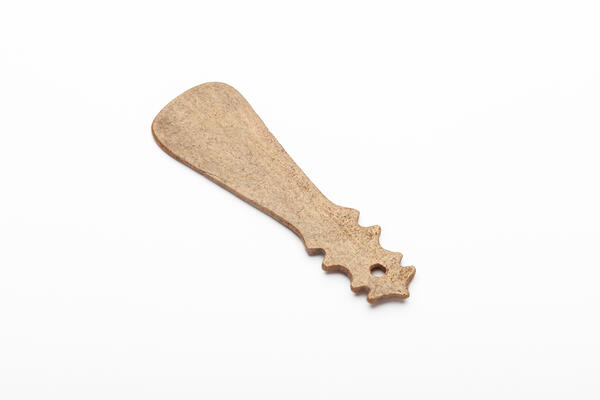
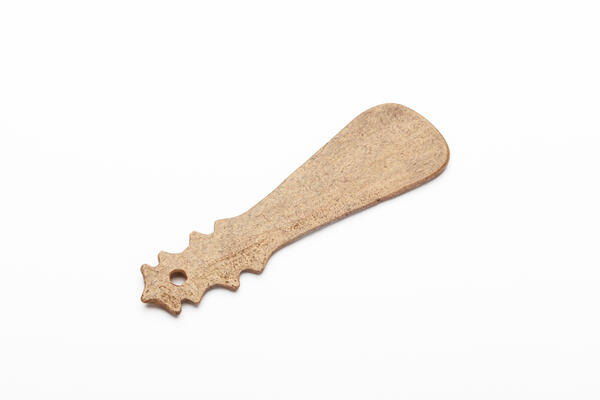
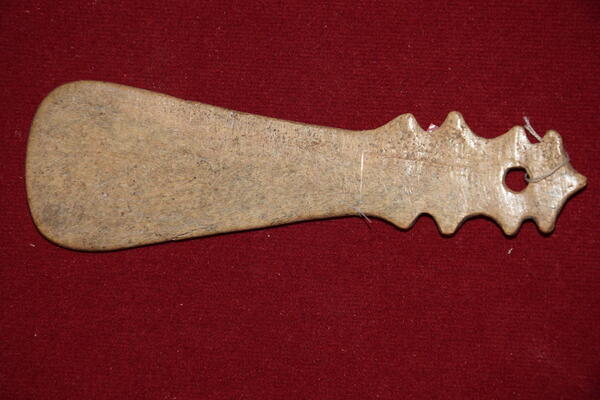
The collections of the Idnakar museum contain cutlery that was used by the inhabitants of that medieval town. The devices were carved from bone and had a flat or slightly concave scoop and a prominent shaped finial. Old Udmurt spoons resemble modern shoehorns.
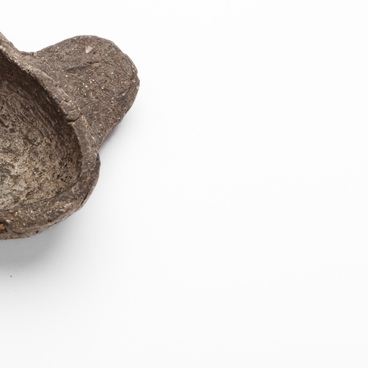
The archaeological collections from the Idnakar site feature spoons with a deep scoop that were most likely intended for broths, stews or decoctions. The tops of the handles of such cutlery were usually shaped like animal heads. Spoons of this type were found much more rarely, which indicates that a clear liquid diet was unpopular with the Udmurts.
The woodworking tools used by Idnakar craftsmen included special tools for carving spoons. They are conventionally classified as blades due to their resemblance to knives. Many modern craftsmen view the spoon-carving tools as a separate group of chisels, and some — as a type of scraper. The sharp bend on the working part of the tool helps make hollows in spoon scoops, bowls and other wooden utensils.
The history of spoons dates to prehistoric times and is associated with the advent of pottery, which made cuisines more diverse and complex. The world’s first spoons were mollusk shells and large nutshells.
Spoons began to be made from wood, bone and horn. Each people came up with a certain size, shape and depth of spoons due to the peculiarities of cuisine and climate. Expensive bronze and silver dishware appeared during the heyday of ancient Greek civilization.
On Russian soil, spoons were traditionally made of wood. Metal was reserved for exquisite amulet spoons, which are most often found in burials throughout the country. The first Russian silver spoons were cast by order of Prince Vladimir in 998, after the Christianization of Kievan Rus.
Today, a spoon is a utensil for a wide variety of dishes and drinks, as well as a measure of volume, a musical instrument, a souvenir, a sacral symbol, a piece of art and a collectible.