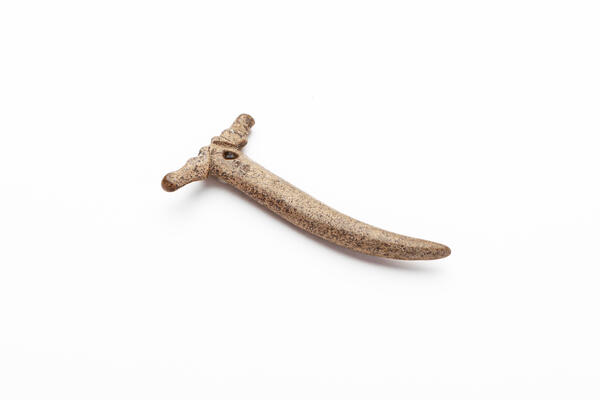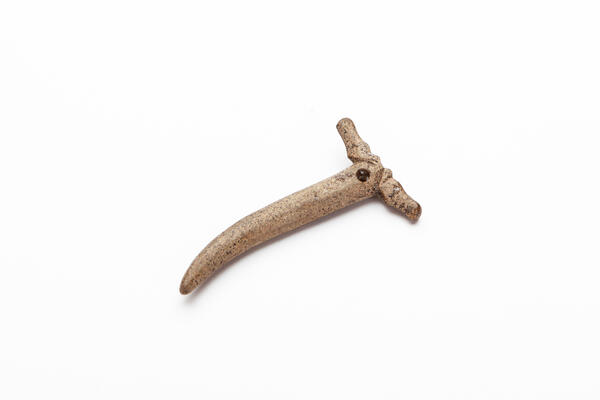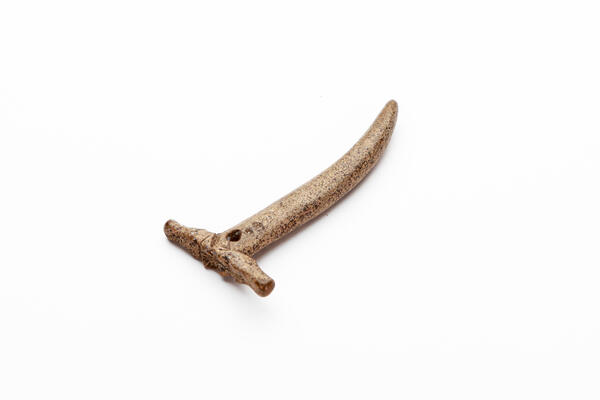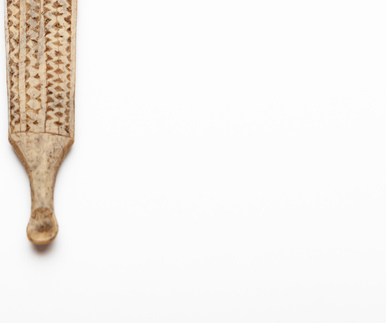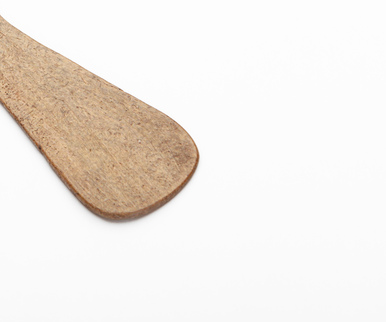
Bone clasps are peculiar-looking rods with rounded or faceted ends, sometimes with a grooved base. Some clasps had a loop in the center, while others had a cord that was wound around the top.
In the Middle Ages, clasps became widespread in the Urals, the Volga region and the Caucasus. They are found at sites, hillforts and burial complexes. Clasps were used as early buttons, badges and clothes decorations.
In burial mounds, clasps were usually placed on the chest, without indications of there being a necklace or a barrette, that is why they are viewed as fasteners for clothes. Clasps are also found in the head area, as they could be used to fix headdresses, ribbons and other decorations. In this case, the clasp was secured on top of the hairstyle or at the lower edge of the headdress, and cords of hair ornaments with beads or pendants were tied to it.
Clasps are also found in the waist area, sometimes there are two or three of them, which means that they were used to fasten the hem of outer clothing. In the Urals and Middle Volga region, clasps were found together with chains, which means they were used not only as fasteners but also as ornamental pendants attached to the ends of the belt.
In some burial mounds, unusual clasps have been discovered, which feature ear picks at one end. An ear pick appeared in the Middle Ages and was used to clean out earwax. It was hung from a belt on a chain or cord; the owner could also use it as a decoration and talisman.
Clasps are often found to the right or left of the belt, accompanied by unspecified small rods, sometimes boxes and mirrors. Most likely, clasps were part of cosmetic sets and were attached as pendants. Clasps came to the Urals and western regions from the Dzhetyasar culture, where they were used as fasteners. It remains unclear why their function was changed so drastically as to be used as jewelry.
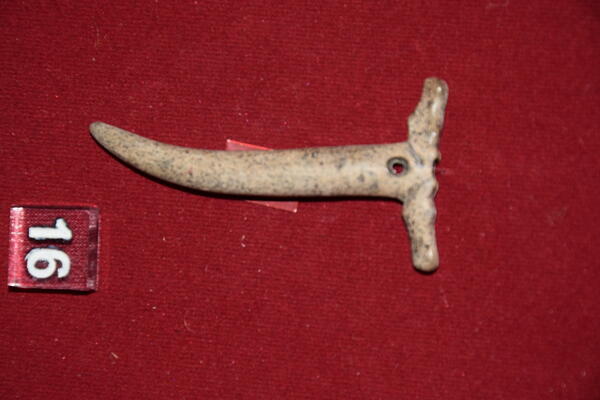
The clasp from the museum’s collection is a pendant clasp with an eyelet at the top. The edges of the product are shaped like elk heads. It was found during archaeological excavations at the Idnakar hillfort in Soldyr in 1997.