In the late 1950s, underwater research of the water areas in South–Eastern Crimea started under the leadership of archaeologist and historian of antiquity, Professor Vladimir Dmitriyevich Blavatsky (1899–1980).
Thanks to Vladimir Blavatsky, underwater archaeology moved to a fundamentally new level. Before him, such expeditions were more of a cooperation between scientists and treasure hunters. Divers went down to the bottom and raised objects in a haphazard fashion, and only then specialists could study the material, knowing neither the place nor the circumstances of its location.
After evaluating the capacity of modern diving equipment, Blavatsky found an opportunity to start more systematic research when archaeologists went underwater themselves. Professional divers were still engaged in the process, but now scientists could see underwater excavation sites with their own eyes.
Later, the research was continued by expeditions led by the medieval archaeology specialist Mikhail Antonovich Frondzhulo, Igor Avenirovich Baranov, Alexander Ilyich Aibabin (from the Institute of Archaeology of the Academy of Sciences of the Ukrainian SSR), as well as by the staff of the Bosphorus underwater archaeological group of the Leningrad Branch of the Institute of Archaeology of the USSR Academy of Sciences under the leadership of Konstantin Konstantinovich Shilik.
The reports on underwater research in the 1980s state that “the remains of houses and pottery kilns of the 6th–10th centuries were found in the bays of Sudak and Novy Svet at the depth of 5–7 meters, as well as the site of a shipwreck with a cargo of high-necked jugs and amphorae of the Black Sea type of the 9th–10th centuries.”
A new stage in research of the shelf zone of the Crimean Peninsula began in the 1990s and has been conducted by the Center for Underwater Archaeology of Taras Shevchenko University. Search expeditions are conducted in summer, while winters are dedicated to processing of new data and studying the finds.
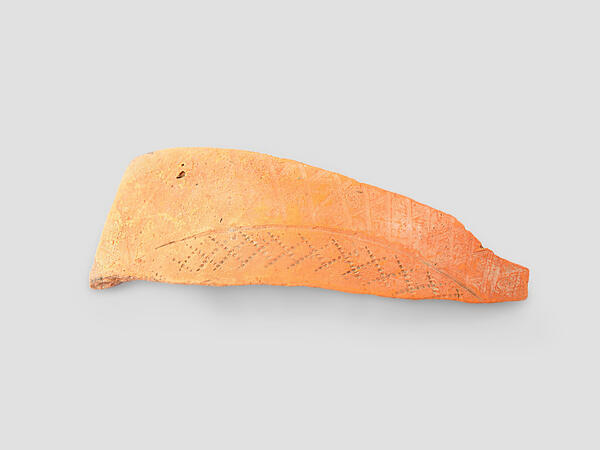
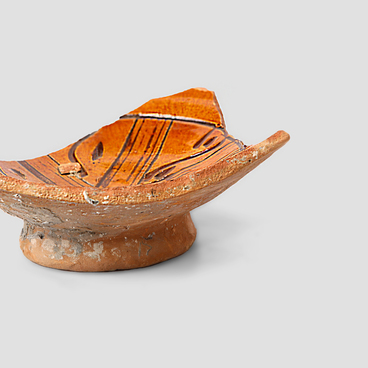
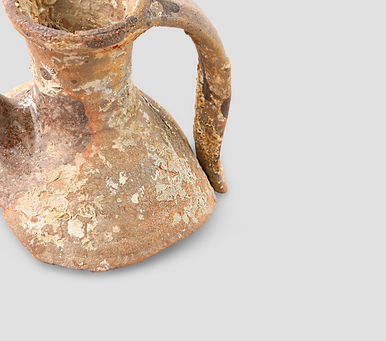
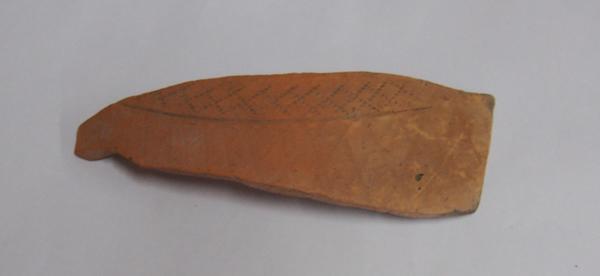
Shipwreck sites are especially valuable for archaeologists. Their study provides important information about the trade and cultural ties of the region and the variety and chronology of trade items. The presented fragment of a jug was also raised from the bottom of the bay at the shipwreck site.