In 1997–1998, the shallow water zone between Cape Chameleon and Cape Meganom was explored by a Kiev group of underwater archaeologists of the Taras Shevchenko University expedition. The specialists set out to verify the tip first received in the 1960s about the presence of ceramic products at the bottom of Novy Svet Bay. The information was confirmed.
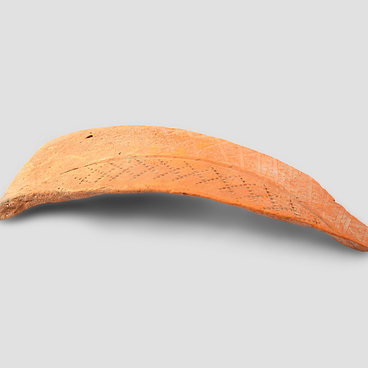
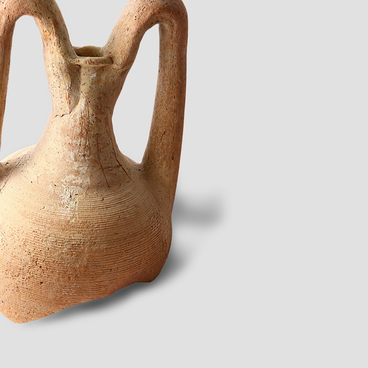
They conducted a series of searches with the use of underwater video shooting in the western part of the bay and were able to find and examine sites that were rich in historically important material. Fragments of pithoi, items of glazed tableware and cooking ware were scattered across the area of 20 by 30 meters near Koba-Kaya Mountain. Having analyzed the finds, scientists concluded that the pottery ended up in the water of the bay after a shipwreck happened in the 13th century.
Further inspection of the seabed uncovered traces of systematic looting committed by both independent divers and entire groups. The identified risk of extinction of an archaeologically important site prompted the introduction of protection measures. In 1999, the staff of the Center for Underwater Archaeology began excavations and continued offshore exploration.
As a result of complex scientific research aimed at studying the structure and dynamics of waters in the coastal zone, the specifics of the bottom, shore and atmosphere of the Black Sea Basin, the scientists obtained some valuable information. For example, they managed to establish that the prevailing easterly winds in this place have always presented a great danger for ships passing through the area of Koba-Kaya Mountain.
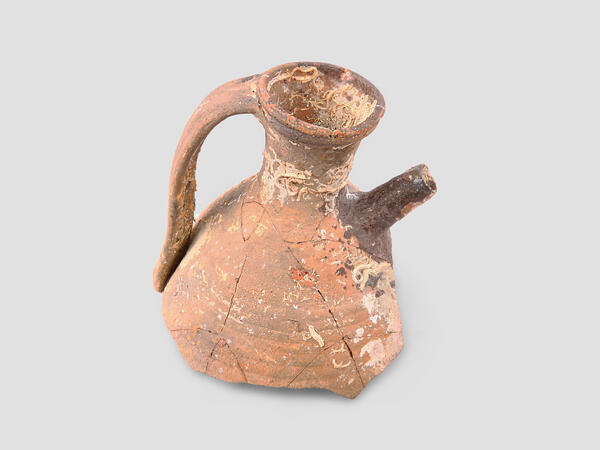
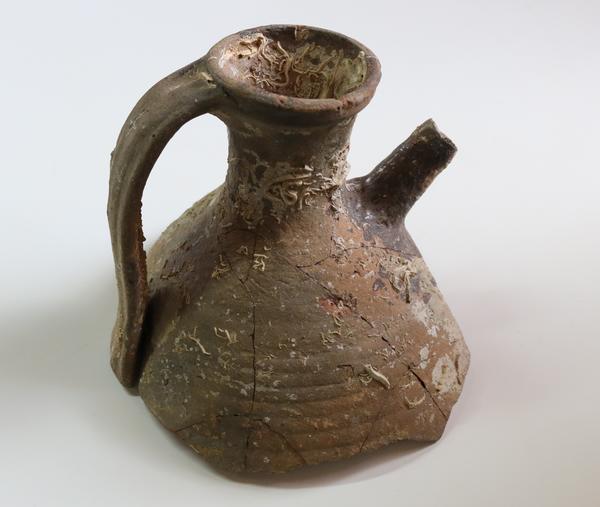
The presented object was raised from the bottom of the bay in 2002. It was identified as a kumgan or kuman, — a type of jug used in Asia for washing the face and the hands, as well as for ritual ablutions.
The production of kumgans was established in medieval Taurica; finds of this kind confirm the existence of permanent trade routes between Crimea and the Byzantine Empire, the Ottoman Empire and the North Caucasus.
In the modern world, a kumgan is used for transportation, storage and cooling of liquids, depending on the area; it is also used for serving tea and kumis and cooking traditional dishes.