With relatively poorly developed hoe farming, gathering was of great importance in the life of the Shors. People used to eat wild plants and thus made up for the lack of nutrients vital for health.
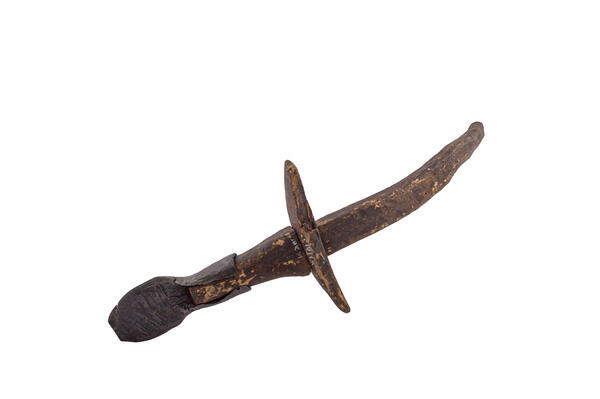
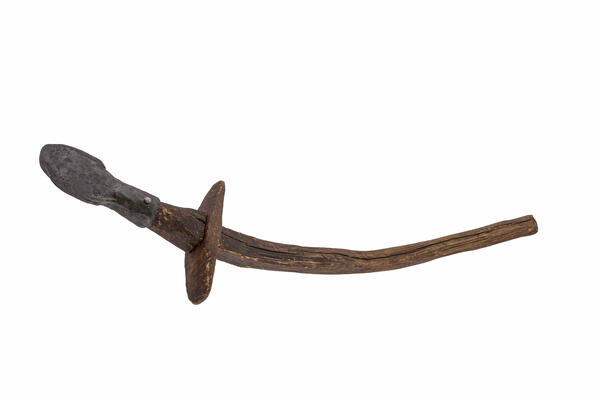
In Gornaya Shoria, the season of collecting wild plants began in May or June: the plants had to be collected before flowering, otherwise they would get a bitter taste. The tool for digging up plant roots was an “ozup” root digger with a curved handle, a transverse crossbar for the leg, and an iron tip.
The Shors put the parts of plants they had dug out into “nandy” birch bark boxes, which were attached to their belts.
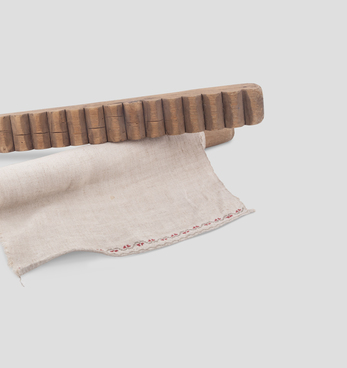
The most important food item was “kandyk”, which tasted like flour. It could be consumed as such but more often it was cooked: boiled for a while, dried on a thin wooden strip bent into a ring, and then boiled in water or milk. The Shors exchanged dried “kandyk” — they traded it with the Khakass for dairy products.
The Soviet ethnographer, who studied the life and culture of the Shors, Altaians, and Tuvans, Leonid Pavlovich Potapov, wrote that kandyk served as the raw material for preparing the brew drink called “abyrtka”. Its tubers, as well as those of peony and martagon lily, “were ground on flat stone grain grinders and flat cakes were baked from the resulting grains and baked or gruel with some talkan was cooked.”
The martagon lily bulbs were harvested in early summer, before flowering, and in the fall, baked in ash or boiled with milk. Wild garlic was collected in the summer and eaten unprocessed or added to stews. Sometimes these products were pickled for the winter. The stems of angelica, goldenrod, horsetail pods and vetch were consumed uncooked; hogweed was boiled to get rid of the bitter taste.
Instead of tea, the Shors brewed currant and raspberry leaves, meadowsweet, bergenia, rotten birch and fir bark.
Kandyk mixed with honey, as well as bird cherry berries crushed with seeds and served with milk were considered delicacies. To collect other berries, as well as pine nuts, the Shors left in groups and went into the taiga for several days.
In addition to plants that provided food, the Shors valued hemp and nettle which they used for weaving and making fabrics.
The ozup presented in the museum’s exhibition was made in Gornaya
Shoria, a region located in the southern part of the Kemerovo region, at the
junction of Altai, Sayan and Kuznetsk Alatau.