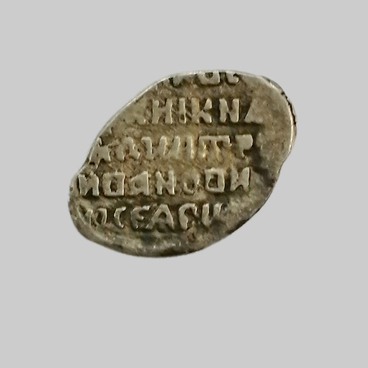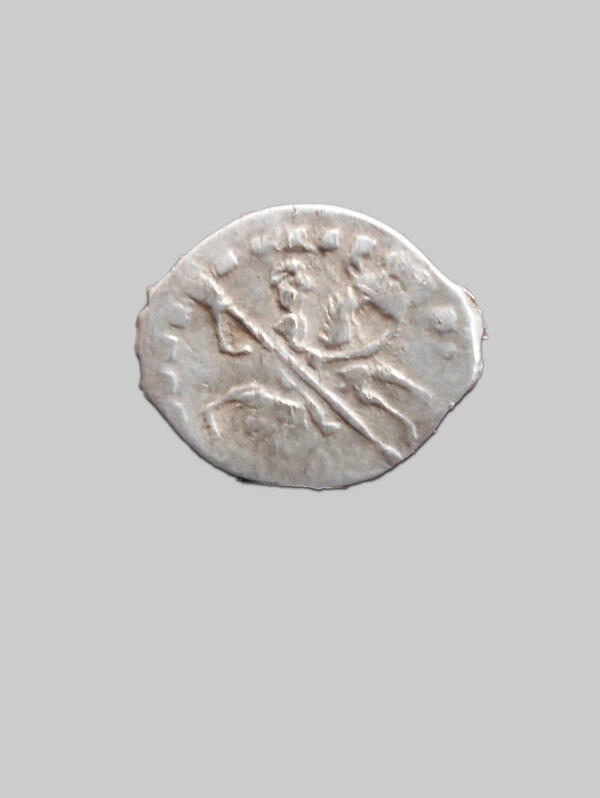
The Karasuksky Regional Museum’s numismatic collections includes a silver coin with a face value of a kopek, issued by the Novgorod Mint between 1535 and 1538 - a period when Elena Glinskaya, the mother of Ivan IV, lead the first monetary reforms in the history of Russia.
The coin is teardrop shaped, weighing 0.67 grams, and is made from 960 silver. A rider, galloping on horseback towards the right of the coin, with a raised spear in his right hand is depicted on the coin’s obverse. The coin’s reverse has a five-line inscription, formed of the ruler’s name and title - ‘Grand Prince of all Rus’.’ It is one of the most common coins.
Ivan IV came to the throne as a child, and his mother, Elena Glinskaya, effectively ran the state. Between 1535 and 1538, she spearheaded monetary reforms in Russia. This was necessary as the monetary circulation had become overcrowded with faulty coins - either forged or with gashes. In the early 1530’s, the monetary crisis exploded. It was caused by the coins being cut into by the population. This phenomenon arose almost spontaneously and very quickly, spreading to every corner of the country. Cutting pieces of silver off the coins began as a way to make old non-standard coins be compatible with the more common coins, which were already in circulation. However, the population soon started to do this to all coins, especially those from Novgorod and Pskov. In some cases, half of the coin would be cut off. Rooting out the perpetrators and executing them did not help the situation.
The Glinskaya monetary reforms carried out between 1535 and 1538 dropped the coins issued from before the breaking up of the feudal system, formalizing and standardizing the nationwide fiscal system. The centralized Russian government then asked the state mints to produce one type of coin, identical in design and weight across the country. There is written evidence of the mints in Moscow, Novgorod and Pskov being in operation at this time.
Coins from the period of Ivan the Terrible’s reign are split into three categories: pre-reforms coins (1533-1534), which are heavier; pre-wedding coins (1535-1547); post-1547 coins. The post-1547 coins have the inscription ‘Tsar’ on them. From the 1530’s onwards, Russia’s monetary circulation had three types of coinage: silver kopeks with a weight of 0.68 grams, dengas with a weight of 0.34 grams, and polushki, weighing 0.17 grams.
The coin is teardrop shaped, weighing 0.67 grams, and is made from 960 silver. A rider, galloping on horseback towards the right of the coin, with a raised spear in his right hand is depicted on the coin’s obverse. The coin’s reverse has a five-line inscription, formed of the ruler’s name and title - ‘Grand Prince of all Rus’.’ It is one of the most common coins.
Ivan IV came to the throne as a child, and his mother, Elena Glinskaya, effectively ran the state. Between 1535 and 1538, she spearheaded monetary reforms in Russia. This was necessary as the monetary circulation had become overcrowded with faulty coins - either forged or with gashes. In the early 1530’s, the monetary crisis exploded. It was caused by the coins being cut into by the population. This phenomenon arose almost spontaneously and very quickly, spreading to every corner of the country. Cutting pieces of silver off the coins began as a way to make old non-standard coins be compatible with the more common coins, which were already in circulation. However, the population soon started to do this to all coins, especially those from Novgorod and Pskov. In some cases, half of the coin would be cut off. Rooting out the perpetrators and executing them did not help the situation.
The Glinskaya monetary reforms carried out between 1535 and 1538 dropped the coins issued from before the breaking up of the feudal system, formalizing and standardizing the nationwide fiscal system. The centralized Russian government then asked the state mints to produce one type of coin, identical in design and weight across the country. There is written evidence of the mints in Moscow, Novgorod and Pskov being in operation at this time.
Coins from the period of Ivan the Terrible’s reign are split into three categories: pre-reforms coins (1533-1534), which are heavier; pre-wedding coins (1535-1547); post-1547 coins. The post-1547 coins have the inscription ‘Tsar’ on them. From the 1530’s onwards, Russia’s monetary circulation had three types of coinage: silver kopeks with a weight of 0.68 grams, dengas with a weight of 0.34 grams, and polushki, weighing 0.17 grams.