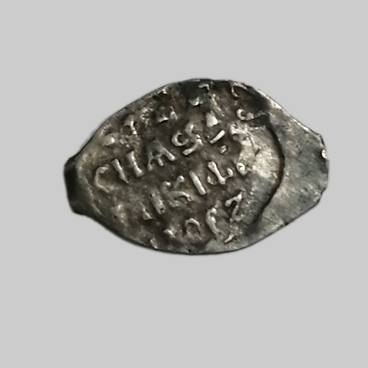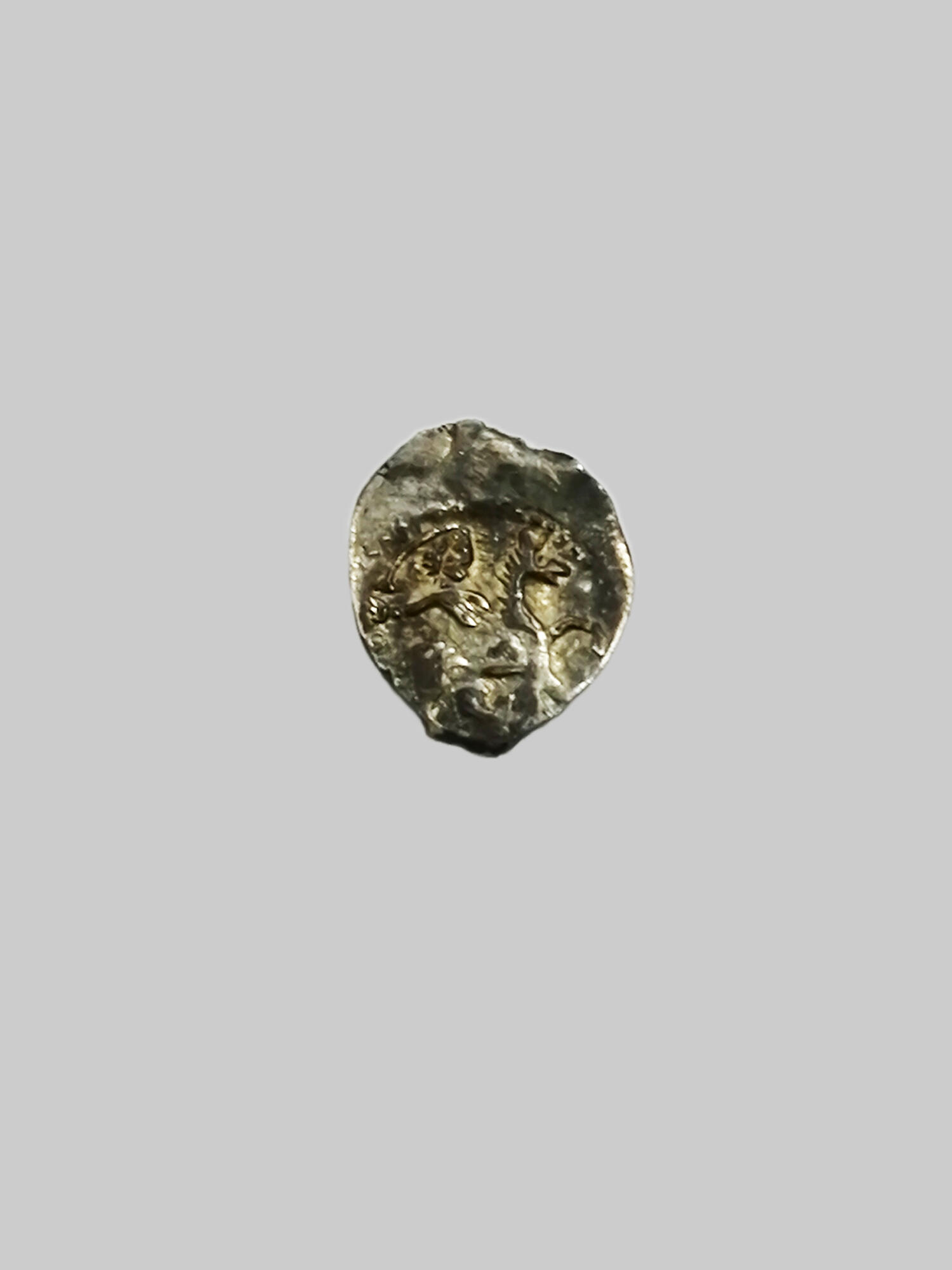


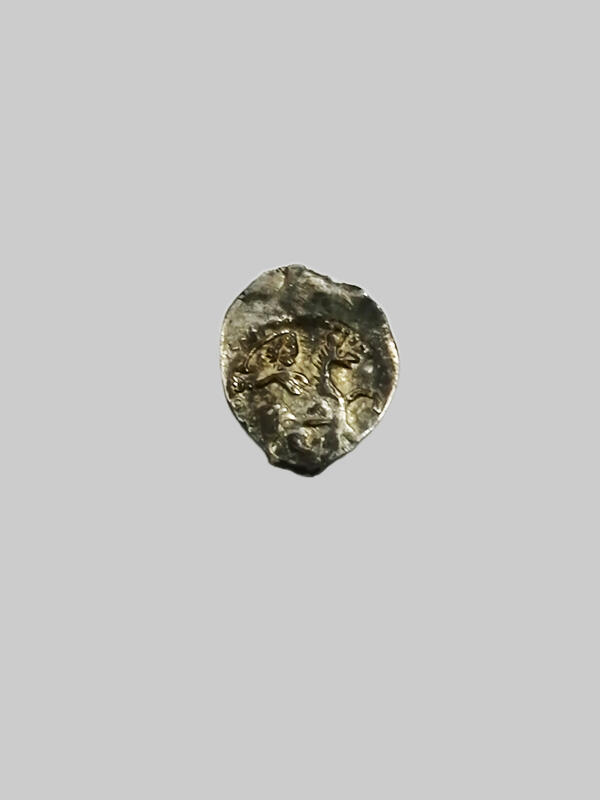
The Karasuksky Regional Museum’s collection includes a 960 silver coin, heralding from the time of Ivan III’s reign. The coin is solid, shaped like a teardrop, with a weight of 0.26 grams. The coin’s obverse depicts a rider, galloping on a horse towards the right of the coin, with a raised spear in his right hand. The rider is surrounded by a cord-like rim. A waist-high image of a soldier in a brimmed-cap, with a sword in his right hand is depicted on the coin’s reverse. It is almost impossible to see what is in the soldier’s left hand, but it could be a mace. The inscription is illegible.
The name ‘kopek’ first appeared in 1538, in the first Pskov chronicles. ‘In the same summer, none of the old money changed hands. We started to trade with new money, kopeks…’ This happened under Ivan the Terrible (1533-1584). The face value of coins issued under Ivan III’s are called ‘dengas’.
Ivan III, later referred to as Ivan the Great in Russian historical writing - was the Grand Prince of Moscow between 1462 and 1505, and the sovereign ruler of all Rus’. He was born 22 January 1440. His father was Grand Prince of Moscow, Vasily II, whilst his mother was Maria Yaroslavna, whose grandfather was Prince Vladimir the Bold. Ivan was the first of their children, and when he was barely five years old, his father was captured by the Tatars. The Moscow Princedom was immediately taken over by Prince Dmitry Shemyaka, a descendant of Ivan I of Moscow. In order to escape from captivity, Vasily II negotiated a ransom with the Tatars, and was eventually released. Upon arrival in Moscow, he immediately retook the throne, with Shemyaka sent to exile Uglich.
The country became more centered around Moscow under Ivan III. Under him, the principalities of Yaroslavl, Rostov and Tver, the Vyatka lands and the Republic of Novgorod were all joined together. From 1478, Ivan III was declared Grand Prince of all Rus’.
In 1480, after the Great Stand on the Ugra river, the period of the Tatar-Mongol Yoke came to an end, and the Russian state became completely independent. At this time, the princes stopped minting their own coins, and a common, nationwide coin was introduced with the inscription ‘Ospodar’, or ‘Grand Prince of all Rus’.’ Under Ivan III, coins were minted in Moscow, Tver and Novgorod. Before this, coins had been made from imported silver. However, under Ivan III, gold and silver mines were opened on Russian soil.
The name ‘kopek’ first appeared in 1538, in the first Pskov chronicles. ‘In the same summer, none of the old money changed hands. We started to trade with new money, kopeks…’ This happened under Ivan the Terrible (1533-1584). The face value of coins issued under Ivan III’s are called ‘dengas’.
Ivan III, later referred to as Ivan the Great in Russian historical writing - was the Grand Prince of Moscow between 1462 and 1505, and the sovereign ruler of all Rus’. He was born 22 January 1440. His father was Grand Prince of Moscow, Vasily II, whilst his mother was Maria Yaroslavna, whose grandfather was Prince Vladimir the Bold. Ivan was the first of their children, and when he was barely five years old, his father was captured by the Tatars. The Moscow Princedom was immediately taken over by Prince Dmitry Shemyaka, a descendant of Ivan I of Moscow. In order to escape from captivity, Vasily II negotiated a ransom with the Tatars, and was eventually released. Upon arrival in Moscow, he immediately retook the throne, with Shemyaka sent to exile Uglich.
The country became more centered around Moscow under Ivan III. Under him, the principalities of Yaroslavl, Rostov and Tver, the Vyatka lands and the Republic of Novgorod were all joined together. From 1478, Ivan III was declared Grand Prince of all Rus’.
In 1480, after the Great Stand on the Ugra river, the period of the Tatar-Mongol Yoke came to an end, and the Russian state became completely independent. At this time, the princes stopped minting their own coins, and a common, nationwide coin was introduced with the inscription ‘Ospodar’, or ‘Grand Prince of all Rus’.’ Under Ivan III, coins were minted in Moscow, Tver and Novgorod. Before this, coins had been made from imported silver. However, under Ivan III, gold and silver mines were opened on Russian soil.