
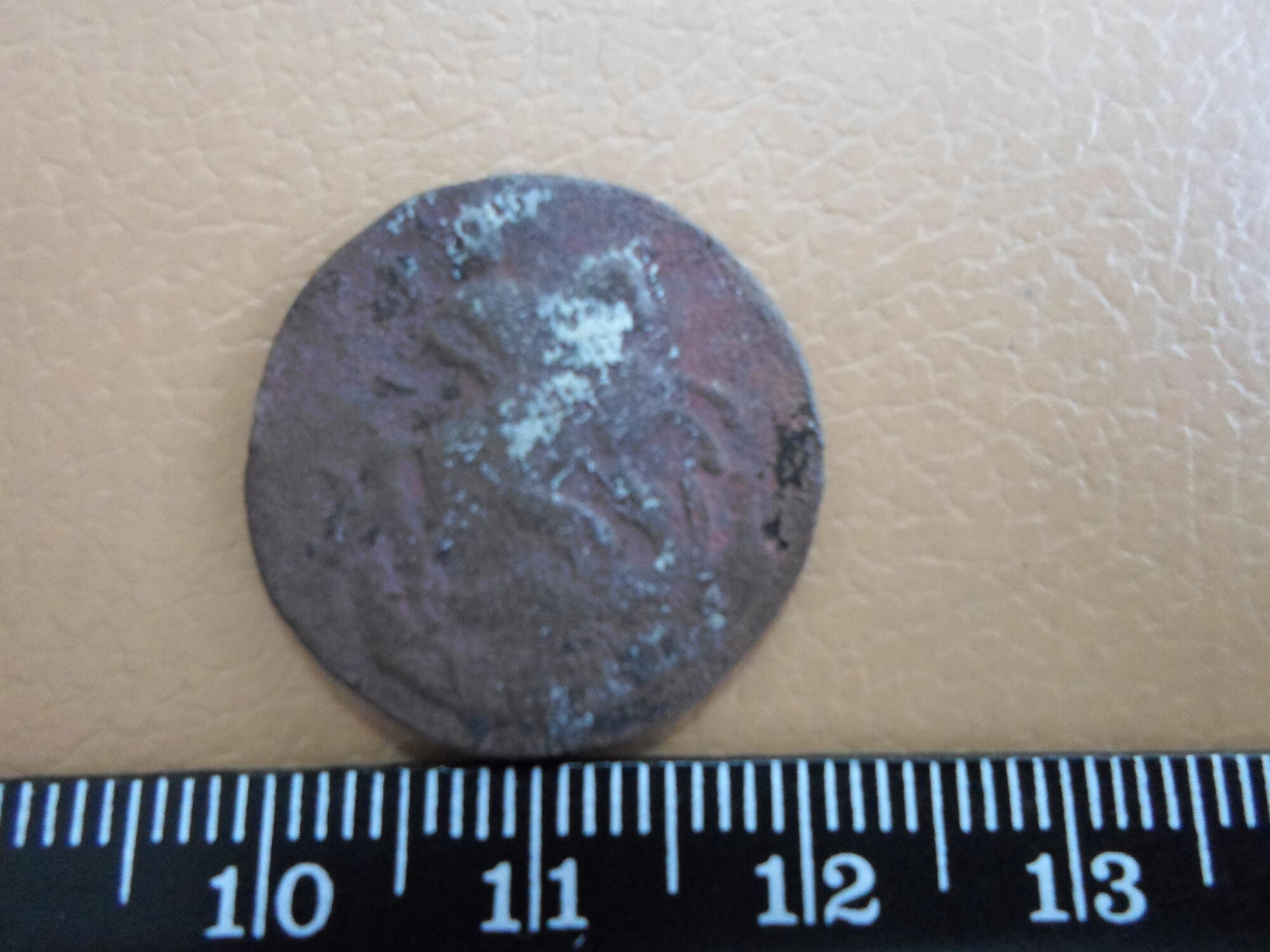


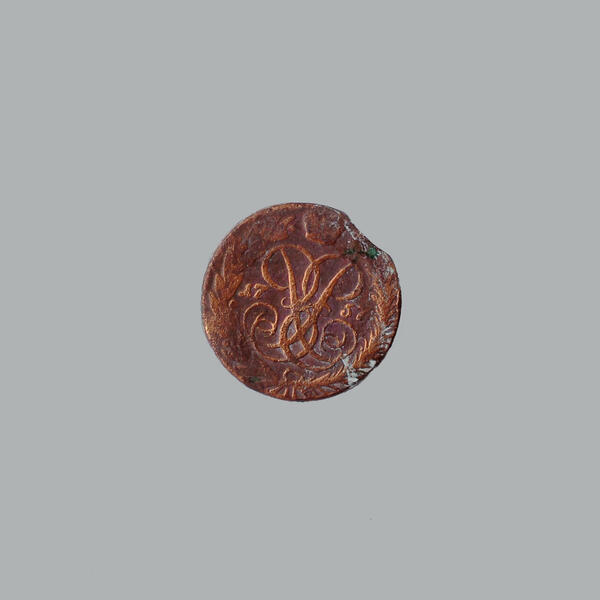
Among the other denga coins held in the Karasuksky Regional Museum’s Numismatics collection, this denga was issued in 1757, entering into circulation towards the end of Elizabeth I’s reign. The denga is a solid copper coin, with a value of half a kopek. The system of monetary circulation in Russia became more standardized and well-defined under Peter the Great. Over a number of years, he gradually introduced new face values of copper coins and normalized the guidelines around minting.
In 1700, the following copper coins appeared: denga, polushka (a half denga) and a polupolushka (a quarter denga). The population became accustomed to the fact that copper coins should be trusted just as much as silver coins. A year later, silver half-rubles (50 kopeks), half-poltinas (25 kopeks), grivenniki (10 kopeks) and five-kopek coins were minted in Russia. The silver ruble and the copper kopek only appeared in 1704.
In the later years of Elizabeth I’s reign, the government decided to change the copper to metal ratio for the most popular coins. In other words, they changed the number of coins made from a defined amount of a precious metal. Now, from one pood of copper (16.3 kilograms), 16 rubles of a particular face value needed to be made. The previous ratio had been 10 rubles to a pood of copper, meaning that they were heavier and therefore contained more of the precious metal. A decree on 8 April 1757 introduced this new ratio for two-kopek, kopek, denga and polushka (half-denga) coins. Five-kopek coins were added to this, following a decree on 14 January 1758. The previous kopeks along with the remaining crossed five-kopek coins were re-minted into the new design of two-kopek coins, which had twice the face value. This scheme, proposed by the head of the Russian government, Pyotr Shuvalov, proved to be effective, with the 16-ruble copper to ruble ratio remaining in force until 1810.
The denga’s obverse shows a rider with a spear, If one compares it with coins in a better condition, you can see that this depicts the Moscow coat of arms: Great Martyr Saint George the Victorious, in armor, on a galloping horse, strikes a serpent with a spear. The face value is positioned under the image - denga. Elizabeth I’s cipher is positioned on the coin’s reverse, with the imperial crown above it. This coin was minted between 1757 and 1760. Throughout these years, there are many different variations in the shape, size and position of the date, the cipher design and other smaller details.
In 1700, the following copper coins appeared: denga, polushka (a half denga) and a polupolushka (a quarter denga). The population became accustomed to the fact that copper coins should be trusted just as much as silver coins. A year later, silver half-rubles (50 kopeks), half-poltinas (25 kopeks), grivenniki (10 kopeks) and five-kopek coins were minted in Russia. The silver ruble and the copper kopek only appeared in 1704.
In the later years of Elizabeth I’s reign, the government decided to change the copper to metal ratio for the most popular coins. In other words, they changed the number of coins made from a defined amount of a precious metal. Now, from one pood of copper (16.3 kilograms), 16 rubles of a particular face value needed to be made. The previous ratio had been 10 rubles to a pood of copper, meaning that they were heavier and therefore contained more of the precious metal. A decree on 8 April 1757 introduced this new ratio for two-kopek, kopek, denga and polushka (half-denga) coins. Five-kopek coins were added to this, following a decree on 14 January 1758. The previous kopeks along with the remaining crossed five-kopek coins were re-minted into the new design of two-kopek coins, which had twice the face value. This scheme, proposed by the head of the Russian government, Pyotr Shuvalov, proved to be effective, with the 16-ruble copper to ruble ratio remaining in force until 1810.
The denga’s obverse shows a rider with a spear, If one compares it with coins in a better condition, you can see that this depicts the Moscow coat of arms: Great Martyr Saint George the Victorious, in armor, on a galloping horse, strikes a serpent with a spear. The face value is positioned under the image - denga. Elizabeth I’s cipher is positioned on the coin’s reverse, with the imperial crown above it. This coin was minted between 1757 and 1760. Throughout these years, there are many different variations in the shape, size and position of the date, the cipher design and other smaller details.


