The Gospel, the most important book in the Christian faith, consists of four texts, compiled by Mark, Matthew, Luke and John. According to historians, the very first one was written by Mark, presumably 40 years after the death of Christ, that is, in the 70s AD. It is the shortest and most concise, it mainly describes the deeds of Jesus, rather than quotes sermons. At the same time, there are vivid details in the text that enliven the narrative.
The Gospel of Matthew has many similarities with the work of Mark, but it is more extensive and complete. The text is written in Hebrew and intended for Jews; it is distinguished by a plethora of references to the Old Testament. Its goal was to convey to the Jewish people that all the Messianic biblical prophecies come true in the Son of God. The Gospel presents a detailed genealogy of the Savior. Describing His life, Matthew pays more attention to the teachings of Christ and quotes parables.
The Gospel of Luke is the longest book of the New Testament, characterized by thoroughness, detail and comprehensiveness. In addition, Luke describes a number of events and includes over 15 parables that are not mentioned in the other Gospels. For example, he describes the Adoration of the Magi and Shepherds soon after the birth of Jesus and the Parable of the Prodigal Son. Luke in his work focuses on the historical narrative of events and often highlights the human nature of Christ.
The Gospel of John is very different from the aforementioned ones. It has a different chronology of events, and some of the characters are named differently. The emphasis in this text is also on the spiritual, on strengthening faith: John often stresses that Christ is the Son of God. As for the authorship of the gospel, it is written “by the disciple whom Jesus loved and who at the Supper, leaning on His chest, said: Lord! who will betray You?” — this is indicated in the text of the narrative itself. However, to date, researchers doubt this account.
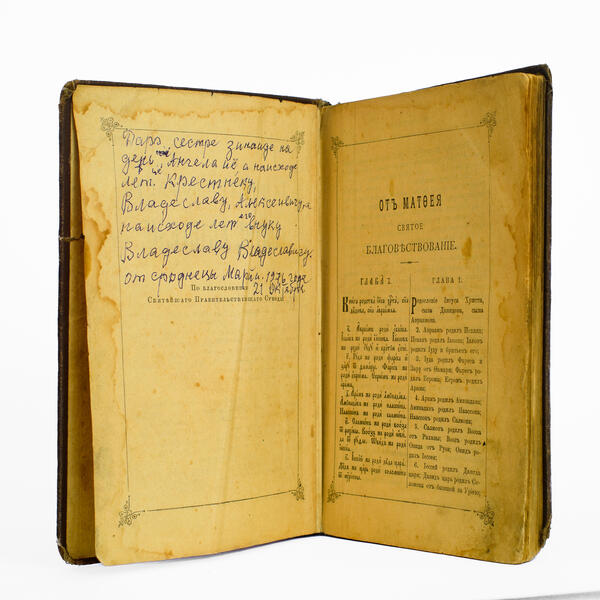
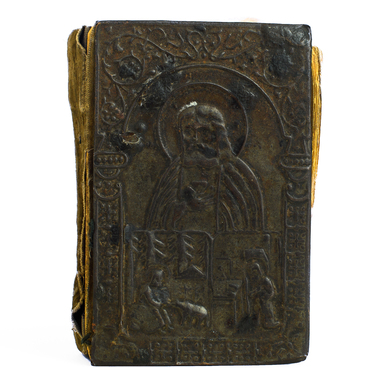
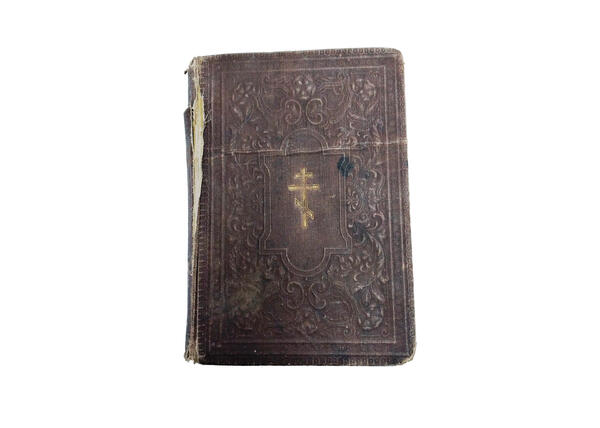
The book “Gospel” from the collection of the Museum Complex of Kuybyshev was printed by the Synod Printing House in St. Petersburg in 1914 on white paper, with a cover wrapped in dark buckram.
The reverse side of the title page, in the upper half, features a touching handwritten inscription in purple ink: “I give this book to my sister Zinaida on her Angel’s Day, and at the end of her years, to her godson, Vladeslav Alekseevich, and at the end of his years to his grandson Vladeslav Vladeslavovich. From your relative, Mary. 1976/ October 21”.
The Gospel of Matthew has many similarities with the work of Mark, but it is more extensive and complete. The text is written in Hebrew and intended for Jews; it is distinguished by a plethora of references to the Old Testament. Its goal was to convey to the Jewish people that all the Messianic biblical prophecies come true in the Son of God. The Gospel presents a detailed genealogy of the Savior. Describing His life, Matthew pays more attention to the teachings of Christ and quotes parables.
The Gospel of Luke is the longest book of the New Testament, characterized by thoroughness, detail and comprehensiveness. In addition, Luke describes a number of events and includes over 15 parables that are not mentioned in the other Gospels. For example, he describes the Adoration of the Magi and Shepherds soon after the birth of Jesus and the Parable of the Prodigal Son. Luke in his work focuses on the historical narrative of events and often highlights the human nature of Christ.
The Gospel of John is very different from the aforementioned ones. It has a different chronology of events, and some of the characters are named differently. The emphasis in this text is also on the spiritual, on strengthening faith: John often stresses that Christ is the Son of God. As for the authorship of the gospel, it is written “by the disciple whom Jesus loved and who at the Supper, leaning on His chest, said: Lord! who will betray You?” — this is indicated in the text of the narrative itself. However, to date, researchers doubt this account.
The book “Gospel” from the collection of the Museum Complex of Kuybyshev was printed by the Synod Printing House in St. Petersburg in 1914 on white paper, with a cover wrapped in dark buckram.
The reverse side of the title page, in the upper half, features a touching handwritten inscription in purple ink: “I give this book to my sister Zinaida on her Angel’s Day, and at the end of her years, to her godson, Vladeslav Alekseevich, and at the end of his years to his grandson Vladeslav Vladeslavovich. From your relative, Mary. 1976/ October 21”.