

The Greek word for gospel — “Evangelium” — means “good news”. This is an early Christian work that describes the earthly life, teaching, death and resurrection of Jesus Christ.
By the 2nd century AD, the narratives of the life and teachings of Christ were formed into four canonical gospels, which contain the texts compiled by the four apostles: Matthew, Mark, Luke and John. The reading of the “Gospel” is part of the Divine liturgy, the festive matins (morning prayer), the Royal Hours and other services.
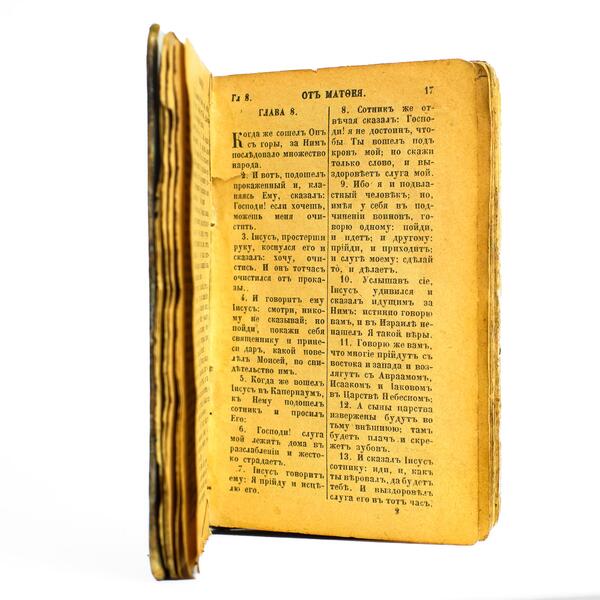
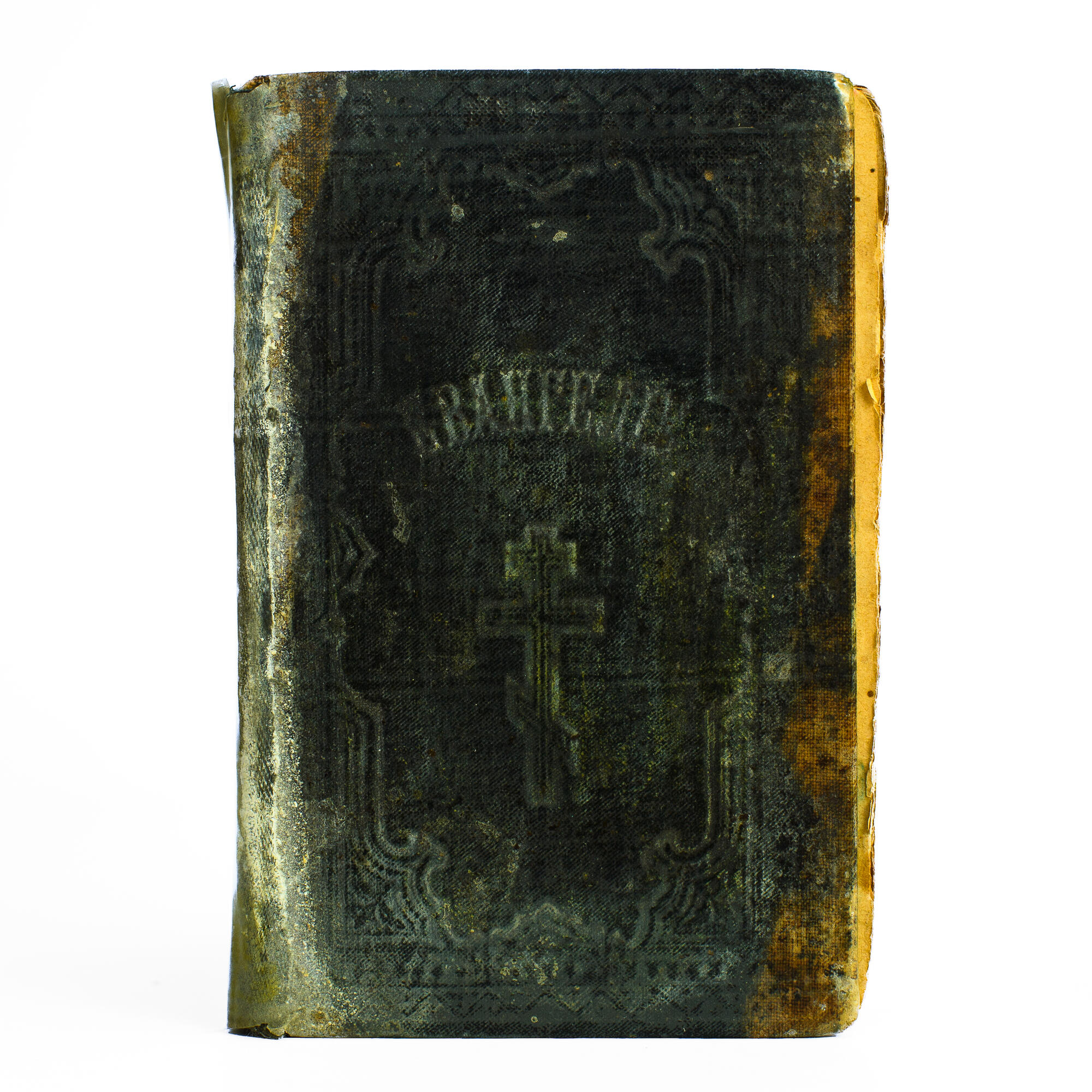
The “Gospel” from the collection of the Museum Complex of Kuybyshev was released with the blessing of the Holy Synod in 1890 and printed by the Synod Printing House in St. Petersburg. The pages of the book are made of thin white paper; the cover is made of cardboard wrapped in dark buckram, on which a frame with a complex geometric ornament is embossed.
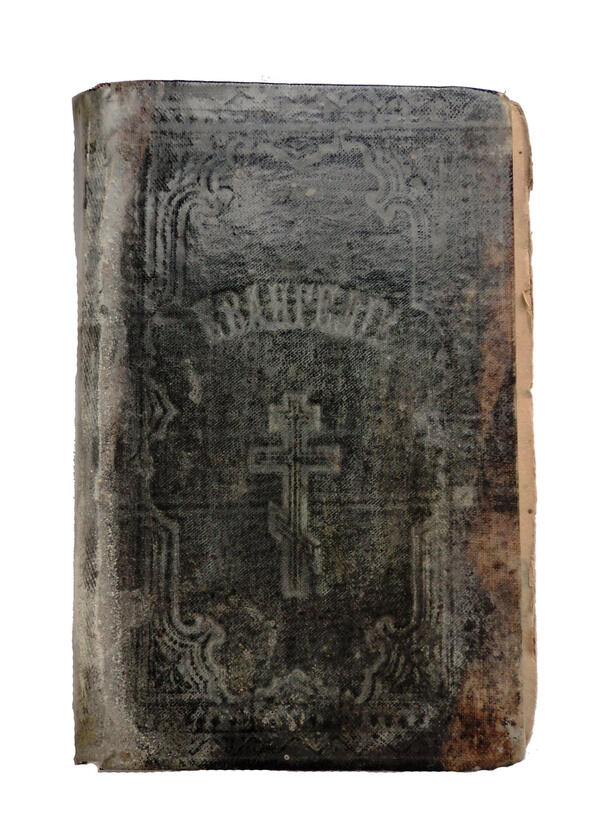
Along the perimeter of the cover is a pattern with floral elements and sharp protrusions to the inside. The middle part features the title of the book. The letters are arranged in an arc above the symbol of the Russian Orthodox Church — an eight-pointed cross.
This type of cross is the most common. There is no image of the crucified Christ on it and there are no designations. Inside the emblem is an impression of two thin stripes repeating the shape of the cross.
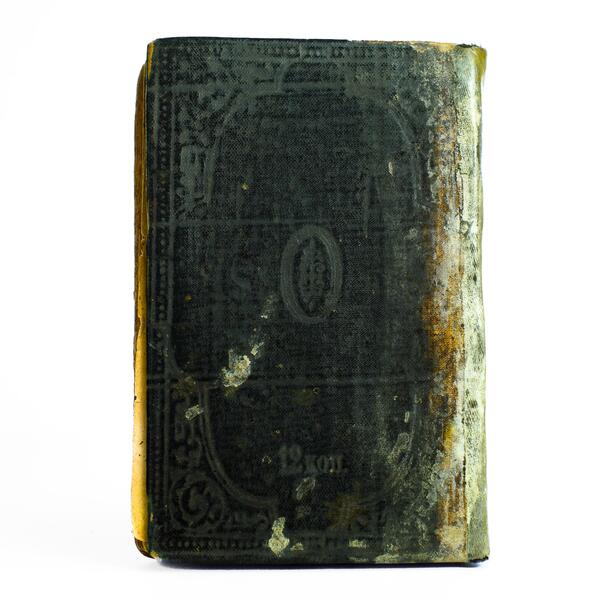
The back cover also features an embossed floral ornament frame with small rounded protrusions. In the center is a circle with a floral pattern inside.
This “Gospel” contains 280 numbered pages of text in black ink. The text is arranged in two columns with a vertical dividing strip. There are no illustrations or other color elements in this edition.
The book consists of four Gospels according to Matthew, Mark, Luke and John. In the Gospel of Matthew, the apostle often dwells on the prophecies about the Messiah, fulfilled in Christ. The Gospel of Mark is mainly dedicated to the miracles performed by the Lord, which clearly showed His divine power. Luke the Evangelist is the only one who describes the events known to all Christians: the Annunciation, the appearance of John the Forerunner, the miraculous circumstances of the Nativity of Christ, and Candlemas. The Gospel of Luke includes the Parable of the Prodigal Son, and the stories about the Good Samaritan, the publican and the Pharisee. John in his Gospel mainly describes the miracles of Christ in Judea and Jerusalem.
By the 2nd century AD, the narratives of the life and teachings of Christ were formed into four canonical gospels, which contain the texts compiled by the four apostles: Matthew, Mark, Luke and John. The reading of the “Gospel” is part of the Divine liturgy, the festive matins (morning prayer), the Royal Hours and other services.
The “Gospel” from the collection of the Museum Complex of Kuybyshev was released with the blessing of the Holy Synod in 1890 and printed by the Synod Printing House in St. Petersburg. The pages of the book are made of thin white paper; the cover is made of cardboard wrapped in dark buckram, on which a frame with a complex geometric ornament is embossed.
Along the perimeter of the cover is a pattern with floral elements and sharp protrusions to the inside. The middle part features the title of the book. The letters are arranged in an arc above the symbol of the Russian Orthodox Church — an eight-pointed cross.
This type of cross is the most common. There is no image of the crucified Christ on it and there are no designations. Inside the emblem is an impression of two thin stripes repeating the shape of the cross.
The back cover also features an embossed floral ornament frame with small rounded protrusions. In the center is a circle with a floral pattern inside.
This “Gospel” contains 280 numbered pages of text in black ink. The text is arranged in two columns with a vertical dividing strip. There are no illustrations or other color elements in this edition.
The book consists of four Gospels according to Matthew, Mark, Luke and John. In the Gospel of Matthew, the apostle often dwells on the prophecies about the Messiah, fulfilled in Christ. The Gospel of Mark is mainly dedicated to the miracles performed by the Lord, which clearly showed His divine power. Luke the Evangelist is the only one who describes the events known to all Christians: the Annunciation, the appearance of John the Forerunner, the miraculous circumstances of the Nativity of Christ, and Candlemas. The Gospel of Luke includes the Parable of the Prodigal Son, and the stories about the Good Samaritan, the publican and the Pharisee. John in his Gospel mainly describes the miracles of Christ in Judea and Jerusalem.