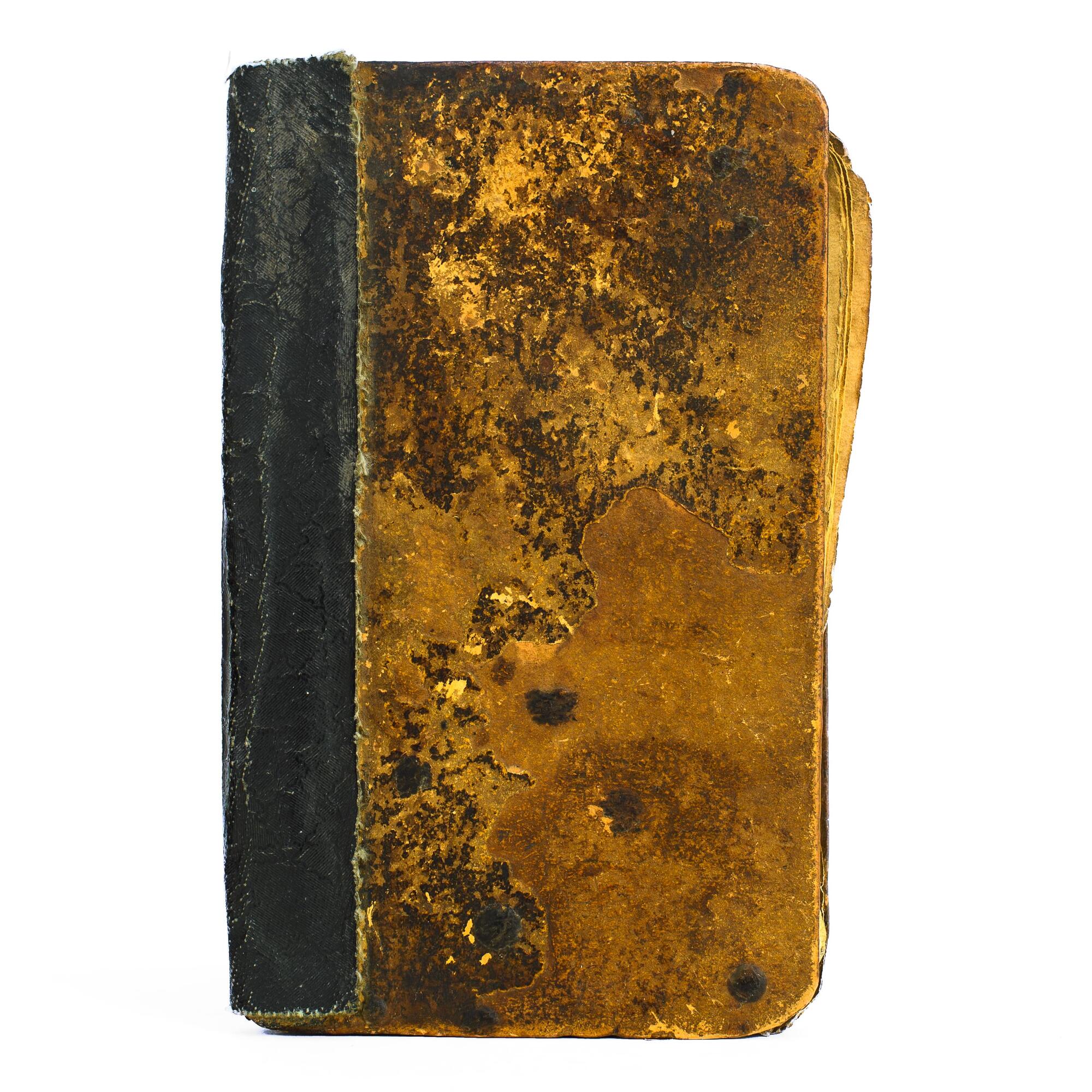


The book “Two Canons: the Canon for the One Who Died and the General Canon for the Dead” presented in the collection of the Museum Complex of Kuybyshev was released in 1909.
“Canon” in Greek means “rule, norm”. The canon is a genre of Orthodox liturgical hymnography, a hymn dedicated to the glorification of a holiday or saint. It is intended for reading or singing on any important occasion.
The canons are based on biblical texts. They usually consist of songs and troparia — short prayers that reveal the essence of the holiday or glorify and call for the help of saints. The canons are read out in a certain order according to specific rules. Thus, the canon is part of the services of services of matins (morning), compline (after-supper), midnight prayers and some others.
“Two Canons: the Canon for the One Who Died and the General Canon for the Dead” are read when a believer wants to honor the memory of a deceased Orthodox Christian and pray for the repose of their soul.
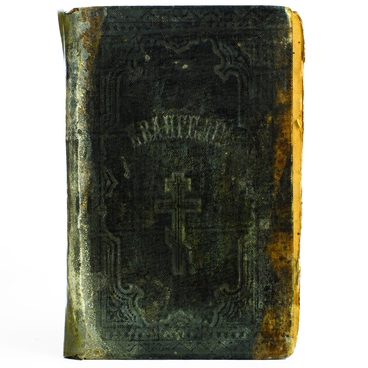
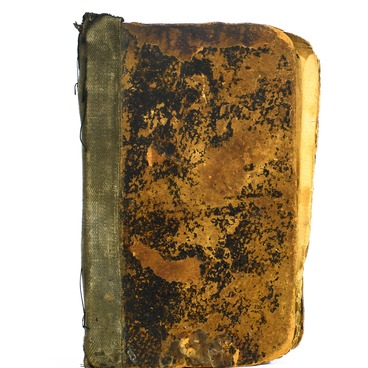
The edition displayed in the Kuybyshev Museum was printed in the city of Moscow, in the Christian Printing House at the Transfiguration Almshouse. The cover of the “Canons” is made of cardboard wrapped in dark brown paper. The spine was restored with the help of black buckram.
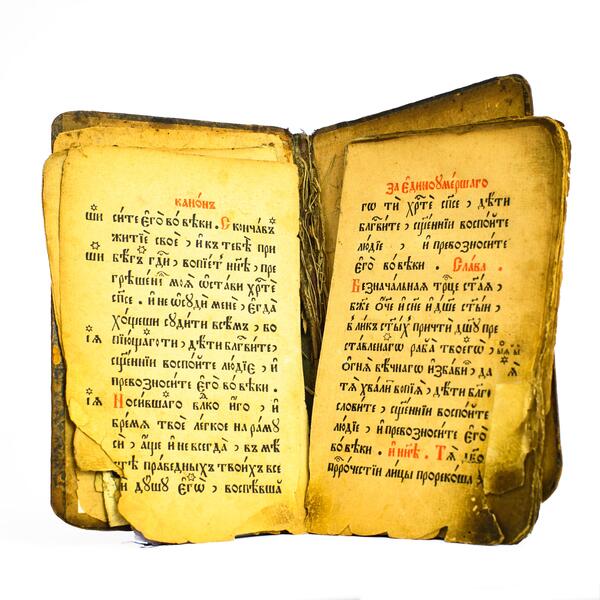
In total, the book contains 32 sheets. The text is printed in black and white ink on white early 20th-century laid paper — special paper with frequent stripes visible in the light. Engraved ornamental inserts and decorative endings are made in red ink on some pages. In some cases, the text begins with an elegant initial. The last sheet contains the book metadata and a mention of the publisher.
There are many entries in the book made by those who read it and actively used it. For example, on the left side of the top flyleaf, the name “Taisiya” is written several times, as well as “Matrona” and a number of half-erased illegible entries.
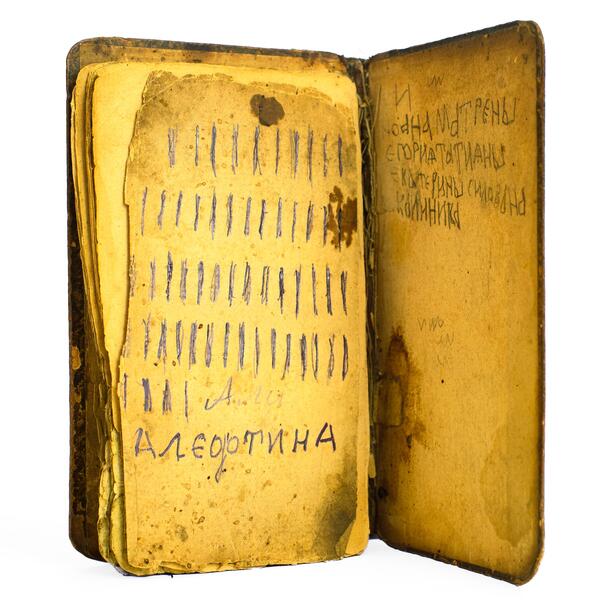
On the right side of the back flyleaf, the inscriptions “IOANA MATRYONA”, “EGORIYA TATIANA”, “EKATERINA SILOVNA”, and “KALINIKA” are placed from top to bottom. In the left part — “the deceased memory of TATIANA DECEMBER FIRST OLD STYLE.” Along the entire plane from top to bottom are vertical lines, and at the end — the inscription “ALEFTINA”.
“Canon” in Greek means “rule, norm”. The canon is a genre of Orthodox liturgical hymnography, a hymn dedicated to the glorification of a holiday or saint. It is intended for reading or singing on any important occasion.
The canons are based on biblical texts. They usually consist of songs and troparia — short prayers that reveal the essence of the holiday or glorify and call for the help of saints. The canons are read out in a certain order according to specific rules. Thus, the canon is part of the services of services of matins (morning), compline (after-supper), midnight prayers and some others.
“Two Canons: the Canon for the One Who Died and the General Canon for the Dead” are read when a believer wants to honor the memory of a deceased Orthodox Christian and pray for the repose of their soul.
The edition displayed in the Kuybyshev Museum was printed in the city of Moscow, in the Christian Printing House at the Transfiguration Almshouse. The cover of the “Canons” is made of cardboard wrapped in dark brown paper. The spine was restored with the help of black buckram.
In total, the book contains 32 sheets. The text is printed in black and white ink on white early 20th-century laid paper — special paper with frequent stripes visible in the light. Engraved ornamental inserts and decorative endings are made in red ink on some pages. In some cases, the text begins with an elegant initial. The last sheet contains the book metadata and a mention of the publisher.
There are many entries in the book made by those who read it and actively used it. For example, on the left side of the top flyleaf, the name “Taisiya” is written several times, as well as “Matrona” and a number of half-erased illegible entries.
On the right side of the back flyleaf, the inscriptions “IOANA MATRYONA”, “EGORIYA TATIANA”, “EKATERINA SILOVNA”, and “KALINIKA” are placed from top to bottom. In the left part — “the deceased memory of TATIANA DECEMBER FIRST OLD STYLE.” Along the entire plane from top to bottom are vertical lines, and at the end — the inscription “ALEFTINA”.