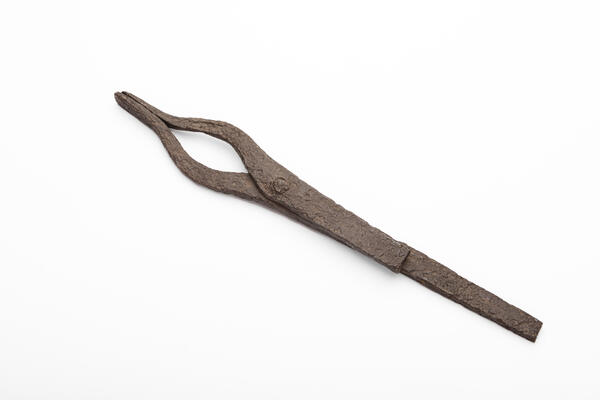
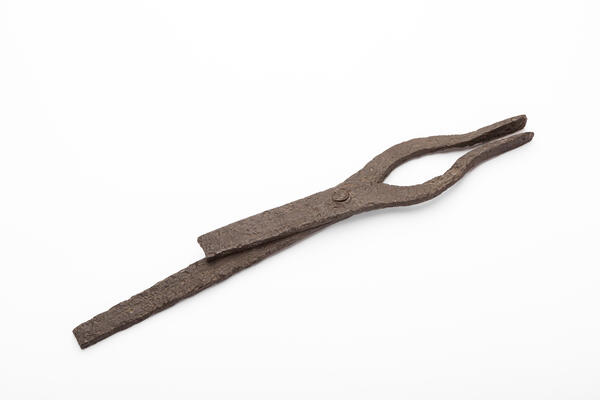
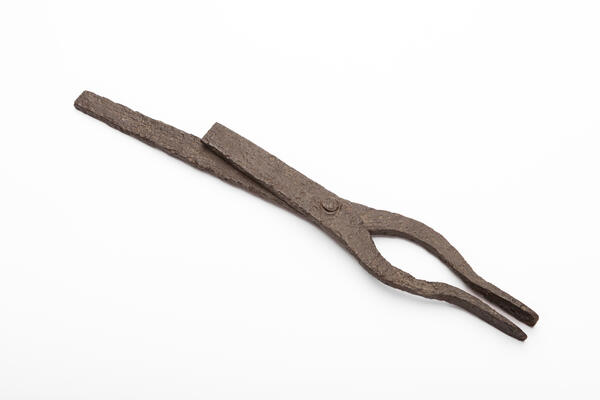
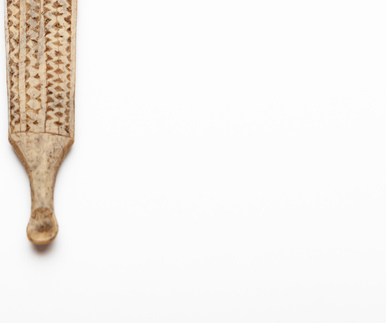
Iron blacksmith tongs were found in the Idnakar hillfort in Soldyr during archaeological excavations in 1978. The expedition, consisting of experts from the Udmurt Institute of History, Language and Literature, was led by Professor Margarita Grigoryevna Ivanova.
The art of early blacksmiths was shrouded in mystery. The profession of a blacksmith was associated with magic, superstitious fears and outstanding strength, which is reflected in various mythologies and folklore around the world. A blacksmith was compared to a demon, an evil spirit and the son of a man and a bear. Smithcraft was passed on from father to son, and only occasionally would outside apprentices be hired and let in on the secret techniques.
The work of a blacksmith, who could tame red-hot metal, stood out compared to other crafts. The process of transforming ore into a finished product was perceived as magic, and therefore the blacksmith craft was compared to witchcraft and communication with the other world.
In Russian epics, legends and fairy tales, a blacksmith embodied such qualities as strength, courage, goodness and invincibility. In the Middle Ages, the Northern Udmurts had a similar attitude towards blacksmiths. A blacksmith was required to have good health, patience, endurance and remarkable strength.
As metallurgy developed, blacksmiths divided according to their area of expertise — iron, copper or silver. Blacksmithing was widespread in medieval Prikamye fortresses and villages. Blacksmiths forged everything that was necessary for everyday life, hunting and warfare: dishware, axes, knives, nails, spearheads, arrowheads, flints, farming tools and woodworking tools. In addition, blacksmiths shod horses — sacred animals in Udmurt mythology.
Idnakar was one of the largest centers of blacksmithing in the Prikamye region. During forging, a blacksmith held a hot workpiece with tongs — a tool with long handles and short jaws that closed over a small area with flat or pointed surfaces. The blacksmith hit the workpiece with a heavy hammer to produce the desired shape. Twelve pairs of tongs at varying stages of preservation were found at the Idnakar site.