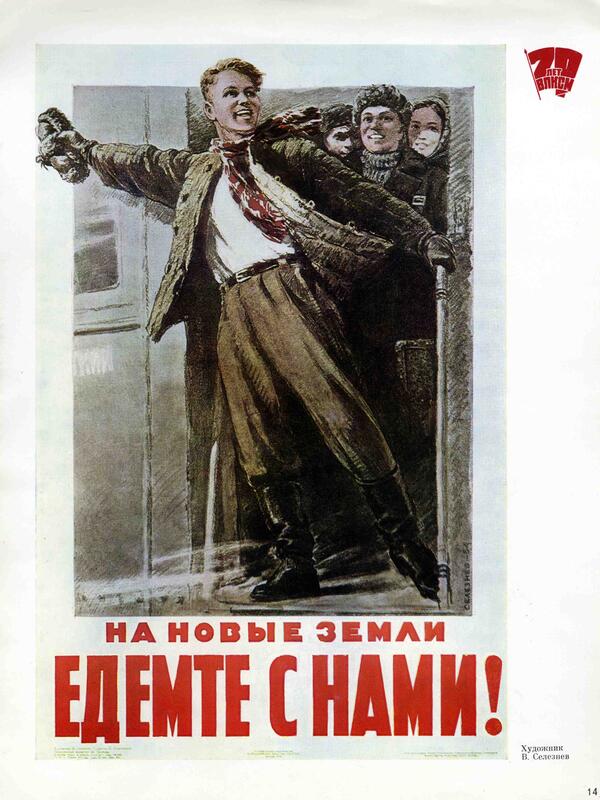


In the 1950s, the problem of labor shortages at construction sites and in the industry was solved with the help of the Komsomol (All-Union Lenin Communist Youth League) members. In 1956, the Central Committee of the Communist Party of the Soviet Union and the Council of Ministers of the USSR issued a resolution ‘On measures to provide labor for the most important construction sites and enterprises located in the eastern and northern regions of the country and the Donbas’. Throughout the country, there was a ‘Komsomol call’ — the redistribution of workers.
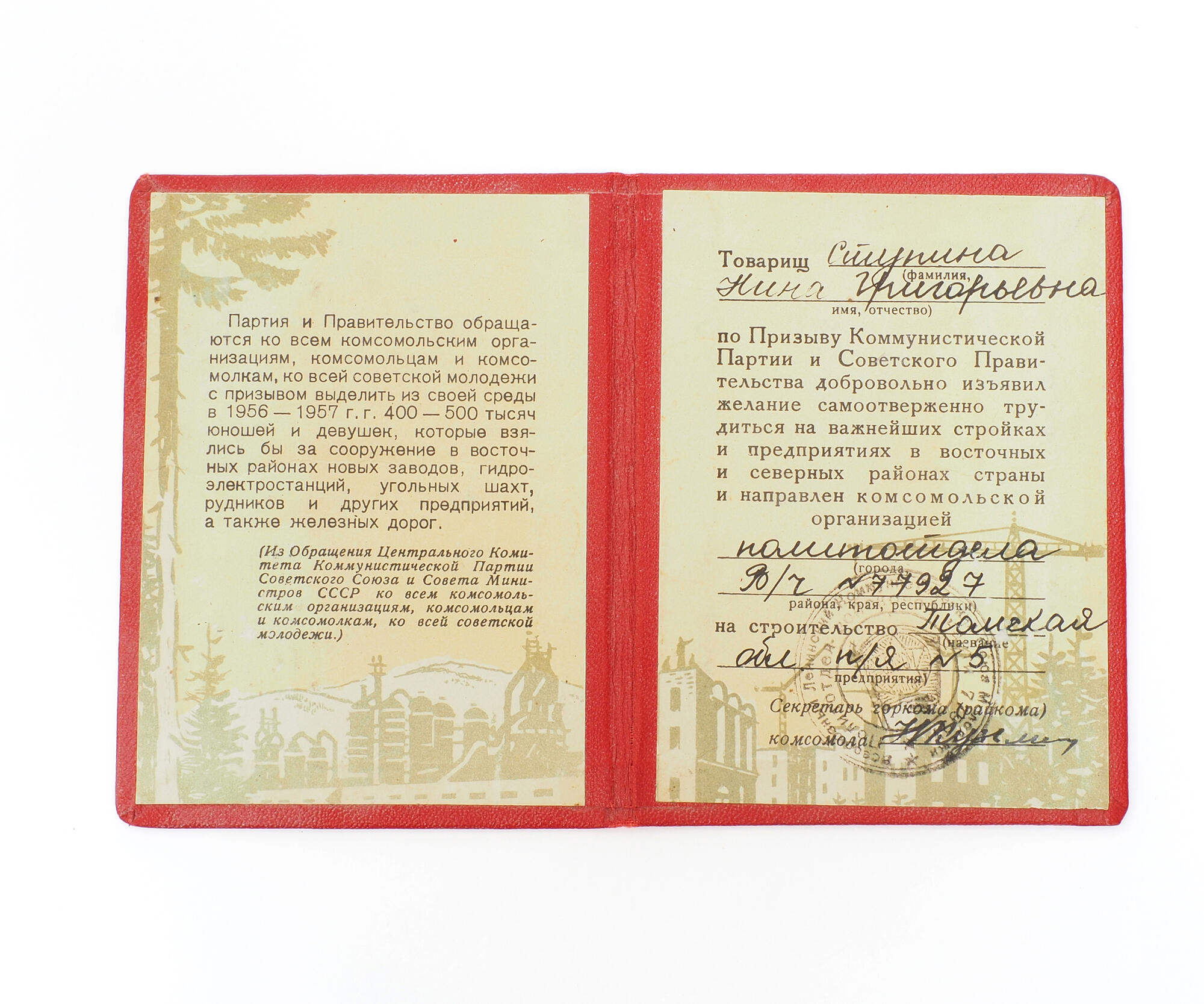
Hundreds of girls and boys went to construction sites voluntarily, on Komsomol directions, which became a characteristic feature of that time They symbolized ‘devotion to communist ideals’ — the desire of young people to contribute to the development of the economy. The voucher was an accompanying document and confirmed that the Komsomol member was officially sent to work. It reported that the bearer ‘at the call of the Communist Party and the Soviet government expressed a voluntary desire to selflessly work on the most important construction sites and industrial enterprises in the eastern and northern regions of the country’. The exact name of the construction objects was not always indicated in order to maintain secrecy.
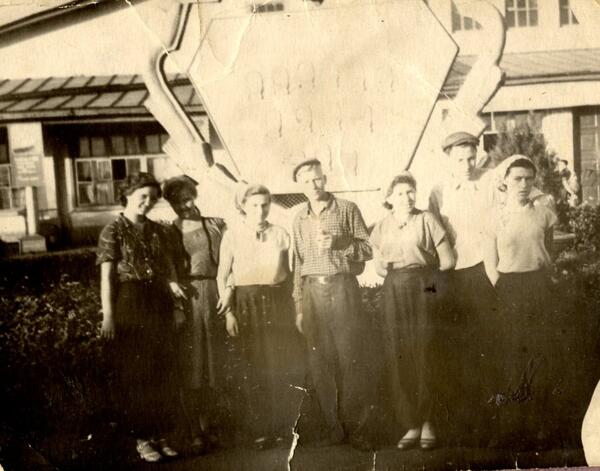
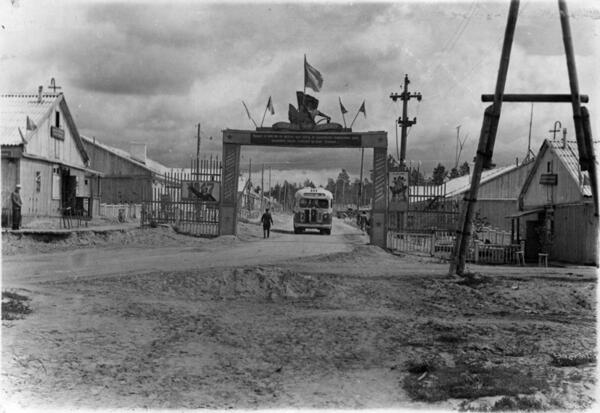
The museum houses one of these Komsomol vouchers, which belonged to Nina Stupina. The voucher has a red cover — it is a booklet that has the seal and signature of the secretary of the committee of the All-Union Lenin Communist Youth Union. Nina Stupina received a referral from the Komsomol organization of the political department of military unit No. 77927 for the construction of an object called ‘PO Box No. 5’.
Hundreds of girls and boys went to construction sites voluntarily, on Komsomol directions, which became a characteristic feature of that time They symbolized ‘devotion to communist ideals’ — the desire of young people to contribute to the development of the economy. The voucher was an accompanying document and confirmed that the Komsomol member was officially sent to work. It reported that the bearer ‘at the call of the Communist Party and the Soviet government expressed a voluntary desire to selflessly work on the most important construction sites and industrial enterprises in the eastern and northern regions of the country’. The exact name of the construction objects was not always indicated in order to maintain secrecy.
The museum houses one of these Komsomol vouchers, which belonged to Nina Stupina. The voucher has a red cover — it is a booklet that has the seal and signature of the secretary of the committee of the All-Union Lenin Communist Youth Union. Nina Stupina received a referral from the Komsomol organization of the political department of military unit No. 77927 for the construction of an object called ‘PO Box No. 5’.